Best Gingerbread Houses is a participant in the Amazon Associates program. As an Amazon Associate we earn from qualifying purchases, at no extra cost to you. A commission never affects what we recommend or how we rate it.
This is the Best Gingerbread Houses guide to candy: what to buy, how much of it, and which part of the house each piece is actually for.
We have spent years cataloging kits, templates, icing recipes and decorating ideas on this one subject, and the pattern in the questions we see never changes. Almost nobody is stuck on which candy is prettiest. They are stuck at the counter with a bag of something that will not stay on the roof.
When we say gingerbread house candy we mean both the decorating candy that goes on the outside and the structural pieces that hold up a wall or frame a window. So whether you are finishing a store-bought kit or cutting your own panels from scratch, this covers it.
If you are standing in the seasonal aisle with a kit in the cart and no clear idea what else to grab, the buy list near the top of this page is the part you want. If last year ended with candy on the tablecloth and a child in tears, skip down to what makes candy stick. And if you are building from scratch and you want the thing to look sharp, the table below is what changes the result.
By the end you will know which candy belongs on a roof and which belongs on the ground, roughly how much to buy for the size of house you are building, and why the pieces that fall off almost always fall off for the same two reasons.
It is grouped into four parts: what goes where, the 24 candies worth buying and the 5 worth skipping, how much to buy, and the techniques that decide whether any of it stays put. Start with the question everyone actually arrives with.
What Candy Goes on Each Part of a Gingerbread House
Decorating candy sorts into about ten jobs. Flat, light candy goes on the roof. Long, straight candy goes on the walls. Translucent hard candy goes in the windows. Bendy candy frames the openings. Anything heavy goes on the ground, where nothing has to hold it up.
Here is the whole thing in one table. For finished houses that put these combinations to work, our 45 gingerbread house decorating ideas show the same decisions made forty five different ways.
| Part of the house | Best candy for it | Why it works |
|---|---|---|
| Roof shingles | Necco Wafers, Hershey Kisses, chocolate chips, Andes-style mints, sliced licorice | Flat, uniform and light. Overlap them in rows starting from the bottom edge and work up |
| Roof pattern and color | M&Ms, Smarties, Nerds, Skittles | Small, round and light. One color per row reads as a pattern from across the room |
| Walls and siding | Kit Kat fingers, pretzel sticks, sour tape, flat wafer cookies | Long and straight. They cover area fast and hide a rough gingerbread edge |
| Windows | Crushed hard candy melted in the opening, Life Savers, Starburst pressed flat | Translucent or easy to frame. See the window method further down |
| Door and window frames | Mini candy canes, Pull n Peel licorice strands, thin sour tape | Bendy or straight enough to outline an opening cleanly |
| Path and walkway | Necco Wafers, chocolate rocks, mini M&Ms, chocolate chips | Flat and small, and they sit on a horizontal surface so weight stops mattering |
| Yard, bushes and trees | Gumdrops, spearmint leaves, Nerds clusters, gummy bears | Chunky and colorful. Nothing out here has to stick to a vertical surface |
| Roofline and trim | Candy icicles, sprinkles, pearl sprinkles, mini candy canes | Small enough to line an edge without adding weight to it |
| Snow and ground cover | Shredded coconut, snow frosting, confetti sprinkles | Loose material. Scatter it last so nobody drags a sleeve through it |
| Christmas lights | Gumdrops, Crunch Berries, Skittles, mini M&Ms | Small, evenly spaced and high contrast against brown gingerbread |
| Chimney | Chocolate rocks, candy bricks, Necco Wafers | Small units that read as masonry at that scale |
| People and figures | Mini gingerbread men, gummy bears, marshmallow snowmen | They stand on the base, so there is no adhesion problem to solve |
Two rules run underneath that whole table. Flat beats round, because a flat face gives royal icing something to grip. And light beats heavy on anything vertical, because royal icing is a glue, not a bracket.
The builder below turns that table into an actual shopping list for the house you are building.
The Candy Buy List Builder
Tell it what you are building and who is helping. It gives you a shopping list sorted by the part of the house each candy is for, with the eaten-candy margin already built in.
Quantities are estimates for planning, not a guarantee. They are worked out from the surface area of a typical house of each size and the footprint of each candy, then rounded up. Buy a little over rather than a little under. Your selections are saved in your own browser only and nothing is sent anywhere.
What Makes a Candy Work on a Gingerbread House
Four things decide whether a candy earns its place: its shape, its weight, its color, and whether it can convincingly stand in for something real.
- A shape icing can grip. A flat face beats a round one every time. Necco Wafers and M&Ms have a side that sits down into the icing. A jawbreaker touches the icing at a single point and behaves accordingly.
- A weight the surface can carry. The same candy is a good idea on the base and a bad idea on a wall. Weight only becomes a problem once the surface stops being horizontal.
- Color that reads from a distance. A gingerbread house is looked at from six feet away, not six inches. Red and green against brown reads instantly. Pale pastels against brown mostly disappear.
- Something real it can pretend to be. This is what separates a decorated house from a good one. Gumdrops become Christmas lights. Pretzels become logs. Coconut becomes snow. Rock candy becomes ice. The candy stops being candy.
Why hard candy holds and soft candy slides
Hard candy wins on gingerbread houses for a reason that has nothing to do with taste. Hard candy has a dry, rigid surface, so when you press it into royal icing the icing grips it and sets around the edge.
Soft candy is a different problem. Gummies, caramels and anything with a sugar coating are slightly damp on the outside, and that dampness sits between the candy and the icing like a film. The candy does not fall off immediately, which is what makes it so annoying. It creeps down a few millimeters as the icing dries, and by morning the roof looks like it slid.
This is also why the same candy behaves differently in different places. A gummy bear standing in the yard is fine. The same gummy bear on a wall is a slow-motion failure.
1. Gum Drops
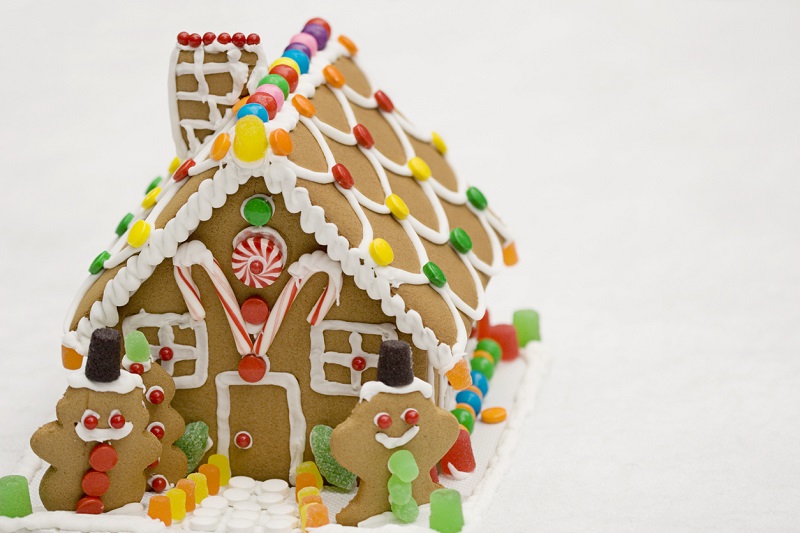
Gumdrops are one of the most iconic gingerbread house candies. They are mainly used as Christmas lights, fences and colorful accents on the roof. Dots is the brand most widely stocked through December, and the smaller spice drops are easier to space evenly as lights. Where it goes: Christmas lights, yard and bushes, fences.
Supermarket bags run small for a whole roof, so if you are covering one, a two pound bag of assorted gum drops works out cheaper than buying four packets.
2. M&Ms
M&Ms are a must for any gingerbread house. M&Ms are small round chocolates that are commonly used for decorating the roof of the house. By adding some frosting and sticking them individually on the roof, you can create colorful red and green patterns. Mini M&Ms are worth buying instead of standard ones if you are working a tight pattern, because you get roughly three times the coverage from the same weight. Where it goes: roof pattern, path, Christmas lights.

3. Hershey Kisses
Hershey Kisses are also one of the most popular gingerbread house candies. They can be used as roof decor, but also used to create walk ways for the house. Where it goes: roof shingles, walkway, trees.

4. Candy Canes
Traditional candy canes are one of the most diverse candies to use when decorating a gingerbread house. They can be used to create heart shape windows, lamp posts with a yellow gumdrop lamp or even a supporting doorway.

If you are able find stick shaped candy canes, this will allow you to create many red and white borders around the house. Where it goes: door and window frames, lamp posts, borders.
5. Christmas Sprinkles
Sprinkles can be used in various ways when decorating your gingerbread house. The primary purpose of Christmas themed sprinkles is to add a pop of color and shapes to your theme.

While most sprinkles come in a cylindrical shape, Christmas themed sprinkles can come in round, star, heart, Christmas tree and even Santa shapes which can elevate your design. They can be also found in many different kinds of colors as well. Where it goes: roofline and trim, snow, filling gaps.
6. Peppermints
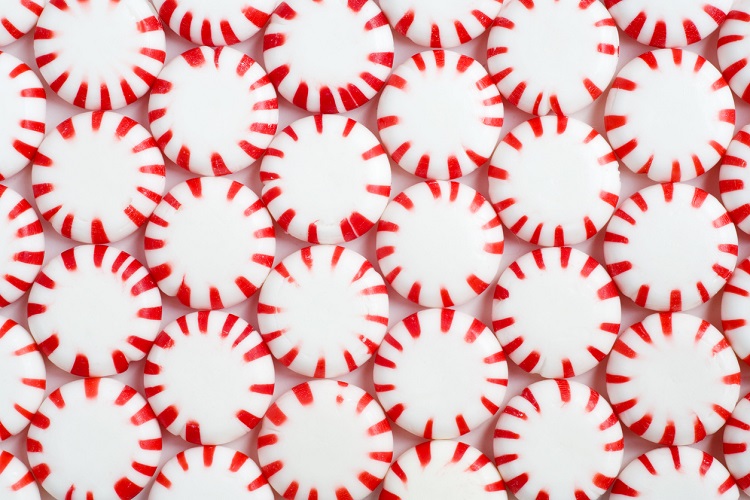
Peppermints can be the focal point of any gingerbread house. They are usually placed right above the door or where the two roofs meet. Peppermints can also be used as the primary candy to decorate the roof. Two different candies get called peppermints here. Flat starlight discs are the ones for a roof or a focal point, and green spearmint discs make the best wreaths. Mini candy canes are the ones for framing. Where it goes: the focal point above the door, roof shingles, wreaths.
These are the one candy worth buying in bulk, because they double as roof shingles and as the melt-down candy for stained glass windows. A five pound bag runs to roughly 360 discs, which is more than one house needs and exactly right for a village.
7. Candy Icicles and Bricks
Candy icicles can add the winter touch to any gingerbread house. Candy icicles are used to decorate the edge of the roof and around the doors.
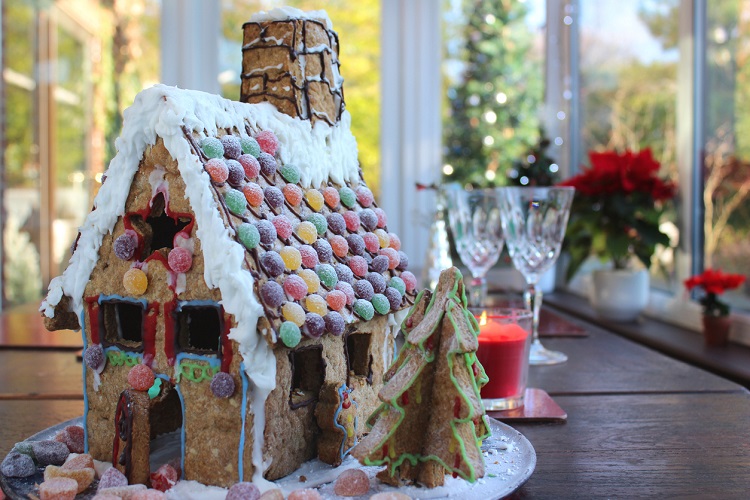
In addition, candy bricks are great to line the gingerbread house walls. This can bring a nice rustic or classic feel to your house. Where it goes: roof edge, door surrounds, wall courses, chimney.
8. Gingerbread Man Decor
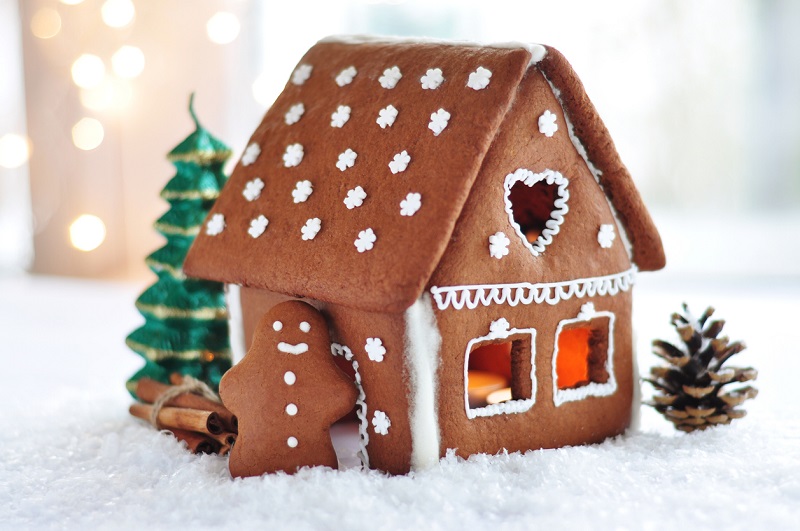
Gingerbread men decor are primary used outside the house. It is common to have a gingerbread couple or family with every gingerbread house. It is best practice to find smaller gingerbread men and women so that they are proportional with the house size. Where it goes: the yard and the base, never the walls.
9. Snow Frosting and Confetti
Snow frosting and confetti can add an elegant touch of winter to any gingerbread house. The snow frosting design is usually applied to the roof and walls to the gingerbread house and can be anywhere from a very simple pattern to a very intricate design.
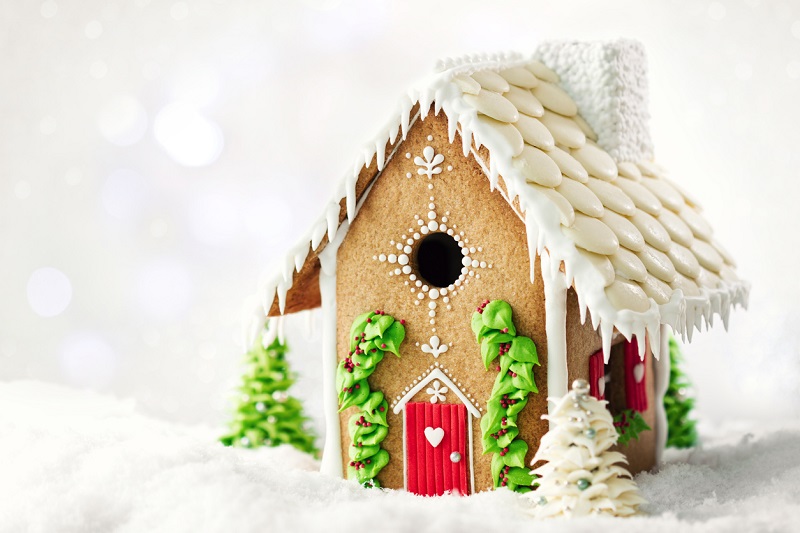
Confetti is a simple way to add color and simple shapes to your creation. Where it goes: roof, walls, ground cover.
10. Red & Green Sour Tape
A newer candy, red and green sour tape is a great way to add texture to your gingerbread house. The sour tape is mainly used on the walls, but could also be used as grass. Where it goes: walls and siding, grass, window frames.

11. Chocolate Pretzels
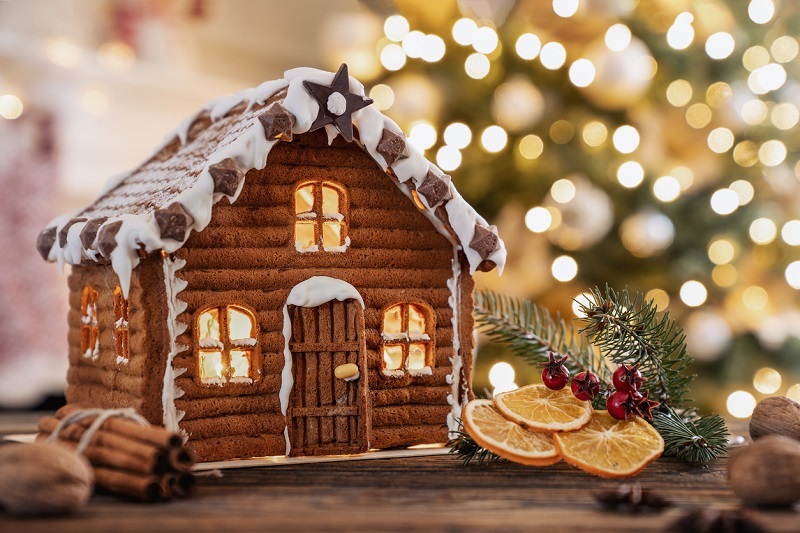
If you are considering a cabin style gingerbread house, chocolate or regular pretzels can be used to create a wooden design. By adding frosting to the pretzels and placing them on the walls and roof of the house, you can have a log cabin style in no time. Where it goes: log cabin walls, roof beams, fences. Attach these flat before you build.
12. Marshmallow Snowmen
By stacking a few marshmallows together, it is easy to turn this candy into a cute snowman marshmallow. Think about adding a few of the pretzels for arms and small drops of chocolate for buttons as well. Where it goes: the yard and the base only. Too top-heavy for anything vertical.

13. Red & Green Licorice Candy
Red or green licorice can be used for roof lining or general roof decor. By cutting small pieces of licorice and adding them to the roof, it can create a type of unique texture. Pull n Peel Twizzlers bend around a corner where a thick licorice rope will not, so use those for anything that has to follow a curve. Where it goes: roof lining, roof texture, window and door frames.

14. Fruit Loops and Crunch Berries
Fruit loops can be used for window decor and bring a colorful pop to your gingerbread house. Crunch berries can be used for Christmas lights and to highlight the outline of the house. Where it goes: window decor, Christmas lights, outlining the house.

15. Kit Kat Bars
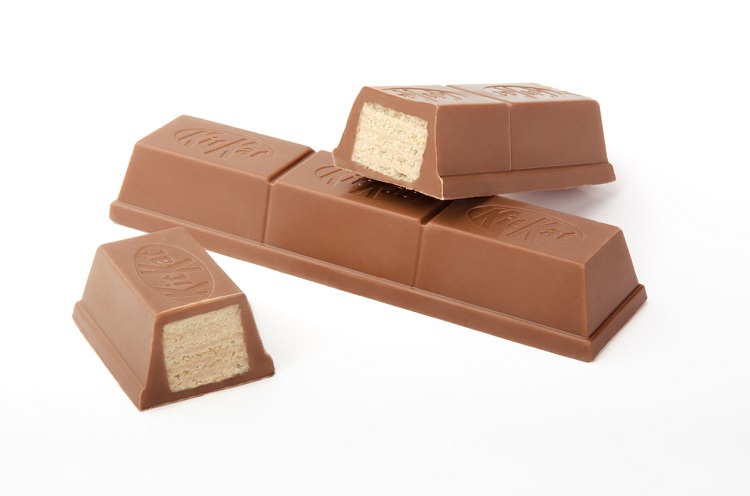
Kit Kat bars make great roof designs and could also be used to create a wooden log cabin design. Another creative way to use Kit Kat bars for a gingerbread house would be to purchase both white and regular Kit Kats and make a creative wall pattern on the house. Where it goes: roof panels and log cabin walls. Attach these flat before you build.
16. Smarties or Nerds
Smarties and Nerds are the smallest useful candy on this list, which makes them the filler. Use them where a bigger candy leaves a gap: the seam where two roof panels meet, the space between a window frame and the wall, the last quarter inch along a roofline. Nerds Gummy Clusters are the exception in this family. They are much heavier than they look, so cut them in half and press the flat gummy side into the icing rather than resting the whole cluster on top. Where it goes: roof seams, gaps, small detail work.
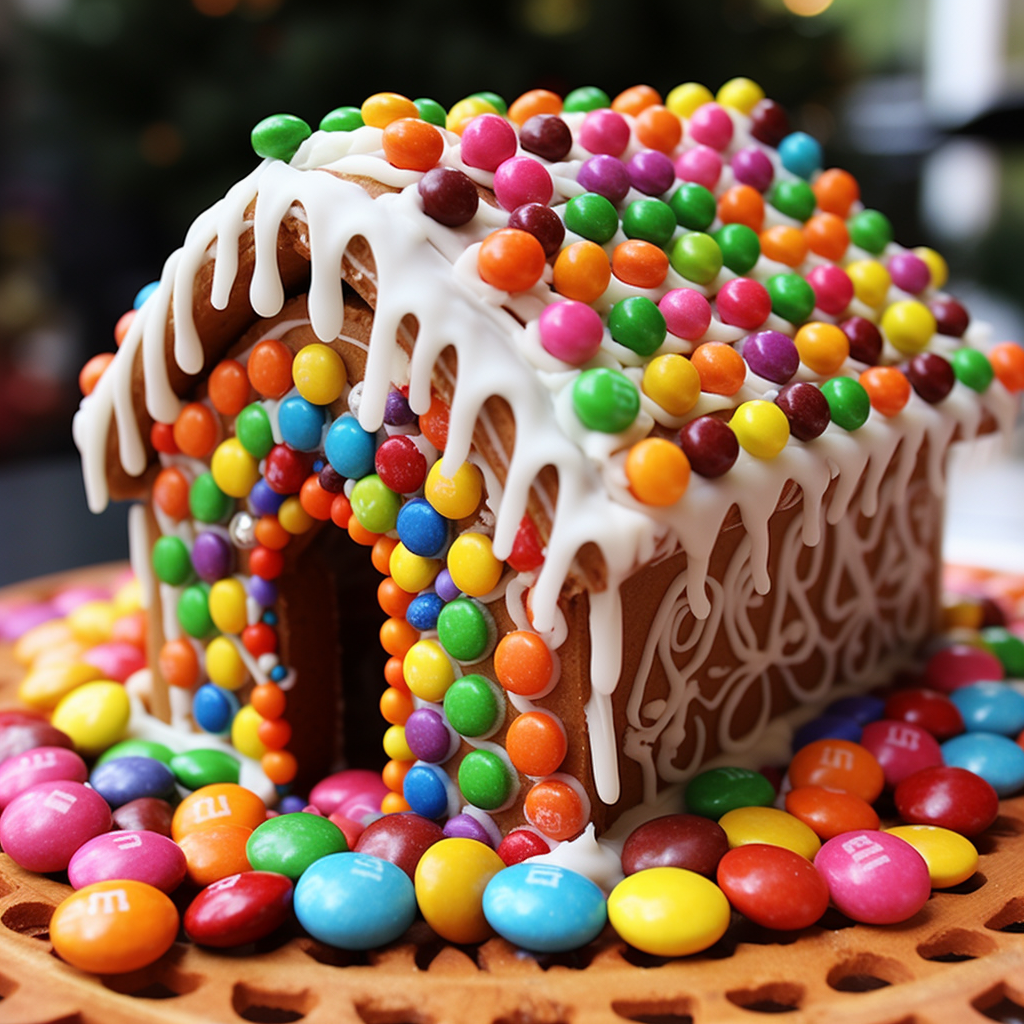
17. Jelly Beans
Jelly beans are oval, which means they roll. That rules them out for anything vertical and makes them excellent for everything at ground level. Line a walkway with them, cluster them into bushes, or scatter them through the yard. They also come in more colors than almost anything else here, so if you are matching a specific theme they are usually the easiest place to find the exact shade you need. Where it goes: path, yard, landscaping.
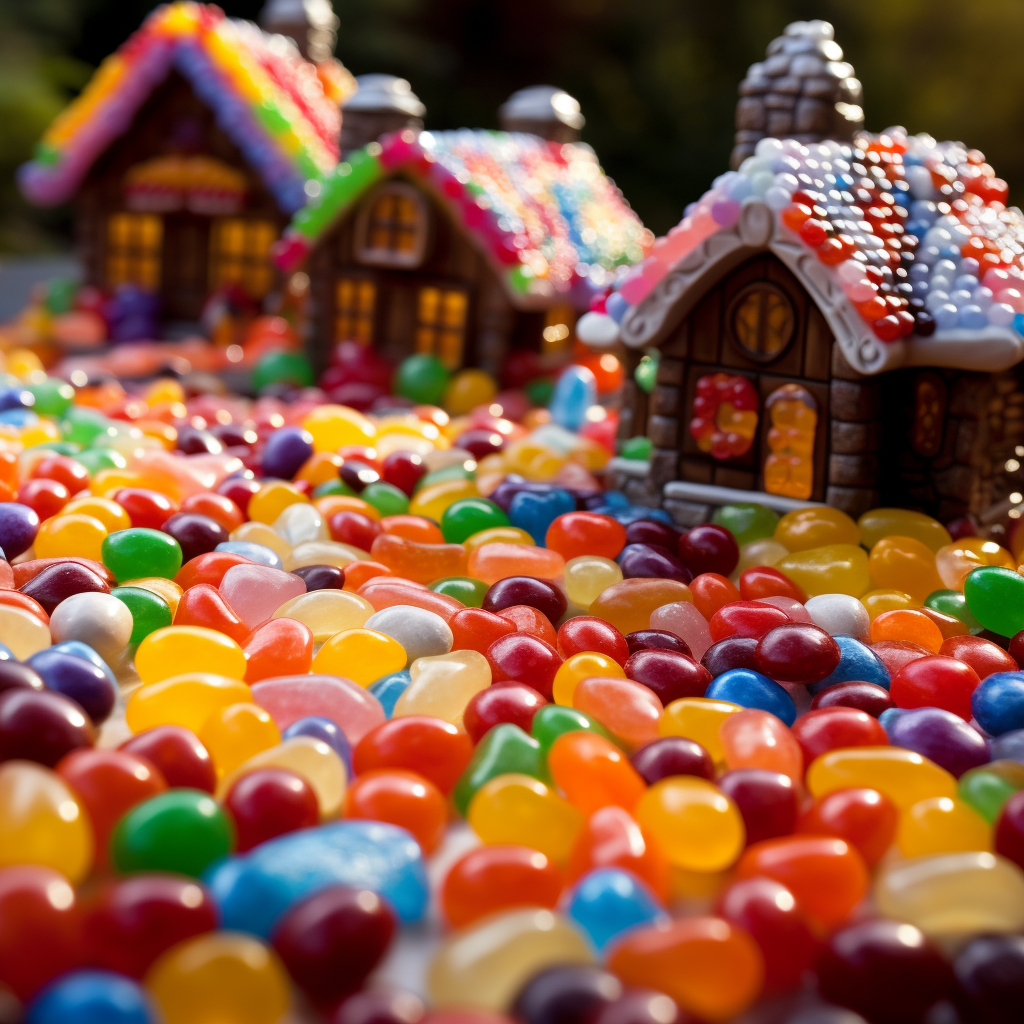
18. Tootsie Rolls
Tootsie Rolls are the only candy here you can genuinely sculpt. Warm one in your hands for about thirty seconds and it behaves like modelling clay: roll it into logs for a cabin wall, flatten it into a door, or shape it into a chimney. Cold Tootsie Rolls do none of this, so work with one at a time rather than tipping the whole bag out. Where it goes: doors, chimneys, log cabin walls, sculpted details.
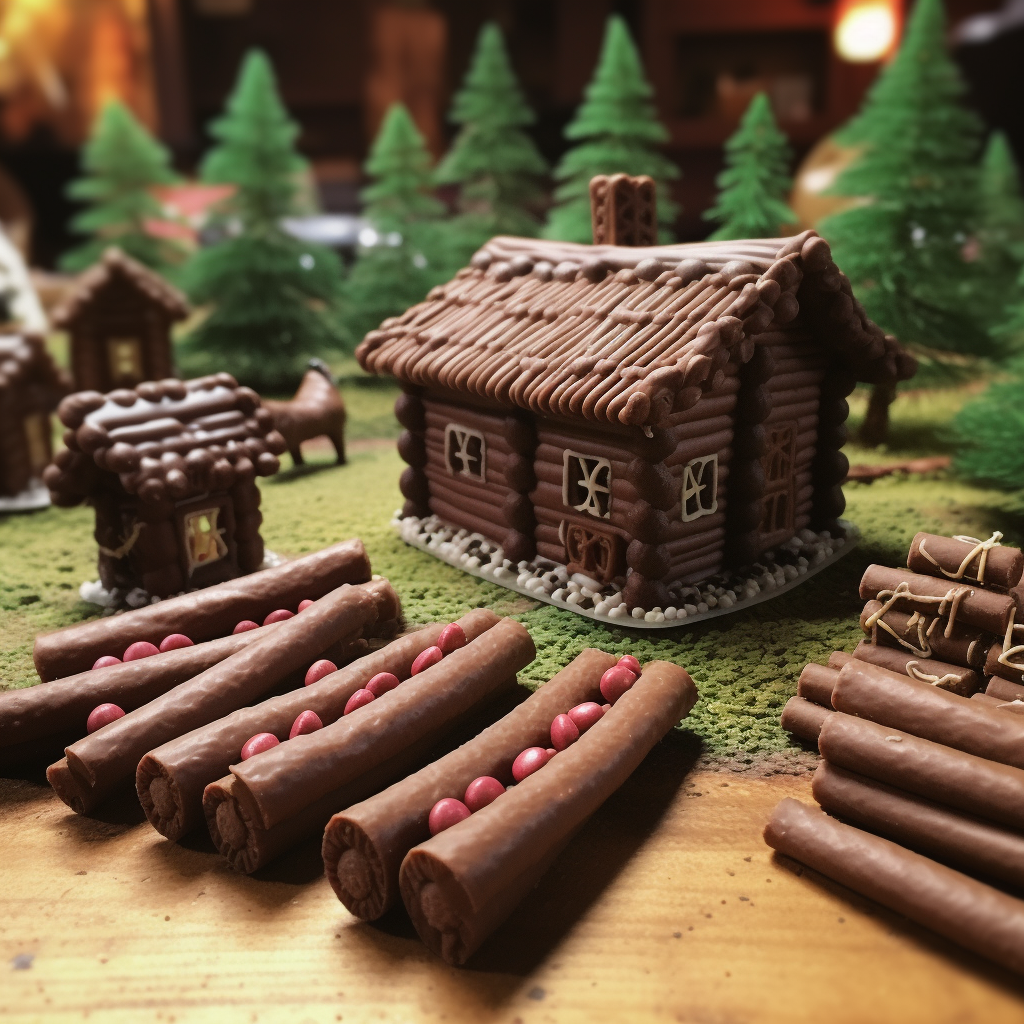
19. Chocolate Chips
Miniature chocolate chips are the cheapest way to shingle a roof and the fastest. Set them point up in rows and the roof reads as texture rather than as individual pieces, which hides an uneven icing job better than any large candy will. They work as a cobblestone path too. One caution: chocolate softens in a warm room and against warm hands, so place them quickly and resist going back to reposition. Where it goes: roof shingles, paths, chimney.
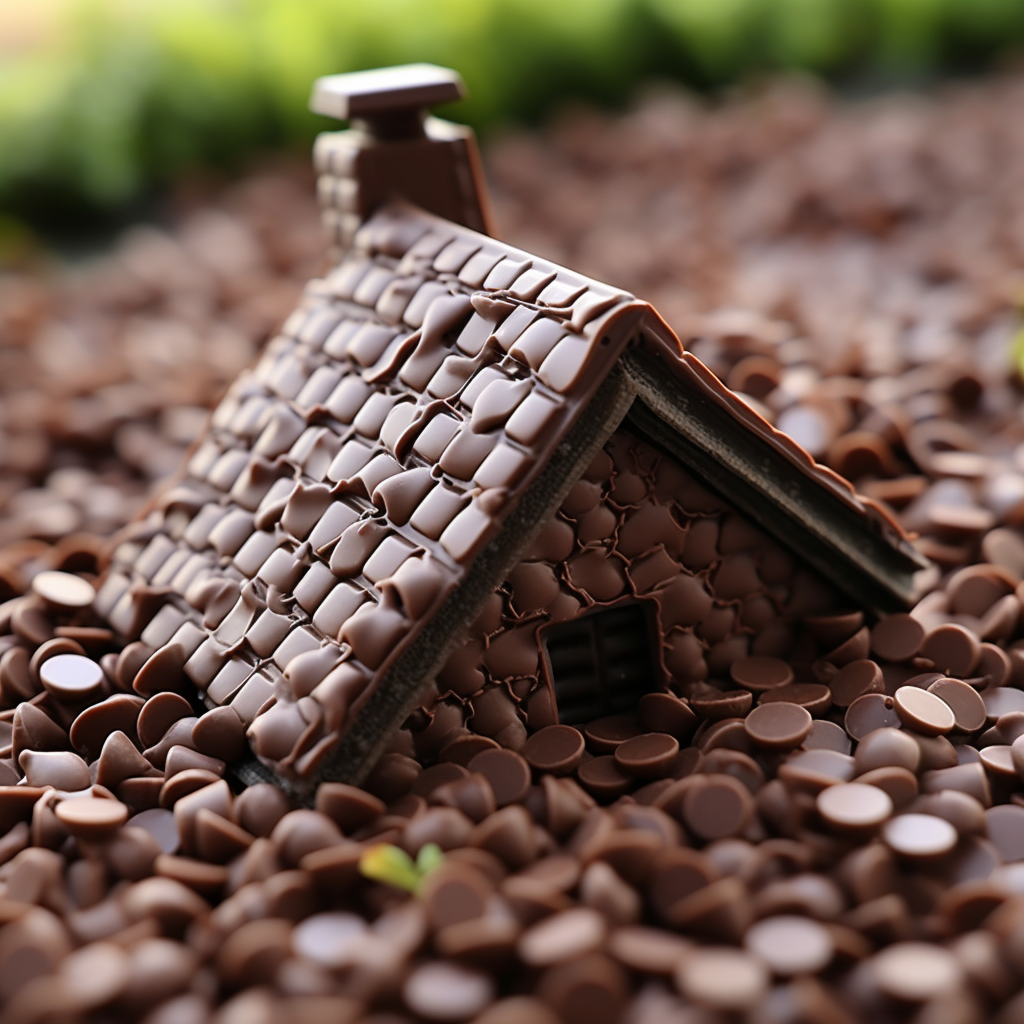
20. Shredded Coconut
Shredded coconut is a popular choice for creating realistic ground textures. It is most commonly used to represent a blanket of snow, especially when dusted over the roof and yard. It can also be dyed green with food coloring to create the look of a grassy lawn. Where it goes: snow on the roof and yard, grass when dyed green.
21. Wafer Cookies
Wafer cookies, such as Pirouettes, are popular for adding architectural structure. The rolled varieties are perfect for creating pillars, log piles, or fence posts. Flat wafers are often used to create doors, window shutters, or even sections of a wall, adding a clean, biscuit-like texture. Where it goes: pillars, fence posts, doors, shutters, wall sections.
22. Gummy Bears
Gummy bears are a fun, popular addition, especially for houses with a more playful theme. They are primarily used as inhabitants of the gingerbread house, placed in the yard or looking out windows. Their bright colors add a whimsical touch, and they can be set up in little scenes around the house. Where it goes: the yard, the base and looking out of windows. Not walls or roofs.
23. Rock Candy Sticks
Rock candy is most popular for its crystalline, icy texture, making it perfect for winter-themed houses. The sticks are often used as icicles hanging from the roof or as gleaming ice shards in the yard. Broken-up pieces can also be used to create sparkling, frozen windows. Where it goes: icicles on the roof edge, ice in the yard, frozen windows.
Rock candy is the rare decoration that reads as icicles, as a fence and as a path depending on how you break it, and a hundred stick box costs less than most single bags of novelty candy.
24. Necco Wafers
Flat, round candies like Necco Wafers are a classic and popular choice for roofing. Their uniform shape and size make them ideal for creating a perfectly overlapping shingle effect on the roof. They can also be used to create a clean, cobblestone pathway leading to the front door. Where it goes: roof shingles and cobblestone paths. The best shingle candy there is.
Necco wafers are the classic shingle and the hardest of these to find on a supermarket shelf, since the brand went out of production for two years before it was revived. A six roll variety pack is the usual way to get them now.
5 Candies That Are Not Good for Gingerbread Houses
You can decorate with any candy you like. These five just fight you, and it is worth knowing why before you are standing at the counter. If you are building a gluten free house, there is a second list to check as well, because a good few decorating candies carry wheat.
Gummy or Chewy Candies
Gummy candy is not banned, it is misplaced. Gummy bears look great standing in the yard or peering out of a window, where nothing has to hold them up. On a vertical wall or a sloped roof they are a different animal: heavy for their size and slightly damp on the outside, so they creep downward as the icing sets. Use them at ground level, or attach them to a panel while it is still lying flat.
Large or Heavy Lollipops
Large, heavy candies like full-sized lollipops are difficult to attach. Their weight will pull them right off the house unless you have extremely fast-drying, structural icing.
Powdery Candies
Any candy that is essentially just loose powder or sugar, like Pixy Stix, is not practical for decorating. It will not stick to the house, will make a mess, and will dissolve if it gets damp, ruining the look of your frosting.
Very Sour Candies
Sour tape, sour belts and anything with a visible sanding-sugar coating carry citric acid and a lot of loose sugar. Both pull moisture, and on white royal icing they can bleed color into the icing around each piece within a day. If the house is going to be photographed or put on display, keep sour candy off anything white. On a colored or chocolate surface it does not matter.
Hard-to-Cut Candies
Candies like jawbreakers are very difficult to use. You cannot shape, cut, or alter them, making them very limiting. Their extreme weight also makes them a poor choice for attaching to any part of the house itself.
Very Delicate Candies
Cotton candy might seem like a great idea for snow or a chimney puff, but it has a very short lifespan. It will absorb moisture from the air and the frosting, causing it to shrink, wilt, and dissolve into a sticky puddle within a day. Moisture is the thread running through most decorating failures, and it is the same thing that decides how long the finished house survives on the counter, which we go through in how long gingerbread lasts.
How Much Candy You Actually Need
A store-bought kit house needs roughly one cup of small candy for the roof, about twenty pieces of something long for the walls, and a handful each of trim, path and yard candy. A large scratch-built house needs around three times that. A village of mini houses needs less than you would think, since most of the surface is roof.
Then you buy more, because a meaningful share of it never reaches the house.
That last part is the number nobody publishes. With one or two children helping, plan on about a third of the candy disappearing during the build. With four or more, plan on half. This is not a complaint about children. It is the single most common reason a roof ends up half finished, and it is completely predictable, which means you can simply buy for it.
If you are decorating a store-bought kit, the kit already includes candy, and the mistake is shopping as though it does not. Open the box first. Kits typically ship enough for the roof and almost nothing for the yard, so buy landscaping candy and trim and skip the roof candy unless you dislike what came in the box. Kits vary a lot in what they include, and our Walmart kit review breaks down what one of the common ones actually contains.
If you are building from scratch, you have the opposite problem. Nothing is included, your surfaces are bigger than a kit's, and the roof alone will eat more candy than most people expect. Work the roof out first, because it is the largest single surface and the one that runs short halfway through.
Picture a family who bought one 10 ounce bag of M&Ms for a kit house because it looked like plenty. A kit roof takes close to 190 M&Ms once you allow for the ones that get eaten, and a 10 ounce bag holds somewhere around 300, so the bag really was plenty. It was plenty right up until the roof was half done and the six year old worked out that the bag was within reach. They finished the second panel in pretzel sticks and the house looked better for it. The bag was sized for the roof and not for the room.
Here is the order to buy in:
- Measure or eyeball the roof, because it is the biggest surface and the one that runs short.
- Buy the roof candy first and in a single variety, so a half-finished roof does not turn into two patterns.
- Add the eaten margin: a third with young helpers, half with a group.
- Buy the yard candy last, because whatever is left over usually covers it.
Whether all of that works out cheaper than buying a kit outright depends mostly on how much you already have in the cupboard, which we worked through in is it cheaper to build your own gingerbread house. The buy list builder near the top of this page does the arithmetic for whichever house you are making.
How to Make Candy Actually Stick
Candy stays on a gingerbread house for two reasons: the icing is stiff enough, and the candy is light enough for the surface it is sitting on. Get either one wrong and it comes off.
Royal icing is the only reliable adhesive. Buttercream never sets hard, and the icing tube that comes in a kit is usually thinner than it needs to be. Stiff royal icing holds a peak when you lift the spoon out. If the peak slumps over, it is too thin for anything vertical, and you want to beat in more powdered sugar before you start rather than discover it halfway up a wall.
One safety note if you are making icing from scratch and the house is going to be eaten rather than displayed. Most royal icing recipes, including our own gingerbread dough and royal icing recipes, call for raw egg whites. The FDA advises using pasteurized shell eggs or pasteurized egg products in anything served raw or undercooked, and uncooked royal icing is exactly that. Meringue powder is the simplest swap and it behaves the same way in the bowl.
There are four ways to attach a piece, and picking the right one matters more than how much icing you use:
- A dot for individual pieces. Pipe a dot about two thirds the width of the candy, press it in, hold for a beat.
- A line for anything long. Pipe a bead down the full length of a Kit Kat or a pretzel, not just a blob at each end, or the middle bows away from the wall.
- A mound for anything standing upright. Pipe a blob roughly the width of the base and push the candy down into it until it sits.
- Wet on wet for anything going onto icing you have just piped. No second dot needed. This is the fastest method and the one people forget.
Then the change that fixes most of it: decorate the panels before you assemble the house. A roof panel lying flat on the counter will hold almost anything, because gravity is pressing the candy into the icing instead of pulling it off. Do the roof and the walls flat, let them set, then build the house with the decoration already on it. Keep some icing back for assembling the house at the end.
Say you have a Kit Kat log cabin in mind. On a house that is already standing, laying Kit Kat fingers across a sloped roof means holding each one for a count of twenty while it fights you, and the bottom row still creeps overnight. Lay the same roof panel flat on the counter, pipe lines of stiff royal icing, set the fingers down and walk away for an hour. When you come back the roof is a single decorated slab you can lift and glue into place. Same candy, same icing, opposite outcome.
Give the icing time. Royal icing skins over in roughly 15 to 30 minutes and takes several hours to set hard all the way through, so do not lift or tilt a decorated panel inside that first window.
The tool below runs the weight-and-surface question for any candy on this page.
Will It Stick
Pick a candy and tell it where you are putting that candy. It tells you whether royal icing will hold it there, and what to do instead when the answer is no.
General guidance for planning, not a guarantee. Verdicts are based on the weight and contact shape of each candy against stiff royal icing at room temperature. Humidity, thin icing and impatient hands all change the outcome. Nothing you select is stored or sent anywhere.
How to Make Stained Glass Candy Windows
Crushed hard candy melted into the window openings gives you translucent panes that light comes through. It is the one technique that visibly separates a good gingerbread house from a great one, and it costs about ten extra minutes.
The method:
- Cut the window openings in the dough before baking, not after. Use one of our free gingerbread house templates so the openings line up on both sides of the house.
- Bake the panels most of the way, then pull the tray out.
- Fill each opening with crushed hard candy, roughly two candies deep. Jolly Ranchers and Life Savers both work. Anything opaque or shell-coated does not.
- Return the tray to the oven until the candy has pooled flat and gone glassy.
- Cool the panels completely on the tray before touching them. Melted candy is molten sugar and it is far hotter than the cookie it is sitting in.
Hard candy melts and reflows around the hard crack stage, which Colorado State University Extension puts at 300 to 308°F at sea level. If you live at altitude, that target drops by about 2°F for every 1,000 feet. In Denver that is roughly 290 to 300°F, so candy that took eight minutes to pool at sea level will get there faster and can scorch.
Picture someone in Denver following a sea-level recipe to the letter. Eight minutes in, the windows have gone from clear amber to brown and bubbling and the kitchen smells like burnt sugar. Nothing was wrong with the method. The candy simply hit its melting point three minutes earlier than the recipe assumed. Checking at five minutes instead of eight gives clear panes in the same oven.
Decorating Gingerbread Houses with Kids
The candy you choose changes completely when children are decorating, and the change is not about safety. It is about the fact that the candy is going to be eaten and the house is going to be lopsided. Plan for both and the afternoon works.
Buy candy your children are allowed to eat, because they will eat it. Set it out in a muffin tin so every type has its own compartment and nobody is digging through one shared bowl. Put the whole build on a rimmed baking sheet so the sprinkles have somewhere to land.
If your children are under four, do not expect a house. Expect a decorated slab, and let that be fine. Decorate the flat panels, let them go wild, and assemble whatever is still standing yourself at the end. Cheerios, raisins and other everyday foods work just as well here as candy and cost nothing, which matters when most of it is going to be eaten anyway.
If they are five to nine, they can place candy accurately but will lose interest before the house is finished. Give them the roof, which is the biggest visible win for the least precision, and take the fiddly window frames yourself.
If they are ten and up, hand over the whole thing and a piping bag. This is the age where the precision candies, the Nerds and the sprinkles and the mini candy canes, start being satisfying rather than frustrating.
With a group, expect three kinds of decorator: the careful one still going when everyone else has left the table, the fast one who is done in four minutes, and the one mainly interested in how much candy fits on a single roof. Buy for all three. The fast one needs a second house.
Say you have a five year old and a two year old and a kit on the table. The two year old will put nine gumdrops in the same square inch and then eat four of them. Give that child their own flat panel and a bowl of the candy you do not mind losing. The five year old gets the roof. You take the walls and the assembly. Everyone has a real job and nobody is standing around waiting for a turn.
A few more things worth knowing before the tray comes out are collected in our gingerbread house tips.
Build Your Gingerbread House with Best Gingerbread Houses
Candy is the last decision, not the first one. The house underneath it decides how much room you have to work with, how much weight the walls can carry, and whether the roof can take the shingles you had in mind. We keep a running guide to every kit worth buying, from the small ones that suit a first attempt with young children to the large scratch-style kits with room for a full candy roof. Start with the gingerbread house kits we recommend and let the house set the candy list rather than the other way round. Get that order right once and every December after this one gets easier.