
Best Gingerbread Houses is a participant in the Amazon Associates program. As an Amazon Associate we earn from qualifying purchases, at no extra cost to you. A commission never affects what we recommend or how we rate it.
This is the build we have been promising on this page since 2018: a gingerbread house made from your own dough, cut against your own template, and assembled so the walls actually stay where you put them.
Structural gingerbread is not cookie gingerbread. It is rolled thicker, baked longer and cooler, and glued with icing stiff enough to hold a peak. Get those three things right and the rest is decorating. Get them wrong and you spend the evening propping up a wall.
Below is the full method, an honest schedule that separates the time your hands are busy from the time you are just waiting, and a troubleshooting table for the seven ways this goes wrong. If you would rather open a box, the kit route is covered further down too.

A Gingerbread House Built From Scratch
Makes 1 house, roughly 8 inches tall on a 10 by 12 inch base · Intermediate · About $15 to $25 in ingredients, plus candy
Total time about 11 hours, of which roughly 3 hours 20 minutes is hands on and the rest is chilling, cooling and setting.
You will need: a stand or hand mixer, a rolling pin, two half sheet pans, a paper or cardstock template, a sharp knife, a piping bag with a small round tip, tins or mugs to prop the walls, and a sturdy board for the base.
Materials: one batch of structural gingerbread dough rolled to a quarter inch · two batches of stiff royal icing, one to glue and one to decorate · a house template of two walls, two gable ends and two roof panels · about two cups of decorating candy · a sturdy base board.
Dough and royal icing quantities are on our recipes page, linked below. This card covers the assembly.
Why Structural Gingerbread Is Not Cookie Gingerbread
A gingerbread cookie is meant to be soft in the middle. A gingerbread wall is meant to be a wall. That single difference changes the dough, the thickness and the bake.
Thickness is doing most of the structural work here, so a rolling pin with thickness rings is the single most useful tool for this build.
Roll structural panels to a quarter inch rather than the eighth you would use for cookies, which is King Arthur Baking’s own instruction for this job: “Keep it at least 1/4″ thick for strong walls.” Then bake them lower and longer than a cookie recipe tells you to. A hot fast bake browns the edges before the center has dried out, and the panel that comes out looking perfect is the one that snaps when you lean a roof on it. You want it dry all the way through and hard enough to knock on.
Most published methods, and Google’s own AI summary of them, say 350°F until firm. King Arthur Baking’s guidance on building a gingerbread house gives the alternative directly: “A lower oven temperature (325°F) and longer baking time will yield a firmly set cookie that is evenly colored.” They also add the sensible caveat that bake time varies with the size and thickness of your pieces, so bake one test panel first. For load-bearing walls and roof panels, take the lower, longer bake. For small decorative pieces that carry no weight, the standard bake is fine.
The other half of the job is the icing. Royal icing used as mortar has to hold a stiff peak when you lift the spoon out. If it slumps, it will not hold a vertical joint, and no amount of patience fixes that. Beat in more powdered sugar until it is stiffer than looks reasonable. Exact quantities for both the dough and the icing are in our gingerbread dough and royal icing recipes.
How to Make a Gingerbread House Step by Step
1. Make the dough
Cream the butter and sugar first, then the molasses, then the dry ingredients. Stop when it comes together as one firm mass that pulls away from the side of the bowl. It should feel stiffer than a cookie dough and slightly dry rather than tacky.
2. Chill the dough
Wrap it flat rather than as a ball, which chills faster and rolls more evenly, and give it at least two hours. It is ready when a pressed thumb leaves a clean dent rather than sinking in.
3. Cut the panels
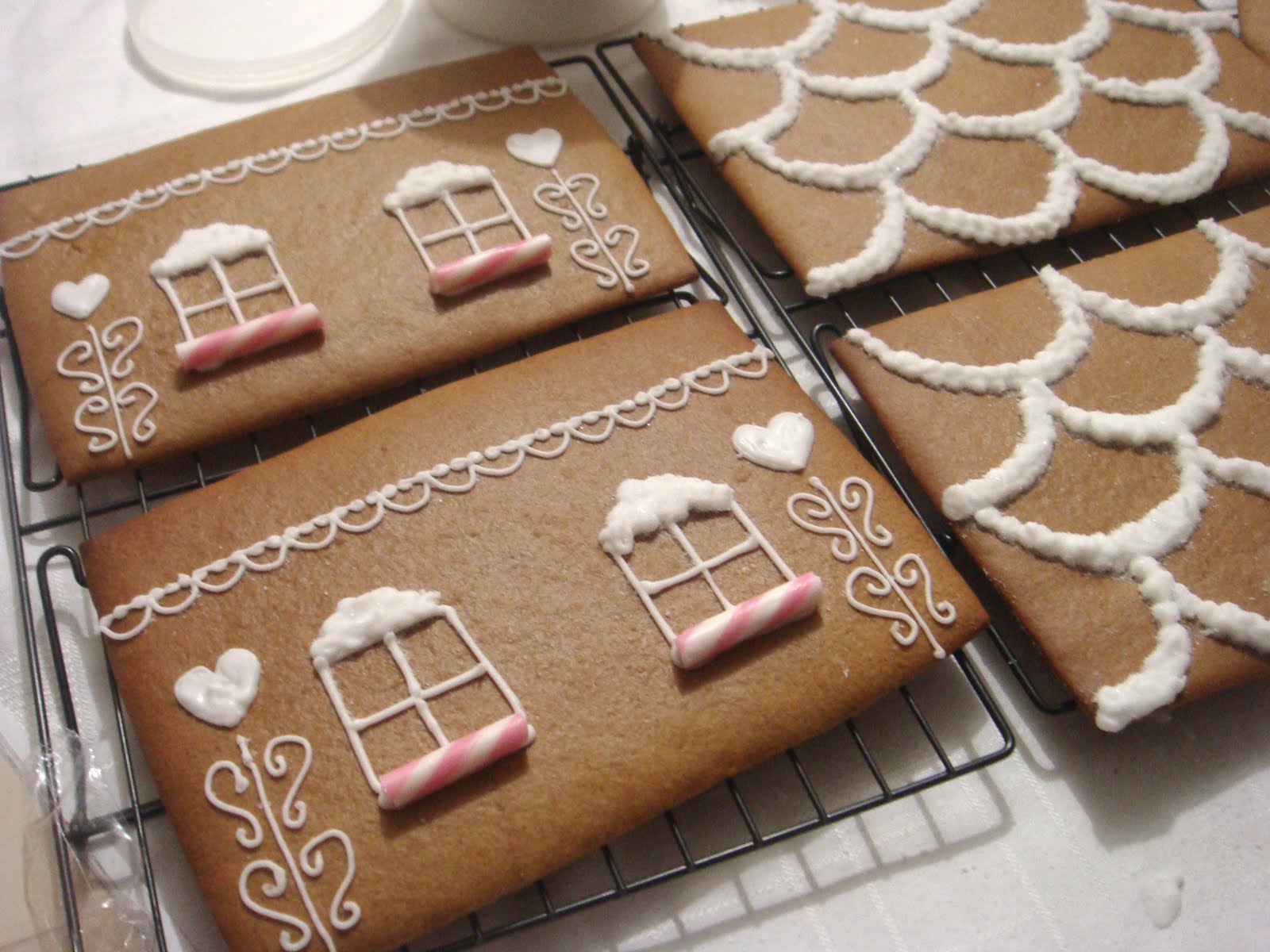
Roll to an even quarter inch and cut against your template with a sharp knife, not a cookie cutter. Guide rails either side of the dough are the easiest way to keep the thickness even, and uneven thickness is the single most common reason two walls will not meet cleanly. Chill the cut panels on the tray for fifteen minutes before they go in. Use one of our free gingerbread house templates if you do not have a pattern.
4. Bake the panels
Low and slow, as above. They are done when the surface is matte rather than shiny, the edges are set, and the panel sounds hard rather than dull if you tap it. Err on the side of longer: an overbaked wall is still a wall, an underbaked one is a repair job.
5. Trim the panels while they are hot
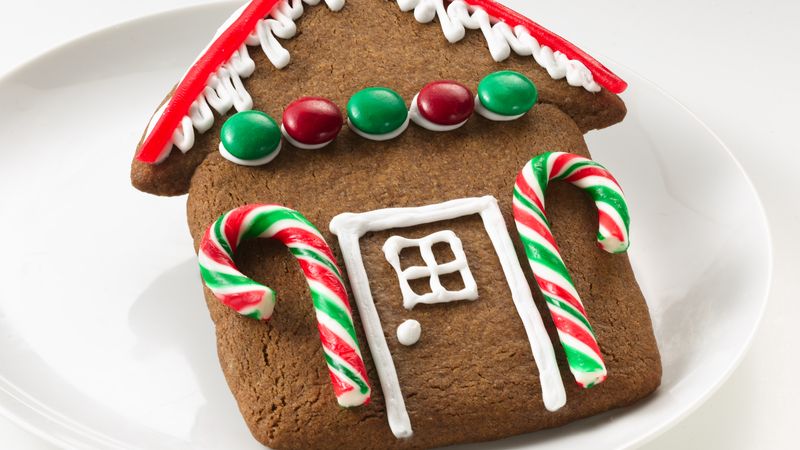
Gingerbread only cuts cleanly while it is hot. If the pieces spread in the oven, lay the paper template straight back on top the moment the tray comes out and trim the overhang away with a sharp knife. Thirty seconds of work here saves an hour of trying to make mismatched walls meet. Then leave the panels on the tray until they are completely cold.
6. Assemble the walls
Pipe a thick line of stiff royal icing along the base of a wall and along one vertical edge, stand it on the board, and prop it with a tin. Add the next wall into the wet icing on that edge. Work around all four, then walk away for a couple of hours. The joint is ready when the wall stands unpropped without any give.

7. Add the roof
Pipe along the top edges of the walls and set one roof panel, holding it about forty five seconds until the icing grabs. Do the second, then pipe a bead along the ridge where they meet. Leave it to set again before any weight goes on it. A roof that goes on before the walls are dry is the most common way a house collapses.
8. Decorate the house
Start at the bottom edge of the roof and work upward so each row rests on the one below. Light, flat candy holds on vertical surfaces; heavy or rounded pieces belong on the base. If you want to know exactly what goes where, which candy goes where has it by part of the house, and 45 decorating ideas are sorted by how hard they are.


Make-Ahead and Timeline
Recipes for this quote times that are not comparable with each other, and it causes real frustration. One well-known recipe says 58 minutes, another says 3 hours 15, another says 24 hours, and all three are describing roughly the same house. The difference is that some are counting only the minutes your hands are busy and others are counting the chilling, cooling and setting too.
Both numbers matter, for different reasons. The hands-on figure tells you whether you have the energy. The elapsed figure tells you whether you can start after lunch and finish before bed. From scratch, expect roughly three and a half hours of actual work spread across about eleven hours of elapsed time.
If you want it done in one day, make and chill the dough first thing, bake before lunch, and assemble in the afternoon so the shell has all evening to dry. Decorate the next morning.
If you would rather split it, the natural break points are the two long waits. Dough keeps in the fridge overnight, and baked panels keep in an airtight tin for days. Making the panels one weekend and building the house the next is genuinely easier than doing it all at once, and nothing suffers for it.
The Gingerbread House Schedule Builder
Gingerbread house recipes quote wildly different times because some count only the minutes your hands are busy and others count the chilling and drying too. This splits the two, so you can see what a gingerbread house really costs you.
Planning estimates, not a guarantee. Hands-on times are our editorial figures for an average build and are scaled up when children are helping, because they are. Chilling, cooling and drying times are the minimums we recommend, and longer is always safer than shorter. Your selections are saved in your own browser only and nothing is sent anywhere.
Kit or From Scratch
Deciding to build your gingerbread house from a kit vs scratch is a night and day process. Depending on how much time you have and the individual who are making the houses with you, one creation process may be better suited for you and your party.

Making a gingerbread house from a kit is simply faster and cleaner. You do not have to worry about buying all the ingredients, making the royal icing and baking the gingerbread from scratch. This saves significant assembly time, money for all the needed ingredients and clean up time. On average, making a gingerbread house from a kit usually takes about 1-2 hours with minimal cleanup efforts, which makes it a short and sweet activity compared to making it from scratch.
One of the downsides of making a gingerbread house from a kit is that you lose potential quality bonding time with you and your kids, family or friends when compared to creating everything from scratch. Also, you lose the personalization aspect since most kits have the same look and decorations. We would recommend considering who is making the gingerbread house for the appropriate decision on building it from scratch or from a kit.
If you have children who are a bit younger and are just looking forward the decorating aspect of building a gingerbread house, we would recommend purchasing a kit. There are many kits that will suit the appropriate age levels and vary sizes such as small, medium and large gingerbread houses. If you are making it with older friends and family, creating the house from scratch while eating and drinking can make it a very fun and relaxing activity. Whether that works out cheaper than a kit depends mostly on what is already in the cupboard, which we went through in is it cheaper to build your own gingerbread house.
If you are going the kit route, the assembly is the same from step 6 onward: walls first, propped and dried, then the roof, then decoration. Kits usually ship less icing than you need, so make a batch of royal icing anyway.
Troubleshooting
Almost every gingerbread house failure is one of seven things, and most of them are recoverable if you catch them in time. Pick the symptom and it will tell you the cause, the fix for next time, and whether the one currently in front of you can be saved.
Most of the icing failures below are really application failures. A small round tip gives you a bead you can place precisely, which a spoon or a snipped freezer bag will not, and a basic piping set costs less than a single kit.
What Went Wrong
Seven ways a gingerbread house fails, what actually caused each one, and whether the one currently in front of you can be saved.
General troubleshooting guidance for planning and rescue, not a guarantee. Causes are the most common ones for each symptom; ovens, humidity and recipes all vary. Nothing you select is stored or sent anywhere.
Storage Instructions
You can make your gingerbread house about 2 to 3 weeks before Christmas.
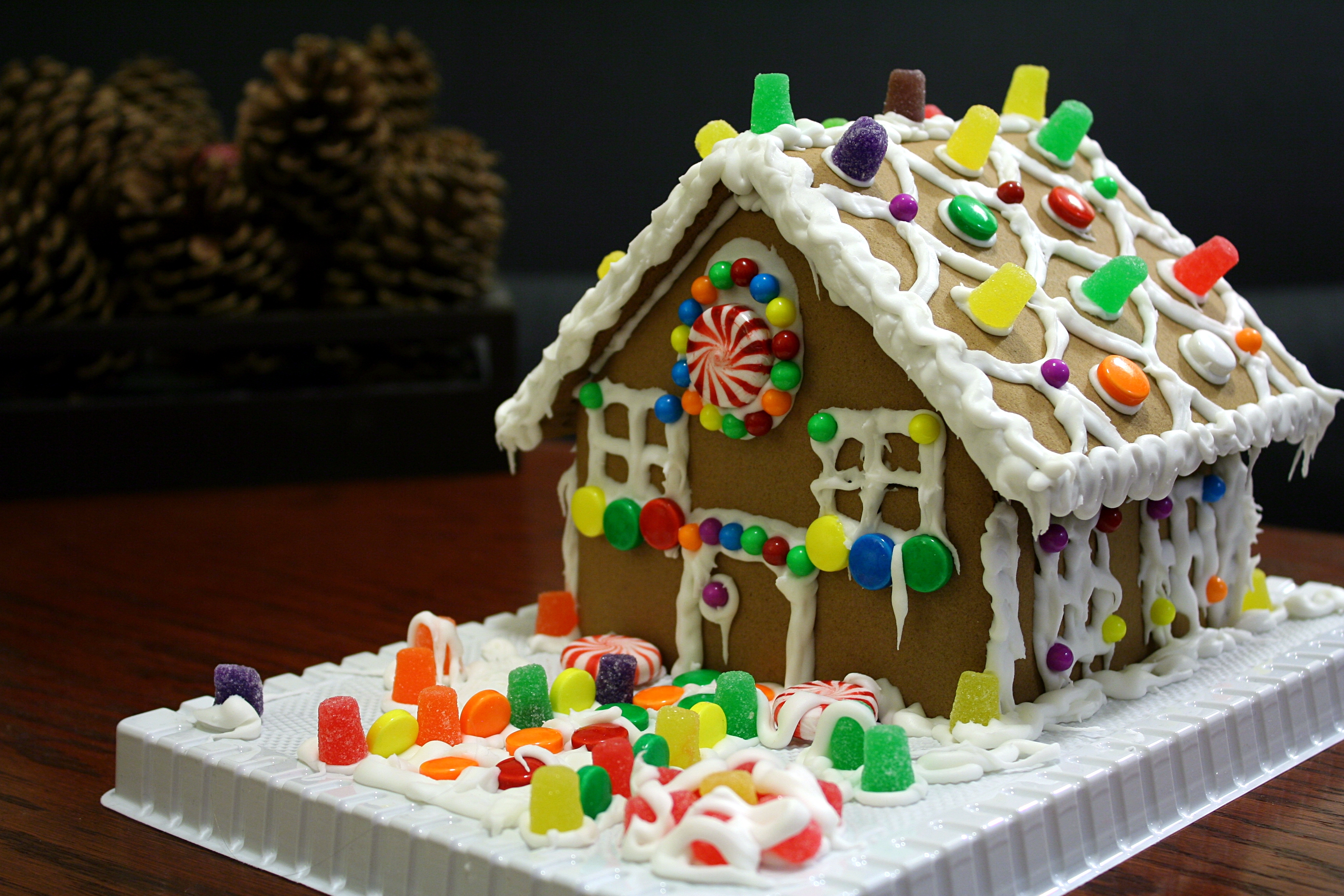
That timing is not just tradition. The USDA’s Food Safety and Inspection Service puts bakery or homemade cookies at two to three weeks at room temperature, two months refrigerated, and eight to twelve months frozen. A gingerbread house is a cookie in an awkward shape, so the same window applies whether you baked it yourself or opened a box.
Keep it somewhere dry and away from a radiator or a steamy kitchen, because moisture is what softens the walls and dissolves the icing. If you want it to last past the window above, freezing works, but decorate after it thaws rather than before.
Whether it is still worth eating is a separate question from whether it is still standing, and we go through both in how long gingerbread lasts.
FAQ
Why did my gingerbread house collapse?
Nearly always because the roof went on before the walls had dried, or because the icing was too thin to hold a vertical joint. Build in two stages with a couple of hours between them and the problem disappears.
What is the best icing to hold a gingerbread house together?
Stiff royal icing, and nothing else. Buttercream never sets hard and the tube in a kit is usually too thin. It should hold a peak when you lift the spoon.
Can I make the gingerbread panels ahead of time?
Yes, and it makes the whole thing easier. Baked panels keep in an airtight tin for several days, and dough keeps in the fridge overnight or in the freezer for weeks.
Do I need a template, or can I freehand it?
You need a template. Freehanded walls do not meet, and the gap only becomes obvious once the icing has set.
Is a homemade gingerbread house actually meant to be eaten?
It can be, within the storage window above. If eating it is the plan, use meringue powder or pasteurized egg product in the royal icing rather than raw egg white, because uncooked icing is not cooked at any point.
How far ahead can I build one for a party?
Two to three weeks is comfortable if it is kept dry. Build the shell early and decorate closer to the day, because the decoration is what looks tired first.
More Gingerbread Recipes
The dough and icing quantities for this build are in our gingerbread dough and royal icing recipes. The panel patterns for it are in the free template library. And a few more things worth knowing before you start are collected in our gingerbread house tips.
Start Your Gingerbread House with Best Gingerbread Houses
Building from scratch is the better version of this project, and it is also the longer one. If this year is not the year for an eleven hour build, a good kit gets you to the decorating in fifteen minutes, and the assembly steps above work exactly the same on kit panels. We keep a running guide to every kit worth buying, sized from a first attempt with young children up to the big scratch-style boxes. Start with the gingerbread house kits we recommend, and come back to this page when you are ready to make the dough yourself.