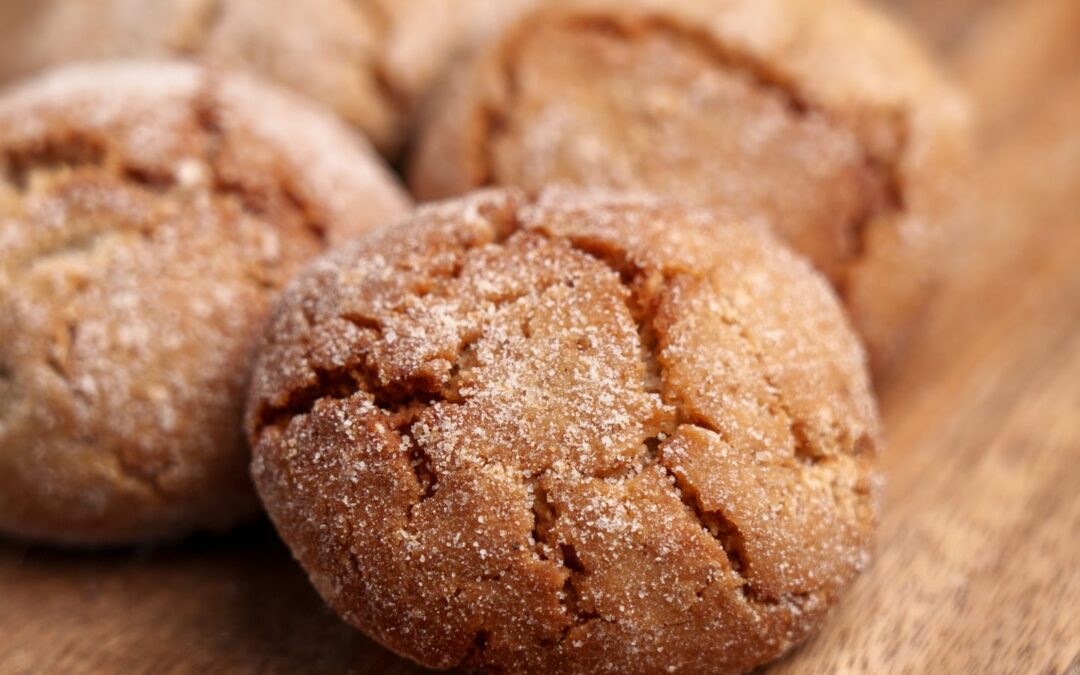
Soft, sugar-rolled gingerbread with real pumpkin in the dough, and a crumb that stays a cookie instead of drifting into muffin territory. That drift is the thing every pumpkin cookie recipe fights and almost none explains.
Canned pumpkin is about 90 percent water. Stir half a cup into a cookie dough and you have added most of a quarter cup of water to a formula that was never written to hold it, and wet dough plus leavening bakes up as cake. This version takes the water out first, with a blotting step that takes five minutes and changes the whole result, then rebalances the fat and molasses around what is left.
Below you get the recipe, the reason the blotting step is not optional, how to steer the texture from chewy to pillowy on purpose, and what to do when a batch comes out wrong.
Pumpkin Gingerbread Cookies
Makes about 24 cookies with a 1.5 tablespoon scoop · Easy · Prep 25 minutes · Chill 1 hour · Bake 11 to 13 minutes at 350F
Total time about 1 hour 37 minutes. Yield is calculated from dough weight, not counted from a bake.
Equipment: a stand or hand mixer, two light-colored half sheet pans, parchment paper, paper towels, a 1.5 tablespoon cookie scoop.
Ingredients
- 1/2 cup (113g) canned pumpkin puree, measured before blotting, not pumpkin pie filling
- 3 cups (360g) all-purpose flour, spooned and leveled
- 1 teaspoon baking soda
- 1/2 teaspoon baking powder
- 1/2 teaspoon salt
- 1 tablespoon ground ginger
- 1 1/2 teaspoons ground cinnamon
- 1/2 teaspoon ground cloves
- 1/4 teaspoon ground nutmeg
- 1/2 cup (113g) unsalted butter, softened but still cool
- 3/4 cup (150g) packed dark brown sugar
- 1/4 cup (85g) unsulphured molasses, not blackstrap
- 1 large egg
- 1 teaspoon vanilla extract
- 1/3 cup (66g) granulated sugar, for rolling
Instructions
- Blot the pumpkin between paper towels until it drops from about 1/2 cup to about 1/3 cup.
- Whisk the flour, baking soda, baking powder, salt and spices together in a medium bowl.
- Cream the butter and brown sugar on medium until lightened, about 2 minutes.
- Beat in the molasses, egg, vanilla and blotted pumpkin until smooth.
- Mix in the dry ingredients on low only until no dry flour remains.
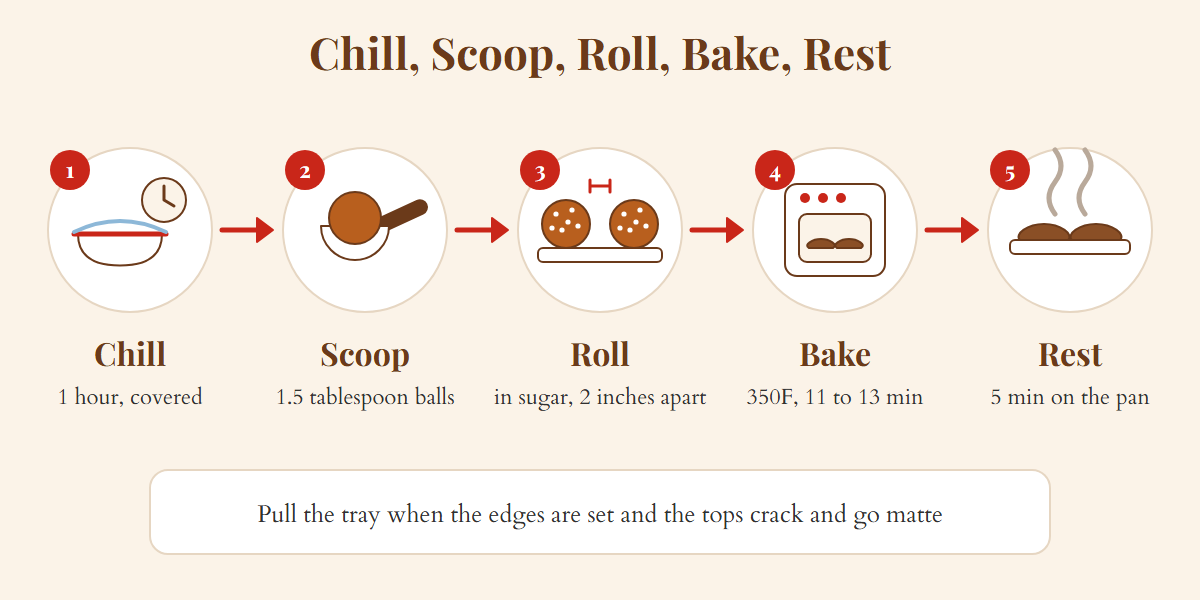
- Chill the dough, covered, for 1 hour.
- Scoop 1.5 tablespoon balls, roll each in granulated sugar and space them 2 inches apart.
- Bake at 350F for 11 to 13 minutes, until the edges are set and the tops are cracked.
Per cookie, approximate: about 137 calories. Calculated from USDA FoodData Central energy values for the listed ingredients divided by the calculated yield. Not laboratory analysis.
Notes: Adapted from our gingerbread cut-out recipe, itself adapted from King Arthur Baking’s gingerbread cut-outs, with a third of the butter and half the molasses replaced by blotted pumpkin, a little baking powder for lift, and a scoop-and-roll method in place of cutting. The blotting step follows In Bloom Bakery’s method for chewy pumpkin cookies. This recipe has not been test-baked by this site.
Why Pumpkin Turns Cookies Into Cake
Pumpkin makes a cookie cakey because it is mostly water, and water plus leavening is cake. The USDA lists canned pumpkin at 90 grams of water per 100 grams, so a half cup carries roughly 100 grams of water into the bowl. In the oven that water turns to steam, the baking soda and powder catch it, and the dough puffs up instead of settling down. Bakers who work with pumpkin often say it plainly: wet dough makes cakey cookies.
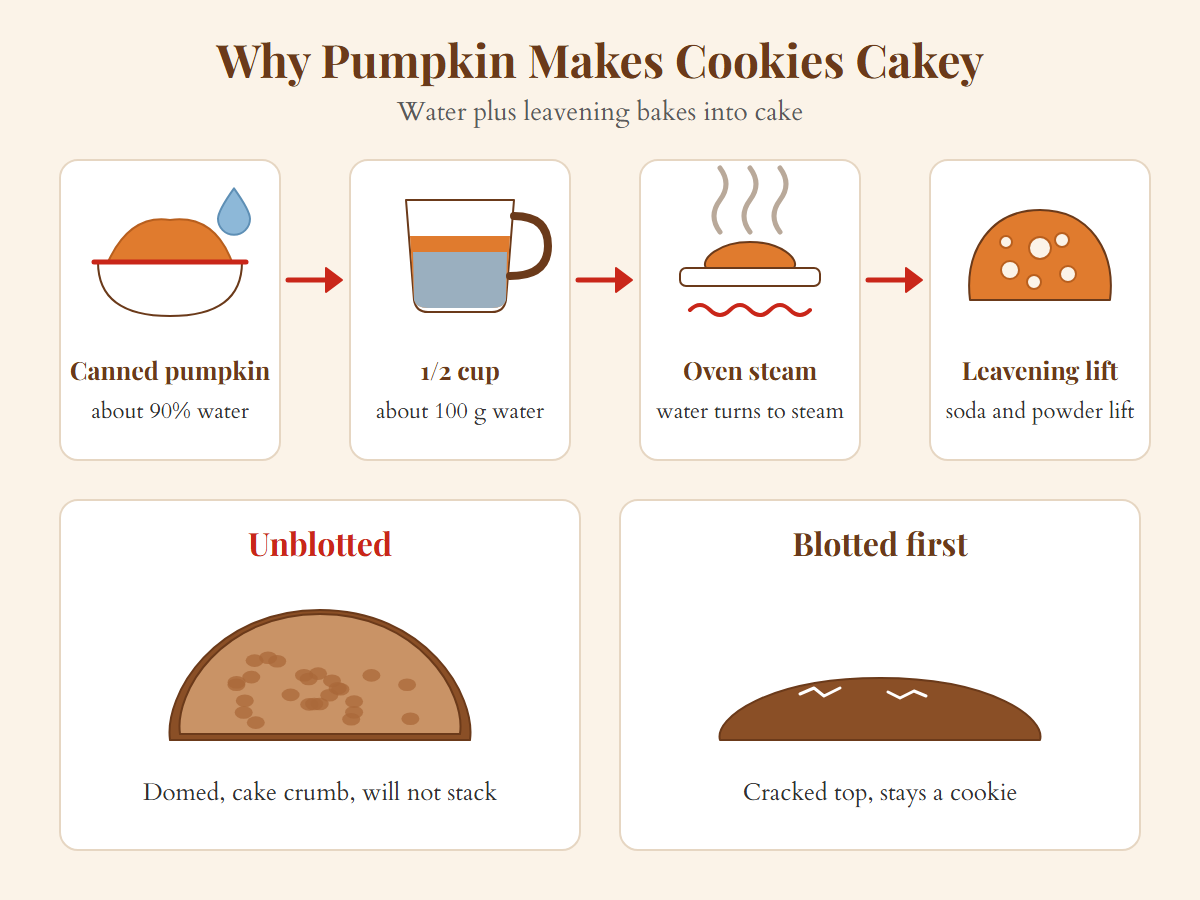
The ranking recipes handle this two ways, and neither says why. Most simply accept the cake and call it soft. One warns that fresh pumpkin makes cookies flat, which is true and is the same water problem from the other direction. What none of them do is remove the water, which is the one change that lets you keep the pumpkin flavor and still get a cookie.
Picture someone baking a double batch for a school fall festival, following a recipe that says soft and chewy, and pulling out forty-eight small orange muffin tops. They taste fine. They are not cookies, they do not stack, and the icing slides off the domes. That result is not a mistake in technique. It is the recipe working exactly as written, because the water was never accounted for.
Blotting fixes it. Spread the pumpkin on a plate, press a folded paper towel onto it, lift, and repeat with a fresh towel until a pass comes away nearly dry. A half cup drops to about a third of a cup and loses roughly a third of its weight, almost all of it water. What stays behind is the pumpkin solids, the fiber and the color and the flavor, which is what you wanted in the first place. Our soft gingerbread cookie recipe gets its softness from molasses and a thick bake; this one gets it from pumpkin fiber, and the two are not interchangeable.
Pumpkin Blot Calculator
How much pumpkin to measure, how much you should have left after blotting, and what changes if you skip it.
| Measure out | |
| You should have left after blotting | |
| Water you are removing, roughly | |
| Paper towel passes |
For information only; results are calculated from published ingredient data, not measured from a bake. Nothing you select is stored or sent anywhere.
Ingredient Notes
Four ingredients carry a real decision here. The rest do what you expect.
Pumpkin means plain canned pumpkin puree, the can with one ingredient. Pumpkin pie filling is a different product: pre-sweetened, pre-spiced, and thinner, at about 71 percent water by USDA’s numbers. One of the top ranking pumpkin gingerbread recipes is written specifically for pie filling and its author says canned pumpkin will not work as a swap. The reverse is also true. If your can says pie filling, this is not your recipe.
Butter is a half cup, down from the three quarters in our cut-out dough, because the blotted pumpkin brings fat-like softness of its own. Keep it softened but cool, around 65F. Greasy, translucent butter has already lost the structure you are about to whip air into.
Molasses is a quarter cup, half what the cut-out uses. Pumpkin and molasses both add moisture and both darken the crumb; run them at full strength together and the cookie goes heavy and damp. Unsulphured, not blackstrap. If you want a darker, more grown-up cookie, swap one tablespoon of the molasses for blackstrap and leave the rest alone.
Baking powder is the one ingredient the cut-out dough does not have, and it is here on purpose. A drop cookie wants a little lift so it cracks on top instead of baking into a dense puck. Half a teaspoon does that. A full teaspoon tips it back toward cake. The gingerbread spice blend here matches the rest of our cookie recipes; if you keep a jar of the blend, use 2 tablespoons in place of the four separate spices.
How to Make Pumpkin Gingerbread Cookies Step by Step
1.Blot the pumpkin
Measure a half cup of pumpkin, spread it on a plate, and press a folded paper towel onto it. Lift, fold a fresh towel, press again. Three passes is usually enough for the texture this recipe is written for. You are done when the pumpkin looks like thick paste and a fresh towel comes away only faintly damp. If you have a scale, you want about 76 grams left from 113.

2.Whisk the dry ingredients
Whisk the flour, baking soda, baking powder, salt and spices together in a medium bowl until the spice is evenly streaked through with no pale pockets. Spoon the flour into the cup and level it; scooping straight from the bag packs in about 20 percent more, and extra flour is how a soft cookie turns tough.
3.Cream the butter and brown sugar
Beat the butter and brown sugar on medium for about 2 minutes, until the mixture lightens a shade and looks fluffy rather than pasty. Stop there. Creaming for five minutes whips in air you do not want, because air is lift and lift is the enemy on this recipe.
4.Beat in the wet ingredients
Add the molasses, egg, vanilla and blotted pumpkin and beat until smooth and one even color, scraping the bowl once. The mixture will look looser than a normal gingerbread dough at this point. That is the pumpkin, and the flour will take care of it.
5.Mix in the dry ingredients
Add the flour mixture on low and mix only until no dry flour remains, then stop. The dough should be soft and slightly sticky, holding a peak when you lift the beater. Overmixing develops gluten, which reads as chew in some cookies and as toughness in this one.
6.Chill the dough
Cover the bowl and chill for 1 hour. The dough firms enough to scoop cleanly and the flour finishes absorbing the moisture. Cold dough also spreads less, which matters here because the butter is already low.
7.Scoop and roll
Scoop 1.5 tablespoon balls, roll each in the granulated sugar until coated, and set them 2 inches apart on parchment-lined pans. Do not flatten them. The sugar coat is what gives you the crackled top; skip it and the cookie is fine but plain.
8.Bake
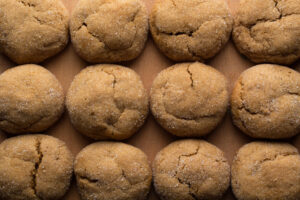
Bake at 350F for 11 to 13 minutes, until the edges are set and the tops have cracked and gone matte. The centers will still look a little soft. Leave them on the pan for 5 minutes before moving them to a rack, because a pumpkin cookie is fragile hot and firms as it cools.
Chewy, Soft or Pillowy, and How to Pick on Purpose
You can steer this cookie’s texture with the blotting step alone, because how much water you leave in decides how much cake you get. The rest of the recipe stays the same.
| Texture | Blot to | What happens |
|---|---|---|
| Chewy, as far as pumpkin goes | About half the starting weight, 5 or more passes | Least water, tightest crumb, edges take on a little chew. Still softer than a plain gingerbread |
| Soft with a little chew, the recipe as written | About two thirds of the starting weight, 3 passes | Tender middle, set edge, cracked top, stacks without fusing |
| Pillowy and cake-like | Do not blot | Domed muffin-top cookie, light crumb. Add 1/4 teaspoon more baking powder if you want it taller |
If you are making these for a cookie tray or a gift box, blot to the recipe. Cakey cookies dome, and domes do not stack or ice well. If you are making them for a kids’ table where they will be eaten the same afternoon, skip the blotting on purpose and lean into the cake; children rarely complain about a soft cookie, and it saves you the step.

Say you are baking for a work potluck and want cookies that survive a car ride and a few hours on a table. That is the recipe as written, and the sugar coat helps here too, because it forms a light crust that keeps the surface from going tacky. Picture instead a Sunday afternoon with a six-year-old who wants to help. Skip the blotting, let them do the sugar rolling, and accept a puffier cookie that is gone by dinner.
Cakey or Chewy Diagnostic
Pumpkin cookies come out wrong in three predictable ways. Answer three questions and get the one change to make on the next batch.
Reasoned from published baking references and the water content of canned pumpkin; no batch was baked to confirm it. Nothing you select is stored or sent anywhere.
Making Them for Halloween or Thanksgiving
These are drop cookies, so they do not take a cutter. If you want pumpkin shapes or gingerbread men for a Halloween tray, use our Halloween gingerbread cookie recipe, which is a cut-out dough built to hold thin shapes and a dark background for icing. What this recipe gives you instead is the flavor of the season and a cookie that is ready to eat the moment it cools.
They do take icing well once fully cool, because the cracked sugar top gives a drizzle something to grip. A thin glaze works; a full flood coat does not, because the surface is uneven. For which icing sets fast enough for a tray that has to travel, our guide to icing for gingerbread cookies sorts the options by drying time.
For Thanksgiving, these sit well next to a gingerbread cake or loaf, which is where most of the pumpkin gingerbread searches actually land. A pumpkin gingerbread loaf and a pumpkin gingerbread cookie share a spice cabinet and nothing else; the loaf wants the water the cookie has to shed.
Troubleshooting
| Symptom | Cause | Fix |
|---|---|---|
| Puffy, cake-like, dry crumb | Pumpkin not blotted, or pie filling used, or butter over-creamed | Blot to about a third off the starting weight; cream for 2 minutes only; use plain puree |
| Flat and spread wide | Fresh pumpkin, which runs wetter than canned; or dough went in warm | Blot fresh pumpkin until nearly dry, or use canned; chill the full hour; bake one test tray first |
| Gummy center, set edge | Pulled early, or scoop larger than the bake time expects | Bake until the tops crack and go matte; use a 1.5 tablespoon scoop; rest 5 minutes on the pan |
| Hard and tough | Flour scooped instead of spooned, or overbaked | Spoon and level the flour; pull the tray when the tops crack; store with a slice of bread |
| No cracks on top | Sugar coat skipped, or dough too cold and dense | Roll every ball in sugar; let scooped balls sit 10 minutes if the dough came out of a very cold fridge |
| Sticky, hard to scoop | Pumpkin brand wetter than average, or chill skipped | Chill the full hour; if still sticky, blot harder next time rather than adding flour |
The pattern across the table is that almost every failure traces back to water, either too much of it in the dough or a bake that did not drive enough of it off. Fix the pumpkin first and most of the rest resolves itself.
Storage Instructions
Store the cookies airtight at room temperature for up to 4 days. Pumpkin cookies hold moisture better than plain gingerbread, so they stay soft longer than the cut-out version, but that same moisture means they go stale toward gummy rather than toward crisp. If they soften too far, five minutes in a 300F oven brings the edges back.
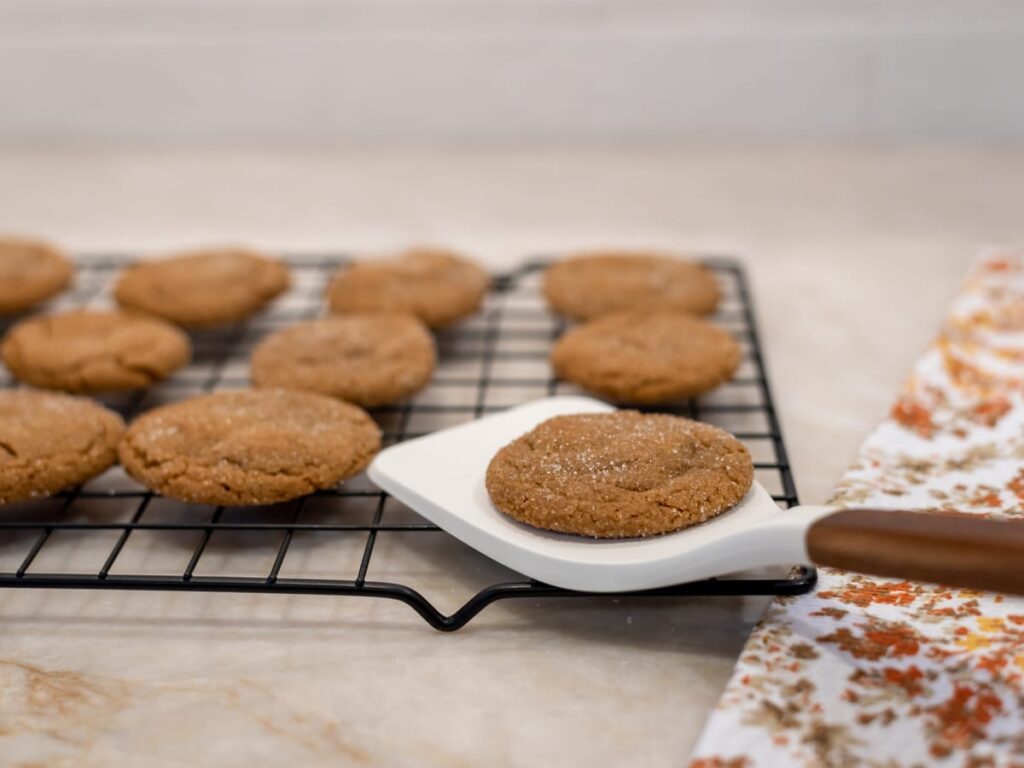
Freeze baked cookies up to 3 months in a bag with parchment between layers, and thaw sealed so condensation forms on the bag rather than the sugar coat. The scooped, sugar-rolled dough balls freeze well too: freeze them on a tray, bag them, and bake straight from frozen with an extra minute or two. That is the more useful of the two, because it means fresh cookies on a weeknight from dough you made on a Sunday.
FAQ
Can I use pumpkin pie filling instead of pumpkin puree?
Not in this recipe. Pie filling is pre-sweetened and pre-spiced, so the sugar and spice amounts here would double up, and it runs thinner than puree. Recipes written for pie filling exist and work; this is not one of them.
Why are my pumpkin cookies cakey?
Water. Canned pumpkin is about 90 percent water, and water plus leavening bakes into cake. Blot the pumpkin between paper towels until it loses about a third of its weight before it goes in the bowl, and cream the butter for two minutes rather than five.
Do I have to blot the pumpkin?
Only if you want a cookie rather than a small cake. Unblotted, the recipe still bakes safely and tastes right; it just comes out domed and pillowy. Some people prefer that. The blotting step is what gives you the choice.
Can I make these as cut-out cookies?
Not this dough. It is too soft to hold an outline even chilled, and adding flour to fix that takes the softness away. For shapes, use our cut-out gingerbread recipe and add a tablespoon of blotted pumpkin for flavor at most; more than that and the shapes blur.
Can I use fresh pumpkin?
Yes, with more blotting. Fresh roasted and mashed pumpkin is looser and wetter than canned and varies from squash to squash. Blot it until almost nothing transfers to a fresh towel, and expect the cookie to spread a little more than the canned version.
How long do pumpkin gingerbread cookies last?
About 4 days airtight at room temperature, or 3 months frozen. They stay soft longer than a plain gingerbread cookie because of the pumpkin fiber, and they go gummy rather than crisp when they finally age.
More Gingerbread Recipes
If you want gingerbread that keeps a shape, start with our gingerbread cookie recipe that holds its shape, which explains why cut-out dough spreads and how to stop it. For a cookie with narrow arms and legs that survive the tray, the gingerbread people recipe is built for exactly that. And if you are choosing between the whole family of doughs, loaves and bars, our guide to picking a gingerbread recipe sorts thirty of them by what each is good for.
Bake Better Gingerbread with Best Gingerbread Houses
A pumpkin cookie that stays a cookie comes down to one step most recipes skip, and now you have it. When the cookies are done and you want to build something for the season, our rated gingerbread house kits tell you which boxes ship icing that will hold a roof up, so the next project goes as well as this one.