Best Gingerbread Houses is a participant in the Amazon Associates program. As an Amazon Associate
we earn from qualifying purchases, at no extra cost to you. A commission never affects what we recommend
or how we rate it.
Three completely different things are called gingerbread. One of them holds a
roof up. One of them is a cookie. One of them is a soft, dark, sticky cake that you eat warm with cream,
and it is the only one of the three that is any good on its own.
They share a spice bill and almost nothing else. The recipe below is the cake,
and because this site publishes the other two as well, it can tell you the thing a hundred cake recipes
cannot: what actually separates them, and why the same ingredients produce a wall panel at one hydration
and a pudding at another.
Everything ranking for this search promises a moist gingerbread cake. Almost
none of them says what produces the moisture, and two of the best use completely different mechanisms to
get there without mentioning it. That is below too, along with which molasses to buy, how to tell when
it is done, and why it is better tomorrow than today.
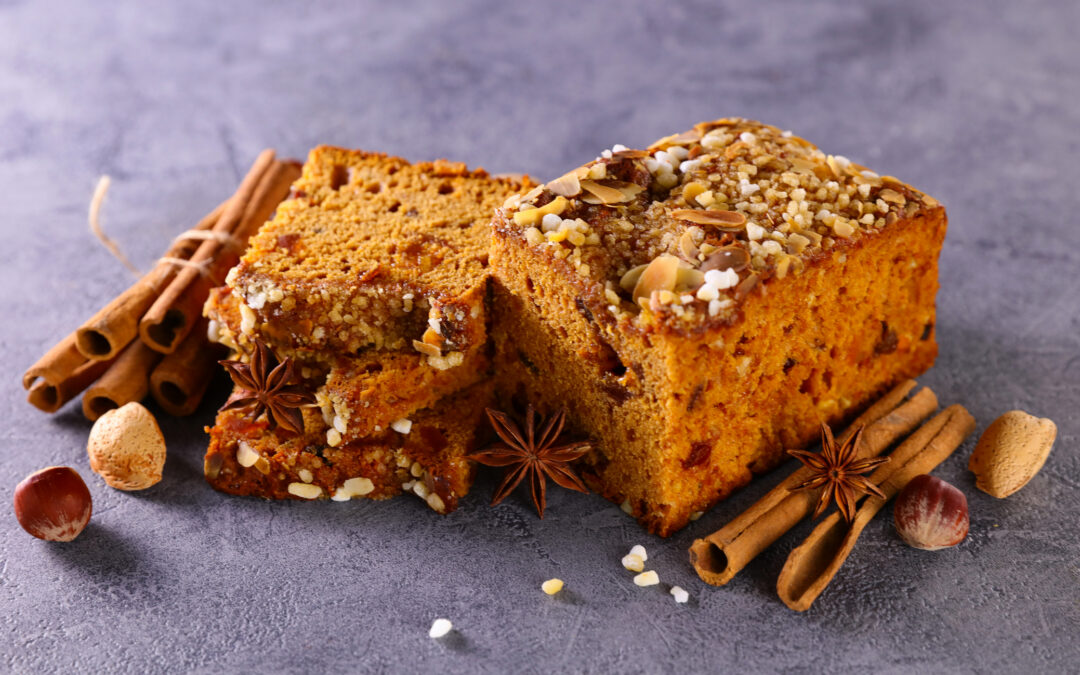
Gingerbread Cake
Makes one 9 inch square cake, 9 to 12 servings · Prep 15 min · Bake 45 to 55 min · Oven 325°F
Ingredients: 1 1/2 cups (180g) all-purpose flour · 1 teaspoon
baking soda · 2 teaspoons ground ginger · 1 1/2 teaspoons ground cinnamon · 1/4 teaspoon ground cloves ·
1/2 teaspoon table salt · 1/2 cup (113g) butter, softened · 1/2 cup (100g) brown sugar, packed ·
1 large egg · 3/4 cup (255g) unsulphured molasses · 3/4 cup boiling water
Method: Heat the oven to 325°F and line a 9 inch square tin.
Whisk the flour, baking soda, spices and salt together. Beat the butter and brown sugar until light,
then beat in the egg and the molasses. Add the dry ingredients and mix only until combined. Pour in the
boiling water and stir. The batter will be alarmingly thin. Pour it into the tin and bake 45 to 55
minutes, until the center springs back and a skewer comes out with damp crumbs rather than
clean.
Why Gingerbread Cake Is Not Gingerbread
The difference is water, and the range is much wider than you would
guess.
All three doughs use the same spices and the same molasses. What changes is how
much flour is holding how much liquid, and that single ratio decides whether you end up with something
you can build a roof from or something you eat with a spoon.
| Which gingerbread | What it is built to do | Roughly | Result |
|---|---|---|---|
| Construction gingerbread | Hold a wall up for weeks | 5 cups flour to 1 egg | Dry, hard, snaps. Barely a food |
| Cookie gingerbread, sorted by difficulty in three cookie recipes at three levels, | Hold a shape and still be pleasant | Middle of the range | Crisp edge, slight chew |
| Gingerbread cake | Taste as good as possible | 1 1/2 cups flour to a cup and a half of liquid | Soft, dark, sticky. Falls apart happily |
The Gingerbread Continuum
Three doughs share a name and almost nothing else. Slide from the wall panel to the pudding and watch what one ratio decides.
Ratios are indicative of the published recipes on this site rather than laboratory hydration figures. The point is the direction of travel: as flour falls and liquid rises, structure is traded for flavor, and there is no setting that gives you both.
Read that column of ratios again. The house recipe carries more than three times
the flour against far less liquid. That is not a variation on a theme, it is the opposite end of a
material. A gingerbread house made from cake batter would be a puddle. A cake made from construction
dough would be a roof tile.
This matters practically, not just as trivia. Every December somebody tries to
build a house from a gingerbread cake recipe because the name matched, and it collapses, and they
conclude they are bad at baking. They are not. They used the wrong end of the continuum.
Picture someone who made this cake in November, loved it, and decides in
December to build a house with the children using the same recipe scaled up. The panels come out of the
oven puffed and soft, they sag as they cool, and by the time the third wall goes on the first one has
folded over. Nothing went wrong in the kitchen. The recipe was never structural and no page told
them.
What Actually Makes It Moist
Two things, and the ranking recipes use them without explaining either.
Molasses holds onto water. It is hygroscopic, meaning it pulls
moisture out of the air and keeps it in the crumb rather than letting it evaporate away. That is why a
molasses cake is still soft on day three when a plain sponge has gone dry, and it is most of the reason
gingerbread cake has a reputation for staying good. Three quarters of a cup of molasses is not there for
color.
The boiling water does two jobs. Gimme Some Oven, one of the
better recipes ranking for this, pours boiling water into the batter and warns you it
will go runny. That warning is well placed, because the batter looks wrong: thin, almost pourable,
nothing like a cake batter should be. It bakes correctly anyway.
What the heat is doing is dissolving the molasses completely rather than leaving
it as ribbons through the mix, and blooming the ground spices so their flavor disperses instead of
sitting in dry pockets. The extra liquid then has nowhere to go but into the crumb. Cold water would add
the moisture and skip both of the other effects.
So do not correct the batter. If it looks too thin, it is right. Adding flour to
thicken it back up is the single most common way this cake gets ruined, and it converts a cake into
something closer to the cookie end of the table above.
Which Molasses to Use
Unsulphured. Not blackstrap.
Molasses comes in grades depending on how many times the sugar has been boiled
out of it. Unsulphured is the first boil: sweet, dark, rounded, and it is what almost every gingerbread
recipe means when it says molasses. Blackstrap is the third boil, with most of the sugar removed and the
minerals concentrated. It is bitter and slightly metallic, and in a cake carrying three quarters of a
cup of the stuff that bitterness is not a note, it is the whole flavor.
This is the same call we make on the
construction
dough, and it matters more here, because a house is mostly looked at while a cake is
entirely eaten.
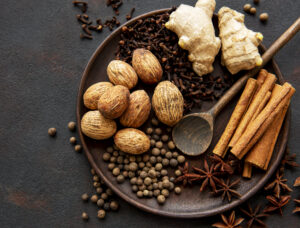
On the spices: the classic four are ginger, cinnamon, cloves and nutmeg, and the
proportions in the recipe above lean deliberately hot rather than sweet. If you would rather mix your own
blend and keep a jar of it, our guide to
gingerbread
spice covers the ratios and the substitution maths.
What You Need
For one 9 inch square cake, 9 to 12 servings.
Materials
- 3/4 cup (255g) unsulphured molasses, not blackstrap
- 1/2 cup (113g) butter, softened, and 1/2 cup (100g) packed brown sugar
- 1 large egg
- 1 1/2 cups (180g) all-purpose flour and 1 teaspoon baking soda
- 2 teaspoons ground ginger, 1 1/2 teaspoons cinnamon, 1/4 teaspoon cloves and 1/2 teaspoon salt
- 3/4 cup boiling water
Tools
- A 9 inch square tin, lined
- A mixing bowl and a whisk
- A skewer or toothpick to test for doneness
How to Make It Step by Step
- Heat the oven to 325°F. Low and slow matters here: a hotter oven sets the outside before the middle of a wet batter has finished rising.
- Whisk the dry ingredients together properly, including the spices and the baking soda. Distributing the soda dry is what stops you finding a bitter pocket of it later.
- Cream the butter and brown sugar until noticeably lighter in color, then beat in the egg and the molasses. The mixture may look curdled. It will come back.
- Fold the dry into the wet and stop the moment it comes together. Gluten development is the enemy of a tender crumb.
- Pour in the boiling water and stir it through. Accept the thin batter.
- Bake 45 to 55 minutes and start checking at 45.
Pan Sizes and Bake Times
The recipe is written for a 9 inch square, which is the shape this cake suits
best. It moves to other tins without changing the ingredients, only the clock.
| Tin | Bake at 325°F for | Notes |
|---|---|---|
| 9 inch square | 45 to 55 min | The default. Best crumb-to-crust ratio |
| 9 by 13 inch | 30 to 38 min | Shallower, so faster. Good for a crowd |
| Two 8 inch rounds | 28 to 34 min | For a layer cake with cream cheese frosting between |
| Bundt | 50 to 60 min | Grease it thoroughly. A sticky batter in a detailed tin is a gamble |
| 12 cup muffin tin | 18 to 22 min | Fill two thirds. They dome less than a standard muffin |
Which Tin, and How Long
One batch of batter, five shapes. Bake time follows depth rather than volume, which is why the biggest tin is not the slowest.
Times are for a 325°F oven and are a starting range, not a guarantee. Judge doneness by the crumb rather than the clock: damp crumbs on the skewer and a center that springs back. A skewer that comes out perfectly clean means this cake is already slightly overbaked. Nothing you select is stored or sent anywhere.
The rule underneath the table is that bake time follows depth, not volume. A
shallower tin of the same batter finishes considerably sooner, which is why the 9 by 13 is nearly twenty
minutes faster than the 9 inch square despite holding more.
Knowing When It Is Done
A clean skewer means you have overbaked it.
This is the one place where standard cake advice actively works against you.
Because the batter is so wet and the molasses holds so much water, a skewer that comes out completely
clean is telling you the crumb has given up more moisture than it should have. What you want is damp
crumbs clinging to it and no wet batter.
Two better cues. The center should spring back when pressed lightly rather than
holding a dent. And the edges will have pulled a millimeter or two away from the sides of the tin, which
happens a little before the middle is finished, so use it as a warning to start checking rather than as
the finish line.
Let it cool in the tin for at least twenty minutes. This cake is structurally
weak while hot, which is the whole point of it, and turning it out early is how it tears.
It Is Better on Day Two
Bake it the day before you want it. This is genuinely the best piece of advice on
this page and no recipe post will give it to you, because recipe posts want you to bake the thing
today.
A freshly baked gingerbread cake is good. A day-old one is better: the crumb
settles, the moisture that was concentrated near the middle redistributes evenly, and the spices, which
are still quite sharp straight out of the oven, round off into each other. The difference is not
subtle.
- Cool it completely in the tin. Wrapping a warm cake traps steam and makes the top sticky.
- Wrap it in the tin, or transfer it whole to an airtight container. Do not slice it first: every cut face is a place moisture escapes from.
- Keep it at room temperature, not in the fridge. Refrigeration dries cake crumb faster than a sealed tin on the counter does.
- It holds three to four days like this, and freezes well for three months wrapped twice.
Say you are hosting on a Saturday. Bake it Thursday evening, wrap it whole once
it is cold, and do nothing else to it. Saturday morning you slice it and warm the slices for fifteen
seconds each, and it is a better cake than one you would have got up early to make. For how long
gingerbread in its other forms keeps, which is a very different answer, see
how long
gingerbread lasts. A plate of gingerbread men alongside it covers the people who wanted a cookie.
What to Serve With It
Warm, with something cold and slightly sour against it.
Lightly whipped cream is the classic and the best. Cream cheese frosting is the
American standard and works particularly well on the layer-cake version, because the tang cuts the
molasses. Lemon sauce is the old English answer and is better than it sounds. Vanilla ice cream on a warm
slice needs no defending.
What it does not want is more sweetness. The cake is already carrying three
quarters of a cup of molasses and half a cup of brown sugar, and a sweet glaze on top of that flattens
it. If you want a glaze, make it sharp: lemon juice and icing sugar, thin enough to soak in. Our
royal
icing is the wrong tool here, being built to set hard rather than to taste of anything.
If you have arrived here wanting gingerbread in some other form entirely, our
roundup of 30
gingerbread recipes covers the cookies, the loaves, the bundts and the rest, sorted by what
you are actually in the mood for.
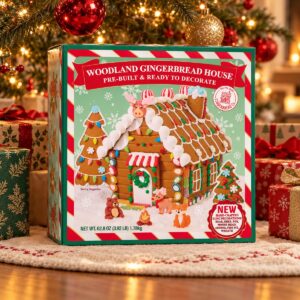
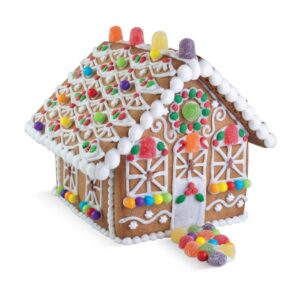
Build Your Gingerbread House with Best Gingerbread Houses
Gingerbread cake is the version of this you eat. The version you build is a
different recipe with a different job, and if the cake has put you in the mood for the other kind, our
rated comparison of
gingerbread house
kits covers thirty one boxes graded on how well they actually hold together.