Gingerbread is the only thing in your kitchen that can be four weeks old, hard as a roof tile, and still completely safe to eat. It is also the only bake you might reasonably want to keep on a shelf until next December. That combination is exactly why the usual shelf life answer never quite fits.
This is our plain language guide to how long gingerbread lasts, covering both the eating question and the keeping question. Where the answer touches food safety we went to the primary sources instead of repeating what the recipe blogs say, so the mold guidance below comes from the USDA and the dog section comes from the Pet Poison Helpline, the FDA and the ASPCA.

If you built a kit with your kids last weekend, you probably want to know when it stops being a snack and starts being a decoration. If you have a bowl of dough in the fridge and no time to bake tonight, you want to know whether tomorrow is still fine. And if you spent ten hours on a showpiece you never intended to eat, you want to know how long it will keep looking that good.
By the end you will know how long every form of gingerbread lasts, how to tell stale from spoiled, whether the house on your counter is worth eating, and how to keep one for years if that is what you are after.
We have grouped it into four parts: the two clocks and the numbers behind them, how to tell when gingerbread has actually gone off, what to do with a decorated house, and how to store or preserve whatever you have. So let’s start with the thing that makes gingerbread confusing in the first place. It is running two clocks at once.
Gingerbread Runs on Two Clocks
Gingerbread has two separate lifespans, and nearly every argument about it comes from people measuring different ones. The eating clock runs from days to a few weeks depending on the form. The display clock runs from weeks to months. A decorated gingerbread house can be long past the point of being pleasant to eat while still being months away from looking bad on a mantel.

Here is every common form of gingerbread on both clocks at once.
| Form | Safe to eat | Tastes best within | Looks good on display |
|---|---|---|---|
| Raw dough, refrigerated | 2 to 4 days | 3 days | Not a display item |
| Raw dough, frozen | About 3 months | 2 months | Not a display item |
| Baked cookies, sealed | 2 to 3 weeks | 2 weeks | About 2 weeks uncovered |
| Baked cookies, frozen | About 3 months | 2 months | Clock paused |
| Gingerbread cake or loaf | 5 to 7 days | 4 days | About 2 days |
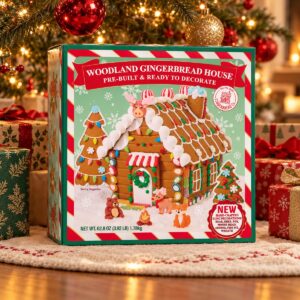
| Unopened kit | Printed date, often up to 12 months | Printed date | Sealed in the box |
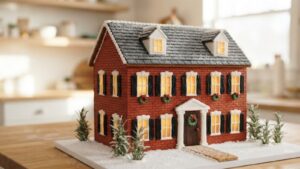
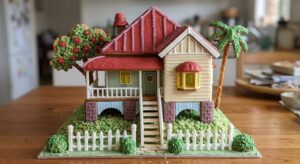
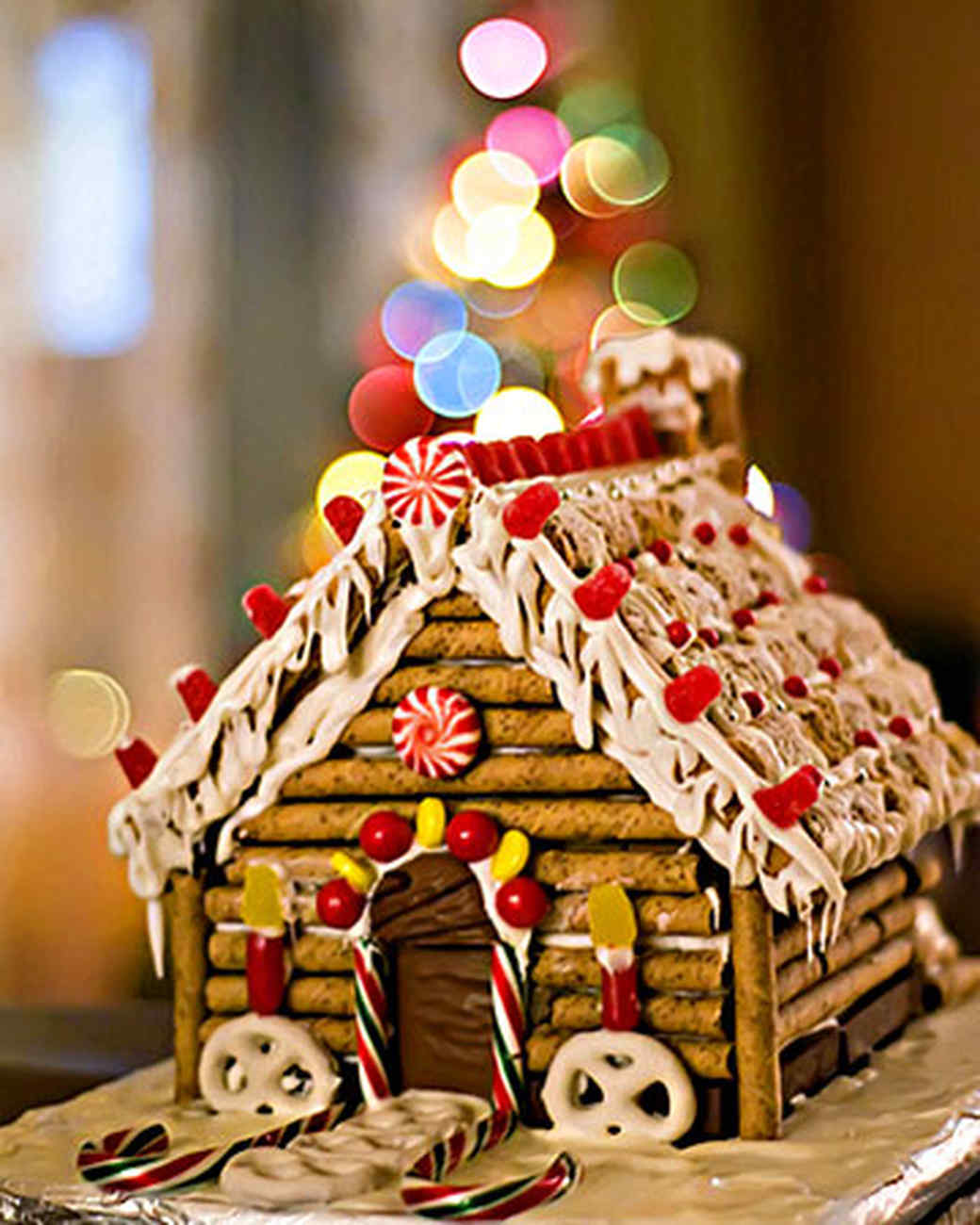
| Decorated house | 3 to 4 weeks | 1 to 2 weeks | 2 to 3 months indoors |
One thing worth saying out loud, because no other page on this topic does. The published sources disagree about freezing. One widely cited shelf life reference puts frozen gingerbread at 6 to 8 months. Google’s own AI summary says 2 months for cookies. Several recipe sites say 3 months. We have used 3 months above because it is the number you can plan around safely, and because past that point the limiting factor stops being safety and becomes freezer burn and flavor loss.

Picture a family that builds a kit on December 8. By the 22nd the house is still technically safe to eat and nobody in the house wants to. By mid-January it still looks fine from across the room, and by then it has been outside the eating window for weeks. Nothing went wrong. The two clocks simply ran at different speeds, which is what they always do.
The Two-Clock Calculator
Gingerbread runs on two clocks at once: how long it stays good to eat, and how long it still looks good sitting out. Tell it what you have and it works out both.
Ranges are typical guidance drawn from published shelf-life references and this article, not a food-safety test of your specific batch. Recipes, kitchens and climates vary, so trust your eyes and nose over any calendar. This is general information, not professional food-safety advice, and it is not a substitute for guidance from a food-safety authority. Nothing you enter leaves your browser or is sent anywhere.
Can You Actually Eat a Gingerbread House?
You can, and in the first week or two you might even want to. After that, our answer is the one people give each other in forum threads and the recipe sites will not print. No. A decorated gingerbread house is a centerpiece that happens to be edible, not a dessert that happens to be shaped like a house.

The reason is in the dough. House panels have to hold their own weight plus a roof without bending, so they are rolled thinner and baked longer and harder than any cookie you would choose to eat. The same bake that makes a panel strong makes it dry, dense and dull. Then it sits out for a week collecting dust while people lean over it. Then there is the candy you decorate with, which has been going sticky the entire time.
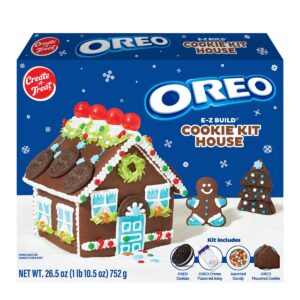
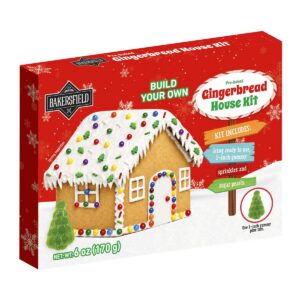
This is the second place your situation changes the answer. If you built from a store bought kit, treat it as decoration from the start. Kit panels are engineered for shelf life and structural strength, and they were never going to be the good part. If you mixed and baked your own dough and deliberately baked it on the softer side, you have a real eating window of about a week, and you should use it. Build it, photograph it, eat it that weekend.
Picture a school gingerbread contest. The houses go up on a Monday, get judged on a Friday, and sit under gym lights all week while a few hundred people lean in for a closer look. By the time anyone is allowed to touch one it has been out for five days, handled, breathed on and warmed. It is still technically food. Nobody sensible eats it.
Two things on a finished house are not food at all, and they are the ones people forget. Fairy lights, ribbon, ornaments and anything attached with craft glue rather than icing all have to come off before anyone eats a panel, and on a house built by a child nobody may remember what went on where. If you cannot account for every decoration, treat the whole thing as decoration.
The icing is worth one thought too. Traditional royal icing is made with raw egg white, and for anything served without cooking the FDA advises using pasteurized eggs or a pasteurized egg product. Meringue powder does the same job and is what most kits and most of our recipes use, so if you built from a kit this is almost certainly already handled. If you made your icing from scratch with fresh whites and you are feeding it to small children or anyone pregnant or elderly, it matters.
If you want to know exactly which part of your house is failing and when, work through it piece by piece.
The Gingerbread House Autopsy
A decorated house is not one thing with one shelf life. It is six or seven materials, each failing on its own schedule. Tap any part of the house to see how long it lasts and what takes it out first.
Timings describe a typical decorated house kept indoors, out of direct sun and away from steam, and are drawn from this article's sources and from what builders consistently report. Your recipe, icing and climate will shift them. General information only, not professional food-safety advice. Nothing you click is recorded or sent anywhere.
Why Gingerbread Outlasts Almost Every Other Cookie
Gingerbread keeps longer than most baked goods because of molasses. Molasses is an invert sugar and it is hygroscopic, which means it grabs water and holds onto it. That does two useful things at once. It keeps the crumb soft, and it ties up the free water that mold and bacteria need in order to grow. A dry, sugar heavy bake with very little available water is a hostile place to be a microbe.
That is also why a gingerbread cake is the fastest clock on the table above and a house panel is one of the slowest. Same spices, completely different amount of water left in the finished bake. When you bake the panels for a house you roll them thinner and leave them in longer on purpose, which drives out more moisture and buys you months instead of days.
The same property has a downside nobody warns you about. If molasses pulls water in, it will pull water out of the air too. In a humid room your crisp panels slowly soften and start to bow, and the seams of your royal icing recipe go tacky. Gingerbread does not really rot in a warm kitchen. It sags.
This is the first place the right answer depends on your situation. If you live somewhere dry, or you run heating through the winter, the display numbers in the table are realistic and you can probably beat them. If your kitchen steams up, or you live near the coast, cut the display column by roughly half and plan on the house looking tired sooner. The eating clock barely moves. The looking-good clock moves a lot.
Say you live two blocks from the water and you build a house in early December. You do everything right. By New Year the roof has a gentle bow in it and the gumdrops have started weeping little sugar tracks down the walls. Nothing spoiled and you did nothing wrong. The house simply drank the room.
How Can You Tell if Gingerbread Has Expired?
Before the list, one distinction that saves a lot of good gingerbread from the bin. Stale and spoiled are not the same thing. Stale gingerbread has lost moisture and gone hard. It is disappointing, not dangerous. Spoiled gingerbread has grown something. Only one of those is a reason to throw it out. There are four things to check.

- Expired gingerbread is extremely hard and no longer edible.
- The smell of the gingerbread is faint compared to typical gingerbread.
- Visually, gingerbread becomes discolored, changing to a lighter brown.
- Lastly, if there is the presence of mold, the gingerbread is expired and should be thrown away.
Of those four, only mold settles the matter on its own. The first three describe gingerbread that is old, and old gingerbread is mostly a texture problem. Mold is different, and it is not something you can cut around. The USDA's guidance on molds in food is that on soft and porous foods you only ever see part of what is there, because the root threads have already grown down into the food and can carry toxins with them. Bread is the example they name. So if you find fuzz anywhere on a gingerbread house, including underneath it on the base board, the whole thing goes. Not the moldy corner. The whole thing.

How Long a Gingerbread House Lasts as Decoration
Kept indoors, out of direct sun and away from steam, a decorated gingerbread house holds its looks for roughly two to three months. Builders who keep houses past the season regularly report them staying intact for three to four months with no sealant at all, purely because royal icing dries as hard as mortar. Two to three months is the number to plan around. Anything past that is a bonus.

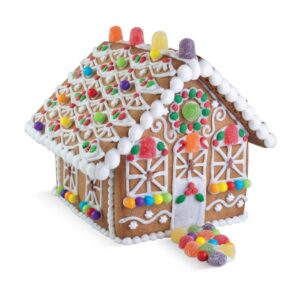
What fails first is never the gingerbread. It goes in this order: the powdered sugar dusting blotches within about a week, the soft candy starts sweating and weeping sugar down the walls a few days after that, then the icing loses its crispness at the seams, and only then do the panels begin to bow. If your house collapses, the icing let go. The gingerbread almost never gives out first.
Two practical things the guides skip. A house sitting out is collecting dust, and if you leave it somewhere warm it will attract ants. If you want to keep it on show for months rather than weeks, a clear display case or a large clear storage box turned upside down over it solves both problems without sealing in moisture. Our tips for building a house that holds up cover the construction side, and the decorating ideas are worth a look if you want decorations that age well rather than decorations that sag.
How to Store Your Gingerbread Properly
One thing to settle before you start. These steps are for gingerbread you intend to eat. If you are storing a decorated house you want to keep looking good, do close to the opposite, and the next section covers that. Airtight is exactly wrong for a display piece, because it traps the moisture that grows mold.


- Wrap your gingerbread in saran, plastic wrap or tin foil. Double wrap your gingerbread to ensure its maximum freshness.
- Place your gingerbread in a tin or airtight plastic container. A cookie tin, a lidded storage box, or a zip top freezer bag with the air pressed out all work.
- Mark your container with the current date and its contents.
- Place in a refrigerator or freezer, all depending on when you will like to eat your gingerbread. A freezer will be the best option if you will not use the gingerbread for more than a week.
Keeping a Gingerbread House Year After Year
Yes, this is possible, and the step people skip is the one that decides whether it works. Let the house dry out completely before you seal anything. Sealing a house that still holds moisture traps that moisture against the base board, and you spend the following autumn discovering mold under your keepsake.

- Leave the finished house somewhere cool and dry with air moving around it for at least two weeks. No box, no bag, no wrap.
- Lift it and check underneath before you go further. The base board is where moisture collects and where mold shows up first. If anything looks damp, give it another week.
- Seal it with a food safe shellac or a clear acrylic or polyurethane varnish, in several thin coats rather than one heavy one, letting each coat dry fully. Never use hairspray. It turns up constantly in craft advice and it is not food safe on something children will handle.
- Store it in a rigid box with a few food safe silica gel packets, somewhere climate controlled. Not a loft, not a garage, not a basement.
There is a trade here and it is worth naming. Once you have sealed a house it is no longer food, and it never will be again. You are choosing the display clock and giving up the eating clock permanently. For a house somebody put twenty hours into, that is usually the right trade. For a kit the kids threw together on a Sunday, it is not.

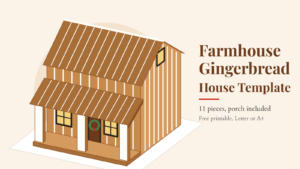
If you know from the start that a house is going to become a keepsake, build it for that. Thicker panels, a rigid base, and a sturdier house template with fewer overhangs will survive storage far better than a delicate build with a lot of unsupported roof.
What to Do If Your Dog Eats the Gingerbread House
First, the thing most articles get backwards. The warning you see everywhere is about nutmeg, and it is overstated. Nutmeg does contain myristicin, which is genuinely toxic to dogs in quantity, but the Pet Poison Helpline is direct about the dose: the small amount of nutmeg used in recipes is very unlikely to cause serious toxicity, though it may cause mild stomach upset. A dog that got a mouthful of gingerbread wall is very probably not facing a nutmeg problem.
The real risks are the things stuck to the house.
- Sugar free candy is the dangerous one. If it contains xylitol, the FDA's guidance is that poisoning can start within 20 minutes and can lead to liver failure. This is an emergency, not a wait-and-see.
- Chocolate decorations, which are a familiar risk and depend on the type and the size of the dog.
- The sheer volume of sugar and fat, which is the most likely outcome by far and usually means an unhappy night rather than a crisis.
Our full guide to whether dogs can eat gingerbread covers each topping and has a checker that sorts the call for you.
If you are worried, call your vet or the ASPCA Animal Poison Control Center on (888) 426-4435. It runs 24 hours a day, every day, and a consultation fee applies. Have the candy wrappers in front of you when you call, because the first thing they will ask is what was on the house.
Say you come home to a basset hound with a gumdrop stuck to his chin and half the roof missing. The useful question is not whether gingerbread is toxic to dogs. It is what was on that house: was there any sugar free candy in the build, was there chocolate, and roughly how much did he get. Those three answers decide whether you are making a phone call or just cleaning up.
Build Your Next One With Best Gingerbread Houses
Knowing which clock you are on changes how you build. A house that is going to be eaten should be small, softer baked, and finished in the first week. A house that is going on the mantel until February should be built for structure, with decorations chosen because they age well rather than because they looked good on day one. Either way it starts with what you build from. Browse our roundup of gingerbread house kits to find one suited to the job you actually have in mind.