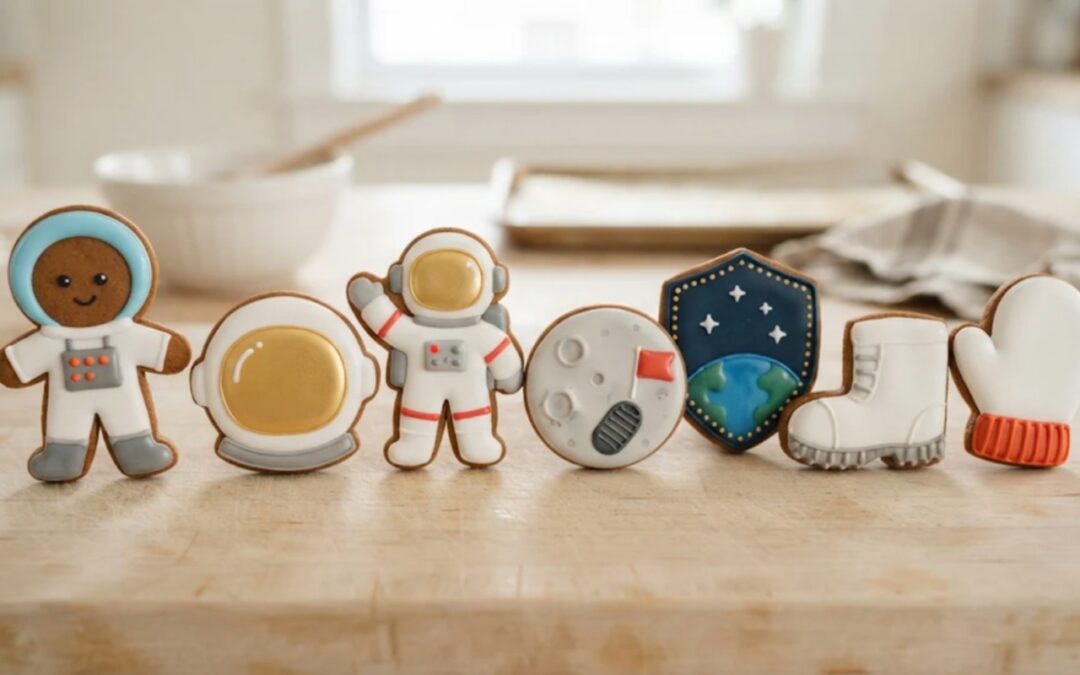
Astronaut gingerbread cookies are a whole tray of space crew: a gingerbread astronaut grinning inside a bubble helmet, a gold visor helmet, a spacewalker waving, a boot print on the Moon, a mission patch, a moon boot and a puffy glove. One white suit, done seven ways, reads as “astronaut” from across a party table.
The set runs on one free printable template, a cut-out dough that keeps a waving arm in one piece, the royal icing cure times from our icing pages and a handful of real spacesuit facts. It is written for a parent planning a space birthday, a teacher running a space unit, and anyone who wants a cookie tray that looks like a launch crew.
You get a palette, three steps for each design, a picker and a party batch planner. Start with the recipe card, then the shapes.
Astronaut Gingerbread Cookies
Makes about 40 cookies, a mix of 2 1/2 to 3 inch shapes · Prep 30 minutes · Bake 11 minutes · Chill and freeze 2 hours 30 minutes · Icing cure overnight, 8 hours
Total time about 11 hours, most of it hands off. The overnight cure is what lets you bag them or stack them in a box.
Equipment: Stand or hand mixer, Rolling pin with 1/4 inch guides, The free template and a small paring knife, Two light-colored half sheet pans, Parchment paper, Piping bags with small round tips.
Template: free 1-page PDF, US Letter, a gingerbread astronaut, a space helmet, a spacewalker, a moon round, a mission patch, a moon boot and a space glove, with piping guides and a 1 inch test bar.
Ingredients
Dough
- 3 cups all-purpose flour, 360 g, spooned and levelled
- 1 teaspoon baking soda
- 1/2 teaspoon salt
- 1 tablespoon ground ginger
- 1 1/2 teaspoons ground cinnamon
- 1/2 teaspoon ground cloves
- 1/4 teaspoon ground nutmeg
- 3/4 cup unsalted butter, 170 g, softened but still cool
- 3/4 cup dark brown sugar, packed, 150 g
- 1/2 cup unsulphured molasses, 170 g
- 1 large egg
- 1 teaspoon vanilla extract
Royal icing, a double batch
- 1/4 cup meringue powder
- 1/2 cup cold water, plus a few drops more for flooding
- 1/2 teaspoon cream of tartar
- 4 cups confectioners sugar, unsifted, 454 g
- Gel food coloring in the shades from the palette chart, including a gold or a yellow plus a touch of brown for the visors
- For the no-bake helmet rounds: store-bought round cookies, white frosting and a tube of navy or dark blue decorating gel, optional
Method
- Make the dough: whisk the flour, soda, salt and spices, cream the butter and brown sugar until lighter in color, beat in the molasses, egg and vanilla, then mix in the dry ingredients on low and stop the moment no dry flour remains.
- Chill the dough as two flat wrapped discs about an inch thick for 2 hours, until a pressed thumb leaves a clean dent rather than a smear.
- Roll each disc to 1/4 inch between two sheets of parchment, so the dough never picks up extra flour.
- Cut the astronaut, helmet, spacewalker, moon, patch, boot and glove round the template with a paring knife held upright, cutting the waving arm, the thumb and the patch point last.
- Freeze the cut shapes on the parchment-lined pan for 30 minutes, until the waving arm and the patch point feel hard and lift without bending.
- Bake at 350F for 9 to 11 minutes straight from the freezer, until the surface looks matte and the edges are set, then cool completely on the pan.
- Mix the icing to stiff peaks, keep a big bowl for snow white, and tint the rest into the colors your designs need from the palette chart.
- Flood the base colors, leave the cookies flat overnight until the flood does not dent under a fingertip, then pipe the helmet rings, shine lines, stripes, treads, stars and dot eyes and give them about 2 hours before bagging.
Notes: times are worked out from the set times on our icing pages, not timed on a build, and ovens vary, so judge by the surface rather than the clock. The yield is an estimate: a batch rolls to about 162 usable square inches after scraps, and the seven shapes average about 4 square inches. Bake one test tray before you shop for a big party. Dough adapted from King Arthur Baking gingerbread cut-outs.
What Makes a Cookie Read as an Astronaut
An astronaut is a white suit, a helmet and one bright detail, which is good news for anyone holding a bag of royal icing. Each shape is built round the thing people spot first, and most of those details exist for a real reason.
| Piece | The detail that gives it away | What the template does with it |
|---|---|---|
| Gingerbread astronaut | A round bubble helmet over a chunky white suit | A big round head with a window guide, so the gingerbread face shows through like glass |
| Space helmet | A huge visor with a shine across the top | A wide dome with a rounded ear bump on each side and a wide curved collar, with a visor oval and a shine curve |
| Spacewalker | A backpack at the shoulders and one arm waving | Square shoulders for the pack and a raised arm cut thick enough not to snap |
| Moon footprint and flag | A boot print in grey dust | A plain round with a tread print, a flag pole and a blank flag |
| Mission patch | A shield with a stitched edge | A stitch line inside the edge, the curve of the Earth and four stars, with no lettering |
| Moon boot | A chunky sole with deep treads | A tall padded shaft, lace bars down the front and a row of tread marks |
| Space glove | A puffy hand on a big cuff | A mitten with the thumb out and a cuff line, fingers piped rather than cut |
The white is not just a look. The spacewalk suits worn on the space station are white to reflect heat and to stand out against the blackness of space, and red stripes on one suit tell two spacewalkers apart. That is why the spacewalker in this set gets red bands across its arms and knees.
The gold visor is real too. NASA notes that the spacesuit helmet’s visor is coated with a thin layer of gold that filters out the sun’s harmful rays during spacewalks, so a blank gold oval on a white helmet looks right to anyone who has seen a spacewalk photo.
Orange has its place. The orange suits shuttle crews wore for launch and landing were nicknamed pumpkin suits, and the color lets rescue crews spot a crew member who has bailed out over the ocean. The glove cuff and the chest buttons borrow that launch orange.
The patch and the boot print round it off. Astronaut Gordon Cooper pushed for the first NASA crew patch for Gemini 5, and each crew still directs the design of its own, so a blank patch is an invitation for a child to design theirs. And because the Moon has no wind, astronauts’ footprints will stay on the Moon for millions of years, which is the fact to share while the moon cookies go round.
One Template, 7 Astronaut Shapes
Every baked design starts as one of seven cookies on a single page, each about 2 1/2 to 3 inches, a good size for a favor bag.
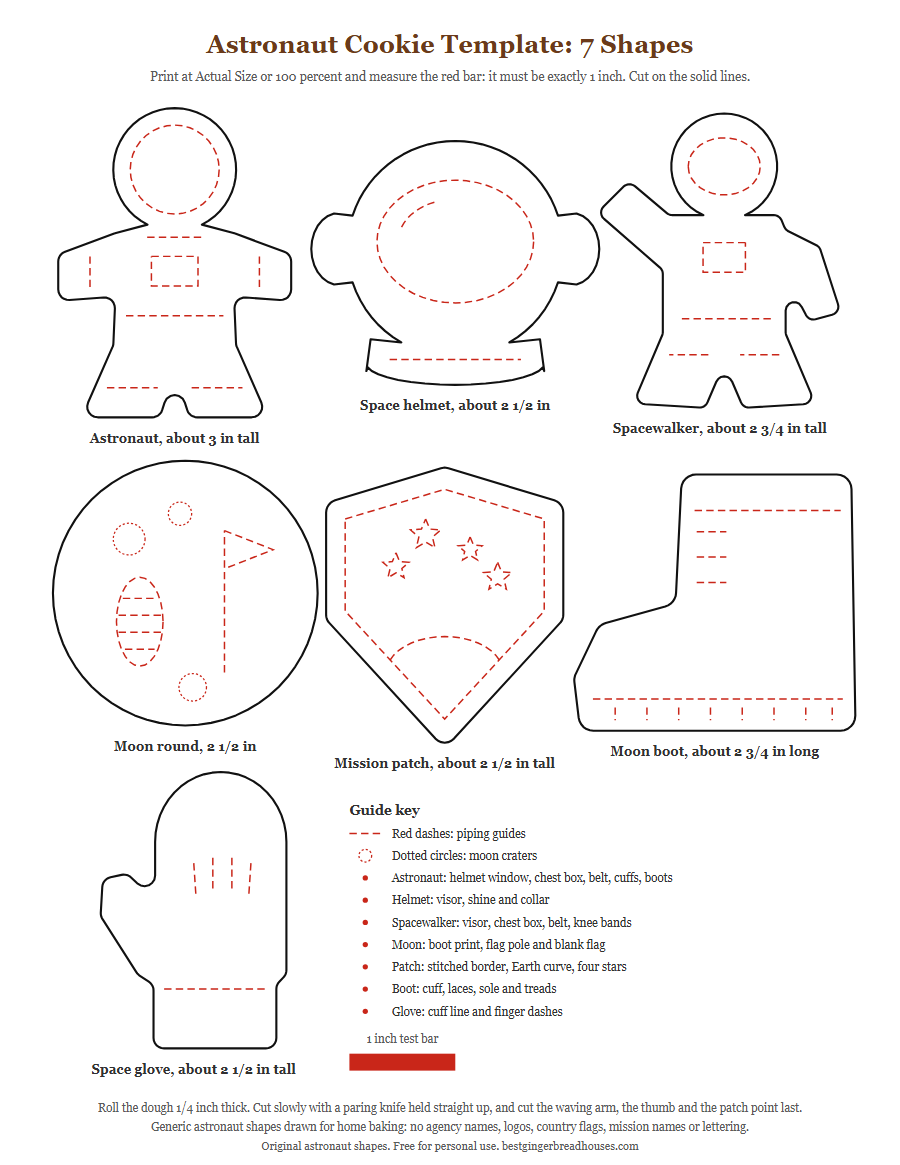
The free template prints on one US Letter page at 100 percent. Measure the red bar first: if it is not exactly 1 inch, your printer scaled the page.
The red dashed lines are piping guides, not cut lines: the helmet window, visors, chest boxes, belts, knee bands, the boot print, the stitched border and the treads. Dotted circles mark the three craters on the moon.
A script checked the parts most likely to snap. The spacewalker’s waving arm is 0.45 inches thick, the lower arm 0.66 inches, the glove’s thumb 0.70 inches, and the patch is still 0.59 inches wide just above its point, and every guide sits at least 0.06 inches inside its cut line. The astronaut’s helmet window is 0.84 inches across, room for two dot eyes and a small smile. The astronaut stands about 3 inches tall, the moon round is 2 1/2 inches across and the glove is the narrowest shape at 1 3/4 inches wide.
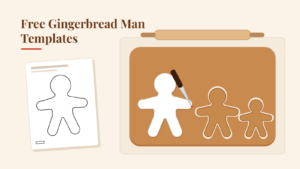
If you own a gingerbread person cutter, it works for the astronaut and the spacewalker; pipe the helmet ring freehand. For rockets, planets and a little alien to round out the tray, our outer space cookie set with a rocket, a ringed planet and a flying saucer uses the same dough, so one bake can cover both.
Icing Palette for All 8 Designs
Each row lists the colors one design needs and what each covers, so you can pick the pieces you want and mix only those bowls. Gel brands vary, so tint a spoonful and test it on a scrap cookie first.
| Design | Shape | Colors and what they cover | Difficulty |
|---|---|---|---|
| The Gingerbread Astronaut | Astronaut template | snow white for the suit, arms and legs; sky blue for the helmet ring and shine line; moon grey for the chest box, belt, cuffs and boots; launch orange for the chest box buttons; charcoal black for the dot eyes and smile | Hard |
| The Gold Visor Space Helmet | Space helmet template | snow white for the helmet shell and shine; visor gold for the blank visor; moon grey for the collar | Medium |
| The Spacewalk Astronaut | Spacewalker template | snow white for the suit and helmet; visor gold for the blank visor; moon grey for the backpack edges, chest box and belt; stripe red for the arm and knee bands | Hard |
| The Moon Footprint and Flag | Moon round template | pale grey for the moon; moon grey for the craters, wet on wet; shadow grey for the boot print; snow white for the flag pole; stripe red for the blank flag | Medium |
| The Mission Patch | Mission patch template | night navy for the patch; earth blue and green for the Earth curve; snow white for the four stars; visor gold for the stitched border | Medium |
| The Moon Boot | Moon boot template | snow white for the boot; moon grey for the cuff, laces, sole and treads | Easy |
| The Puffy Space Glove | Space glove template | snow white for the glove; launch orange for the cuff; moon grey for the finger dashes and cuff ring | Medium |
| No-Bake Astronaut Helmet Rounds for Little Kids | Store-bought round cookies | white for the frosting; navy decorating gel for the visor | Easy |
Snow white goes on every baked design, so mix a full cup of it. Moon grey covers six of the seven and visor gold three. An astronaut, helmet, spacewalker and moon tray needs 9 bowls, while a helmet, boot and glove tray needs only 4. The picker shows each design’s swatches, steps and difficulty, or picks one from what your little astronaut loves most.
Which Astronaut Cookie Should You Make?
Pick a design to see its icing colors, its three steps and how hard it is. Or ask what your little astronaut loves most, filter by skill, or let the button choose.
For ideas only: these palettes are original color choices and gel brands vary in shade, so tint a little and test on a scrap cookie. Nothing you pick leaves your browser.
Difficulty follows one rule. Easy means one flood and one detail color. Medium means a two-stage flood, where one color has to crust before the next goes on beside it. Hard means three or more flood areas plus fine lines on one cookie.
Ingredient Notes
The dough is a cut-out dough on purpose. It bakes flat with a sharp edge. A soft dough puffs, and the waving arm turns into a stub.
Meringue powder, not raw egg whites. Royal icing is never cooked and party favors sit out for hours, so use meringue powder, dried egg white sold as a pasteurized product. For flood consistency and the full cure table, see how runny to make flood icing for a white suit.
Keep the white white. This set is mostly white, and dark gingerbread can show through a thin flood. Flood white a little thicker than the other colors, and use clear vanilla or none in the icing, since regular brown vanilla can give white icing an ivory cast.
Gold is yellow plus a whisper of brown. Start from lemon yellow, add a toothpick dot of brown and a smaller dot of orange, and stop when it reads as gold rather than mustard. If you own edible gold luster dust, you can brush it on the cured visor instead, but a flat gold flood photographs well on its own.
How to Make Astronaut Gingerbread Cookies Step by Step
1.Make the dough
Whisk the flour, soda, salt and spices, cream the butter and brown sugar until lighter in color, then beat in the molasses, egg and vanilla. Mix in the dry ingredients on low and stop the moment no dry flour remains, so the dough stays tender.
2.Chill the dough
Chill the dough as two flat wrapped discs about an inch thick for 2 hours. It is ready when a pressed thumb leaves a clean dent rather than a smear.
3.Roll the dough
Roll each disc to 1/4 inch between two sheets of parchment. Keep it even: a thin spot under the waving arm or the patch point is where the cookie breaks.
4.Cut the shapes
Lay the paper shapes on the dough and cut round them with a paring knife held straight up. Cut the waving arm, the thumb and the patch point last, then peel the scraps away rather than lifting the cookies.
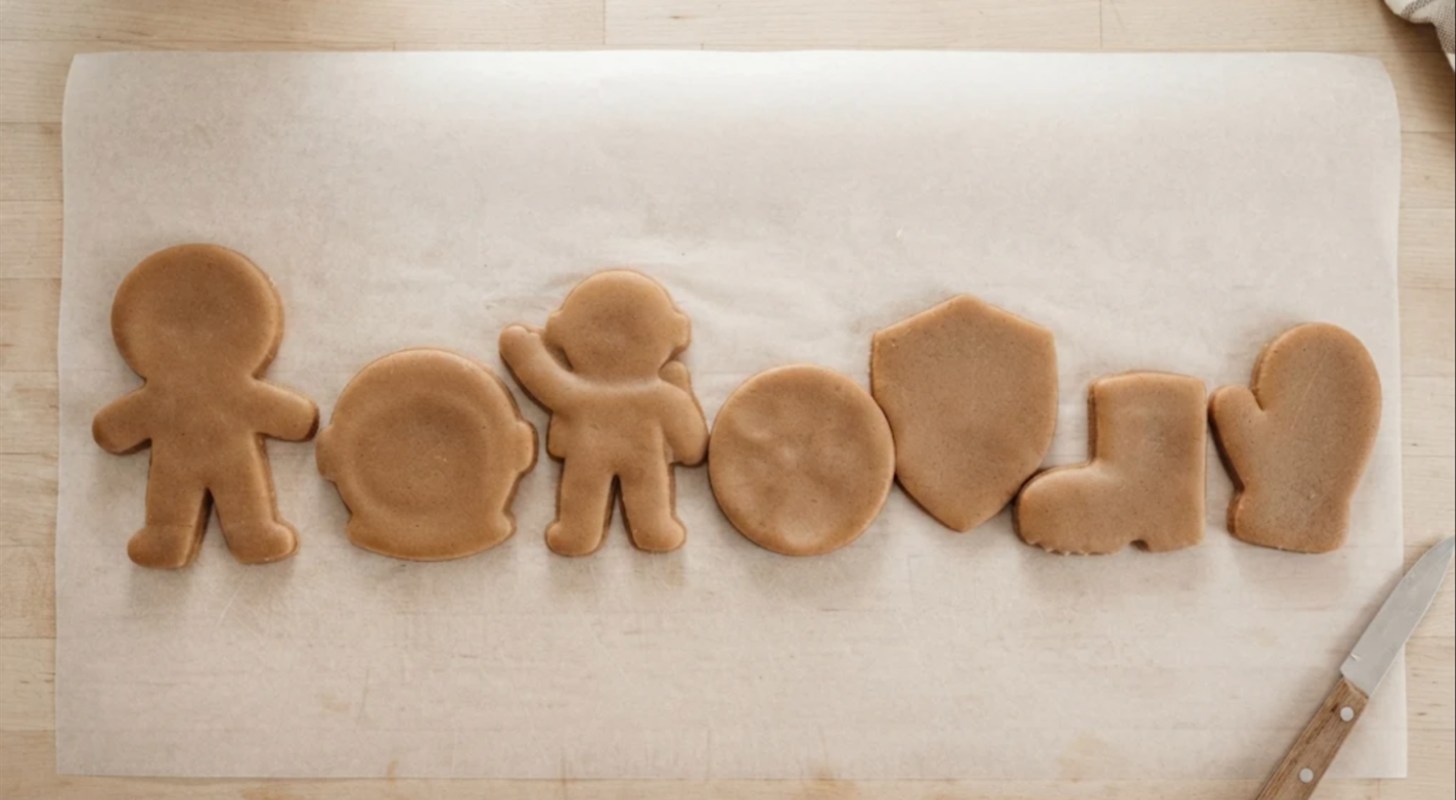
5.Freeze the shapes
Freeze the cut shapes on their parchment for 30 minutes, until the arm and the patch point feel hard. That stops the edges rounding off in the oven.
6.Bake at 350F
Bake for 9 to 11 minutes straight from the freezer. The glove and the spacewalker are the smallest shapes and the moon boot and the moon round the largest, so bake similar sizes together, and judge by the surface rather than the clock: matte all over, with edges that are set. Let everything cool completely on the pan.
7.Mix and color the icing
Beat the icing to stiff peaks, set aside a big bowl for snow white, and tint the rest from the palette chart. Thin a spoonful of each base color to flood consistency and keep the rest stiff for details. Mix the gold, the navy and the black first so they have time to deepen.
8.Flood and pipe the details
Flood the base colors and leave the cookies flat overnight, until the flood does not dent under a fingertip. Pipe the details the next day and give them about 2 hours before anything touches them.
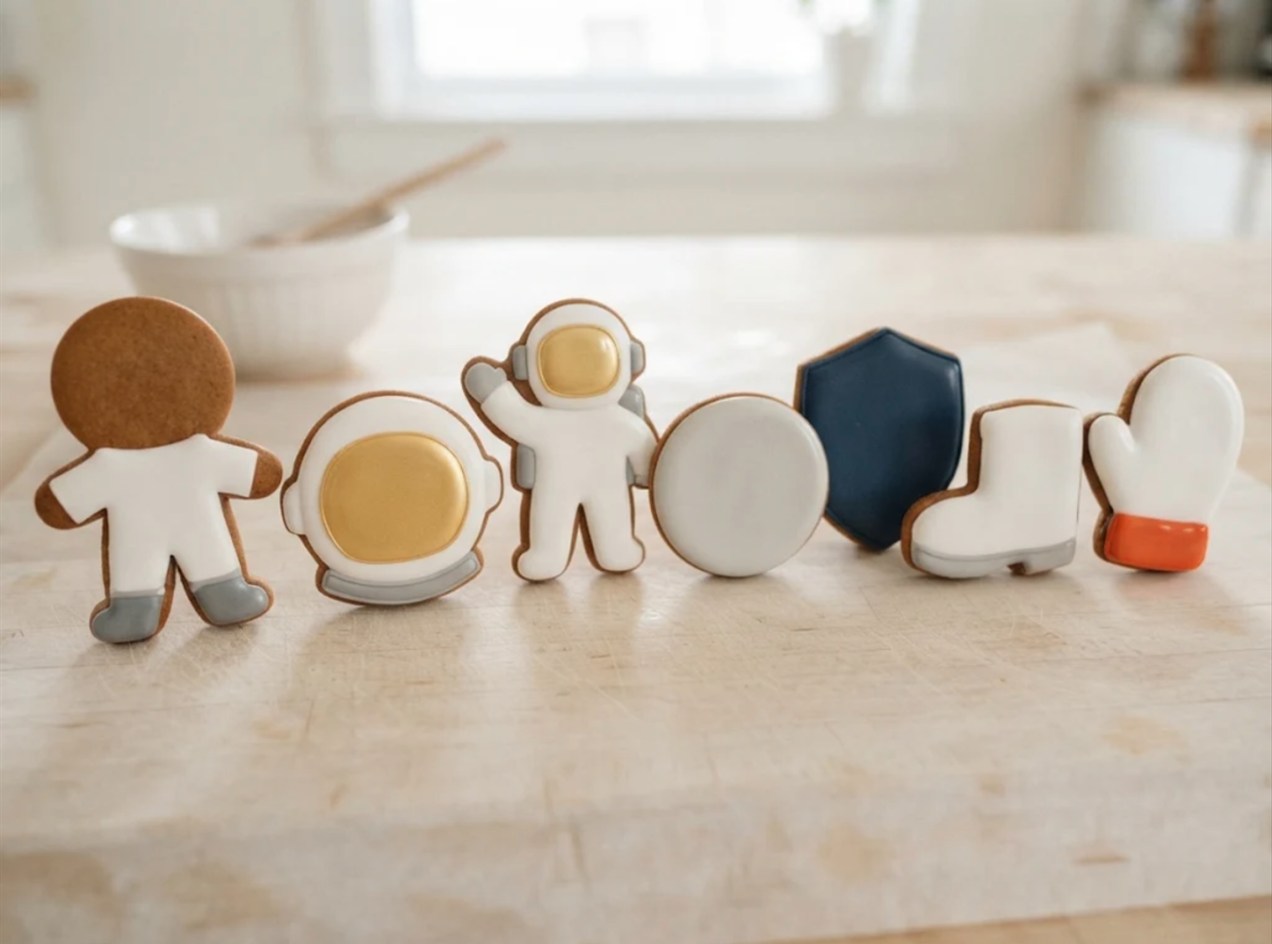
Say you are decorating with a six-year-old who wants to be an astronaut. Flood the suits, helmets and moons the night before, then hand over a bag of moon grey for the boot treads and a bag of red for the spacewalker’s knee bands. A wobbly tread still looks like a boot that walked on the Moon.
7 Astronaut Cookie Designs
Each design lists its colors, difficulty and three short steps, plus a no-bake cookie for the youngest helpers. Only the gingerbread astronaut gets a face, two dot eyes and a small smile behind its bubble helmet. Every visor elsewhere stays blank.
1.The Gingerbread Astronaut
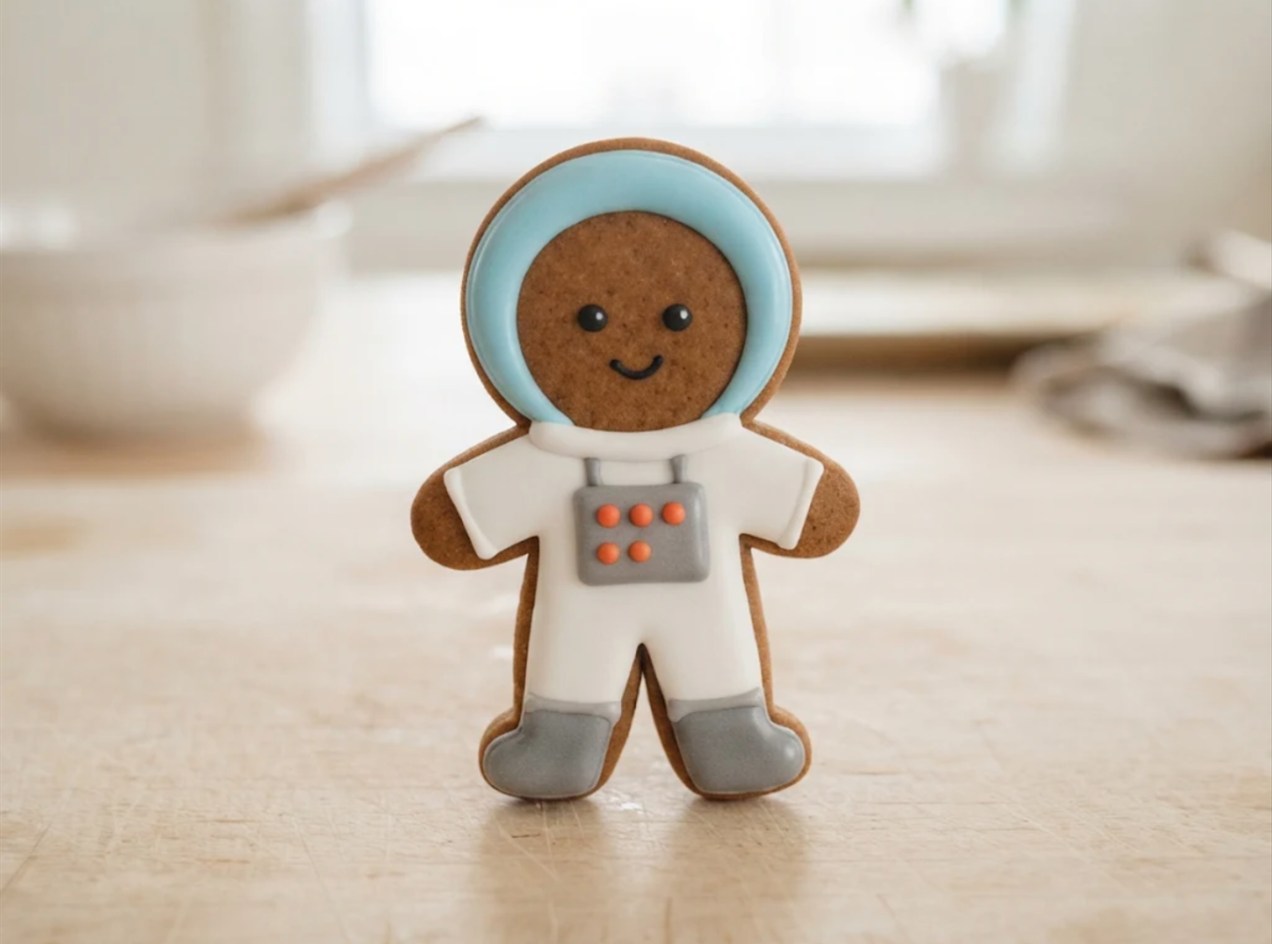
Colors: snow white, sky blue, moon grey, launch orange, charcoal black. Difficulty: Hard.
The star of the tray, and the cookie that answers “can the gingerbread man be the astronaut?” Leaving the face bare inside the ring is what makes the helmet read as glass. For a launch-day version, flood the suit launch orange instead of white, like the pumpkin suits.
- Flood the suit snow white from the neck ring to the boot tops, arms included, leaving the helmet circle bare, and let it crust for an hour.
- Flood the boots, cuffs and chest box moon grey, then leave the cookie flat overnight.
- Pipe a sky blue ring on the helmet window guide with a short white shine line inside it, two charcoal dot eyes and a small smile on the bare gingerbread, a moon grey belt and a row of launch orange dots on the chest box.
2.The Gold Visor Space Helmet
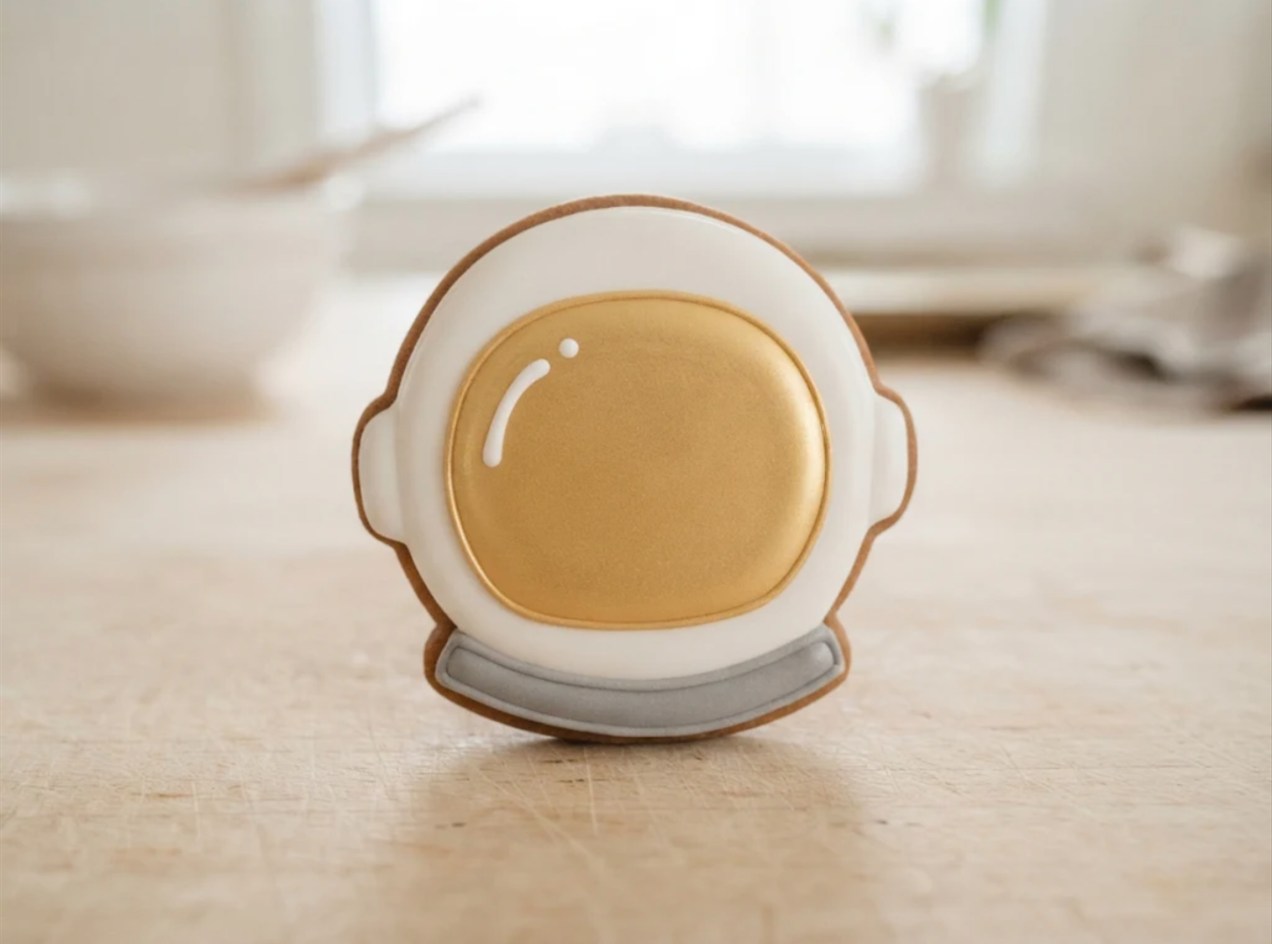
Colors: snow white, visor gold, moon grey. Difficulty: Medium.
The quickest way to say “astronaut” with one cookie. Keep the shine curve short and high on the visor; a long one makes the gold look striped.
- Flood the shell snow white round the visor oval and down to the collar line, and let it crust for an hour.
- Flood the visor gold and the collar moon grey, then leave the cookie flat overnight.
- Pipe one stiff snow white shine curve on the shine guide, high on the visor, and a moon grey line along the collar guide.
3.The Spacewalk Astronaut
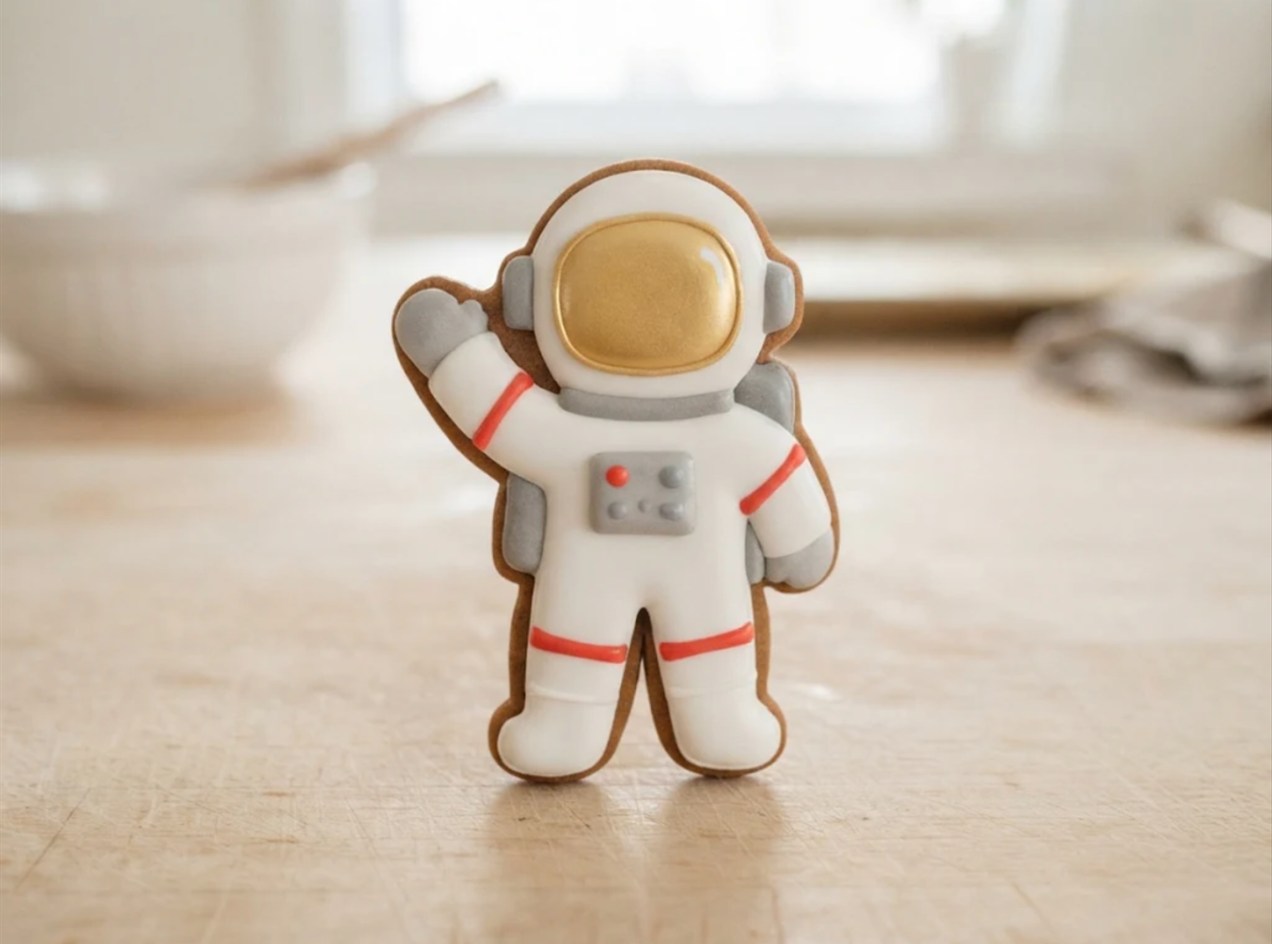
Colors: snow white, visor gold, moon grey, stripe red. Difficulty: Hard.
The action shot of the set. The red bands are the detail grown-ups recognize, so pipe them thick, and bake two so one can float beside the moon on the platter.
- Flood the suit and helmet snow white, leaving the visor oval and the two backpack corners at the shoulders bare, and let it crust for an hour.
- Flood the visor gold and the backpack corners moon grey, then leave the cookie flat overnight.
- Pipe the chest box and belt in moon grey and a thick stripe red band on each knee guide and across each arm.
4.The Moon Footprint and Flag
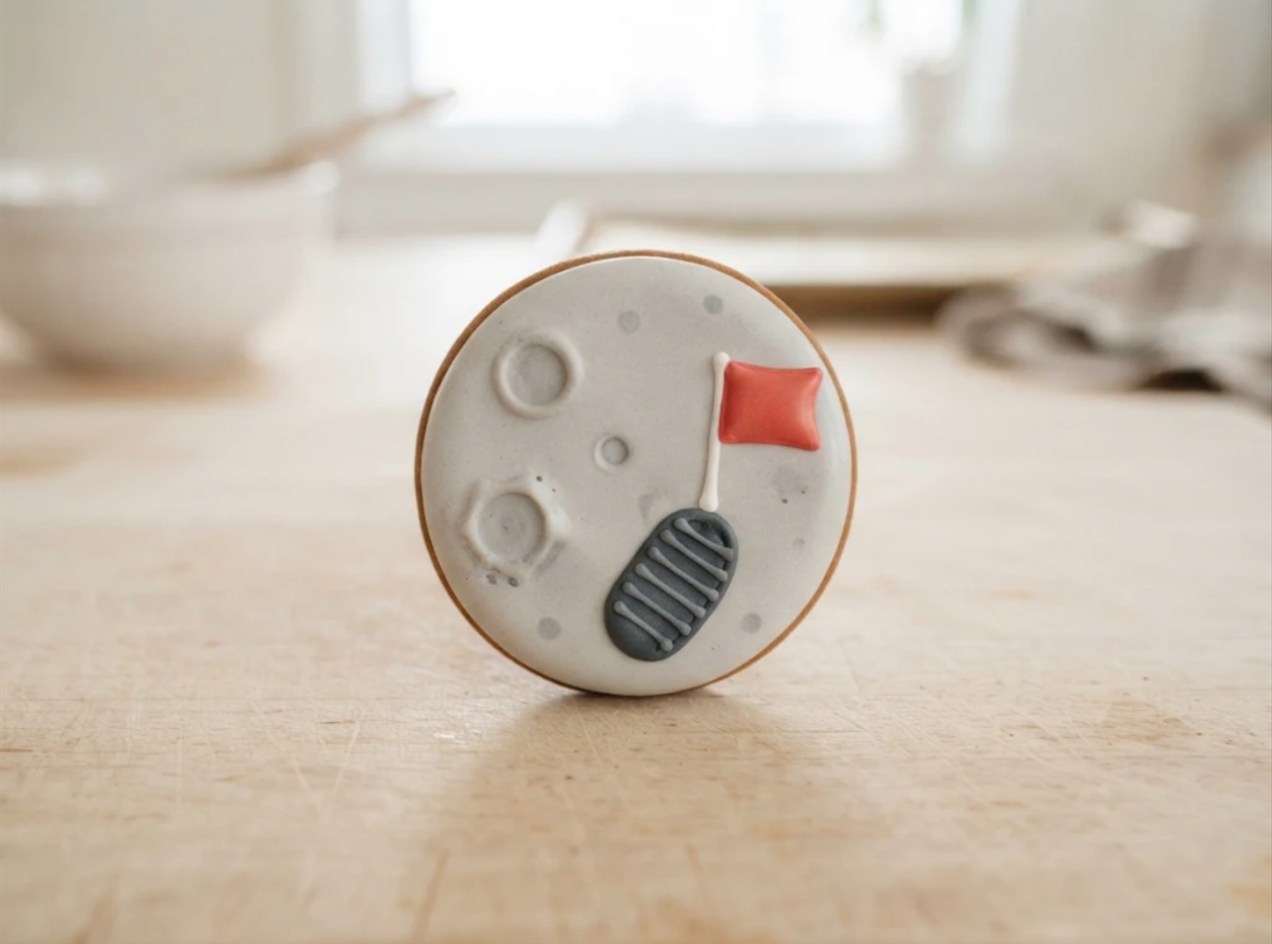
Colors: pale grey, moon grey, shadow grey, snow white, stripe red. Difficulty: Medium.
The flag-planting moment without anyone in it. The flag stays blank on purpose, so it belongs to whichever crew is eating it, and a child can pipe an initial on it.
- Flood the whole round pale grey and, while it is wet, drop moon grey dots on the three crater circles so they settle flat. Leave it flat overnight.
- Pipe the boot print outline in shadow grey, fill it, and pipe the tread lines across it once it crusts.
- Pipe the flag pole in a thick snow white line and fill the little flag stripe red. Leave the flag blank.
5.The Mission Patch
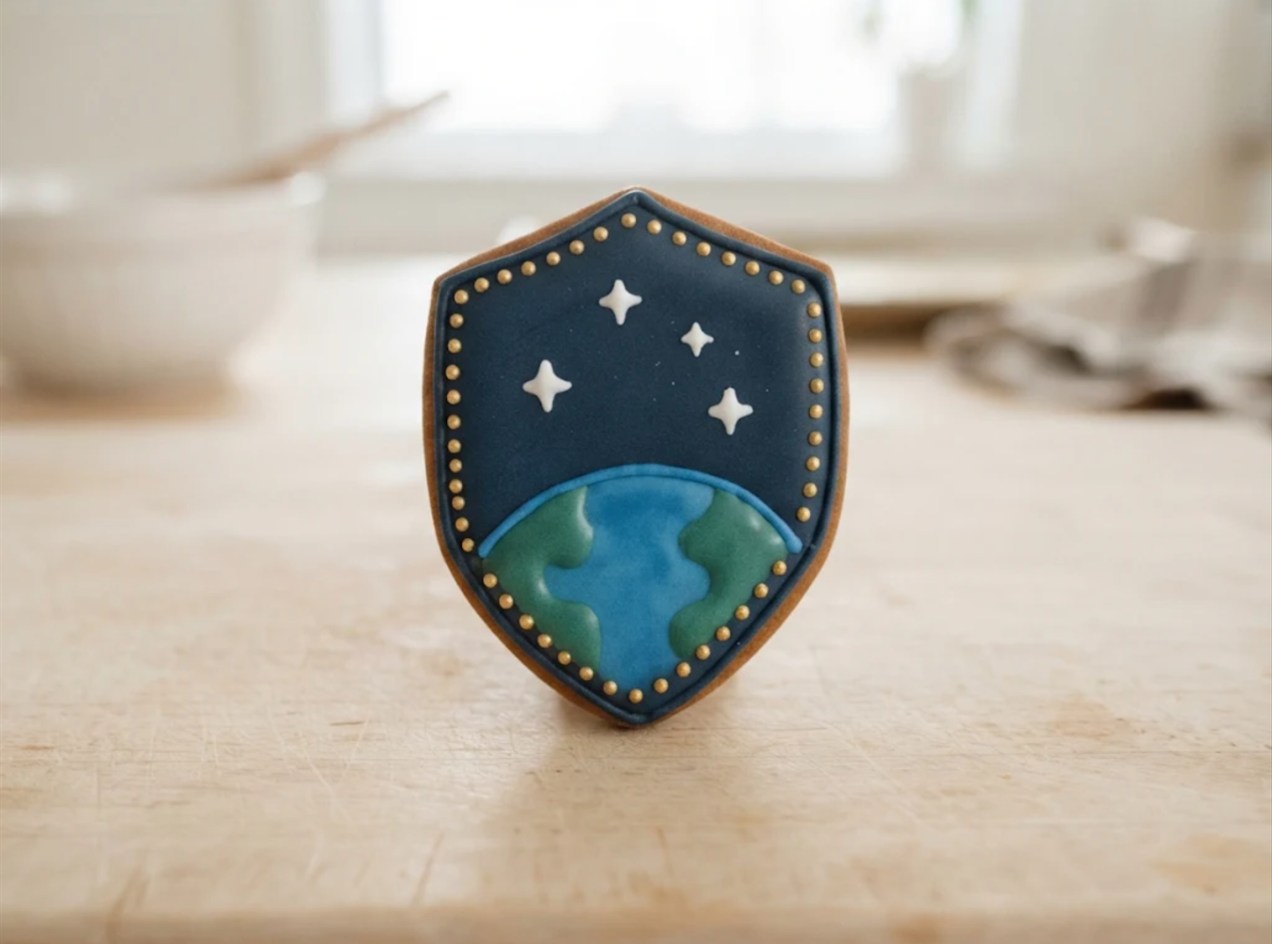
Colors: night navy, earth blue and green, snow white, visor gold. Difficulty: Medium.
The grown-up cookie of the set, and the one that looks best in a gift box. Tiny gold dots read as stitching; a solid line reads as a sticker.
- Flood the shield night navy above the Earth curve, and let it crust for an hour.
- Flood the Earth curve earth blue, drop in a few green patches of land while it is wet, then leave the cookie flat overnight.
- Pipe the four stars snow white on the star guides, then a row of tiny visor gold dots along the border guide.
6.The Moon Boot

Colors: snow white, moon grey. Difficulty: Easy.
The easiest design and the best first cookie for a new decorator. Two colors, and the treads are just short lines in a row.
- Flood the whole boot snow white and leave it flat overnight.
- Pipe moon grey lines on the cuff, lace and sole guides.
- Pipe the short tread lines along the bottom of the sole in moon grey.
7.The Puffy Space Glove
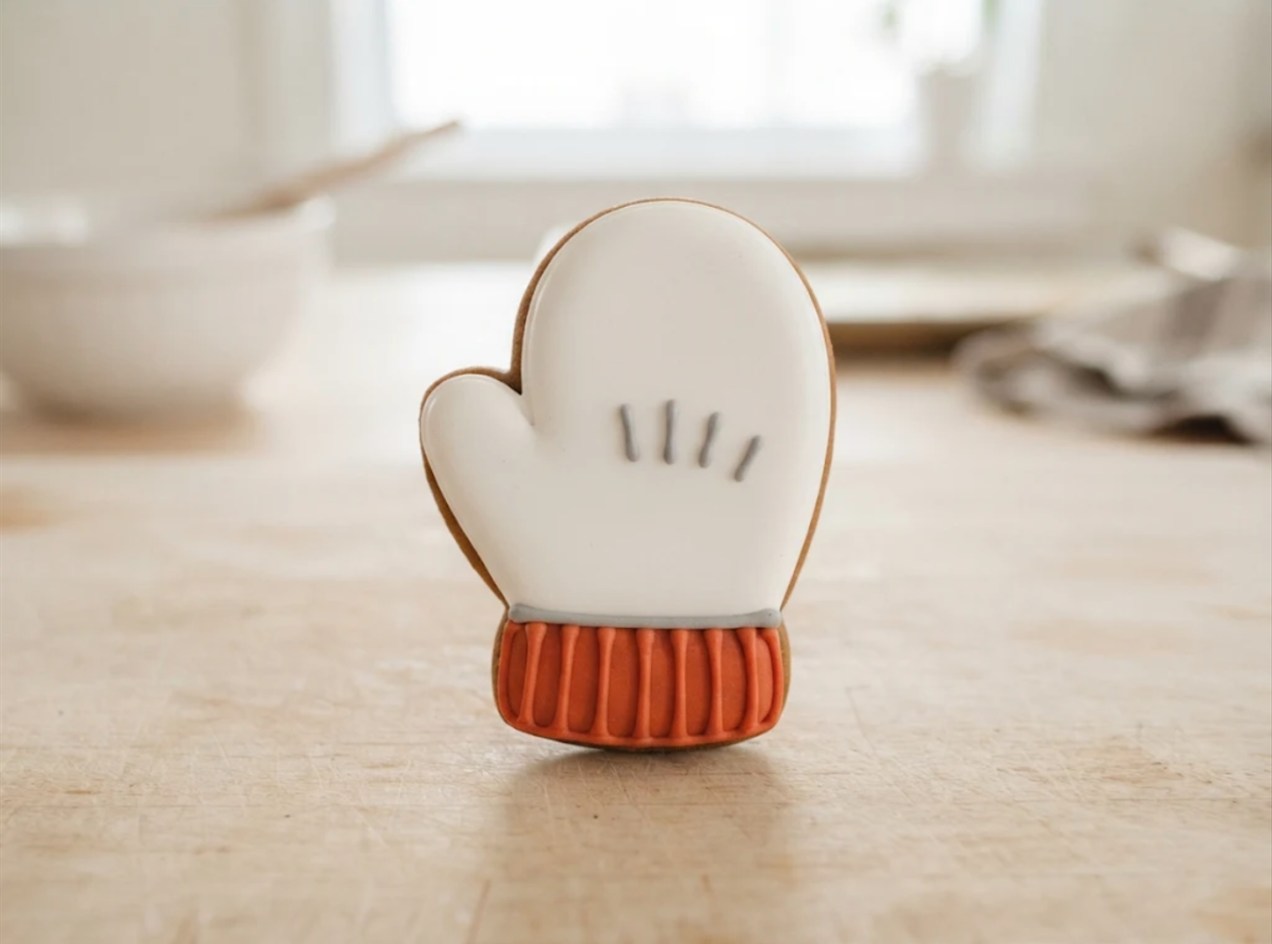
Colors: snow white, launch orange, moon grey. Difficulty: Medium.
The cookie kids hold up to their own hand. The fingers are piped, not cut, so nothing thin sticks out to snap in the bag.
- Flood the glove snow white down to the cuff line, and let it crust for an hour.
- Flood the cuff launch orange, then leave the cookie flat overnight.
- Pipe a moon grey ring on the cuff line and four short moon grey finger dashes on the finger guides.
No-Bake Astronaut Helmet Rounds for Little Kids
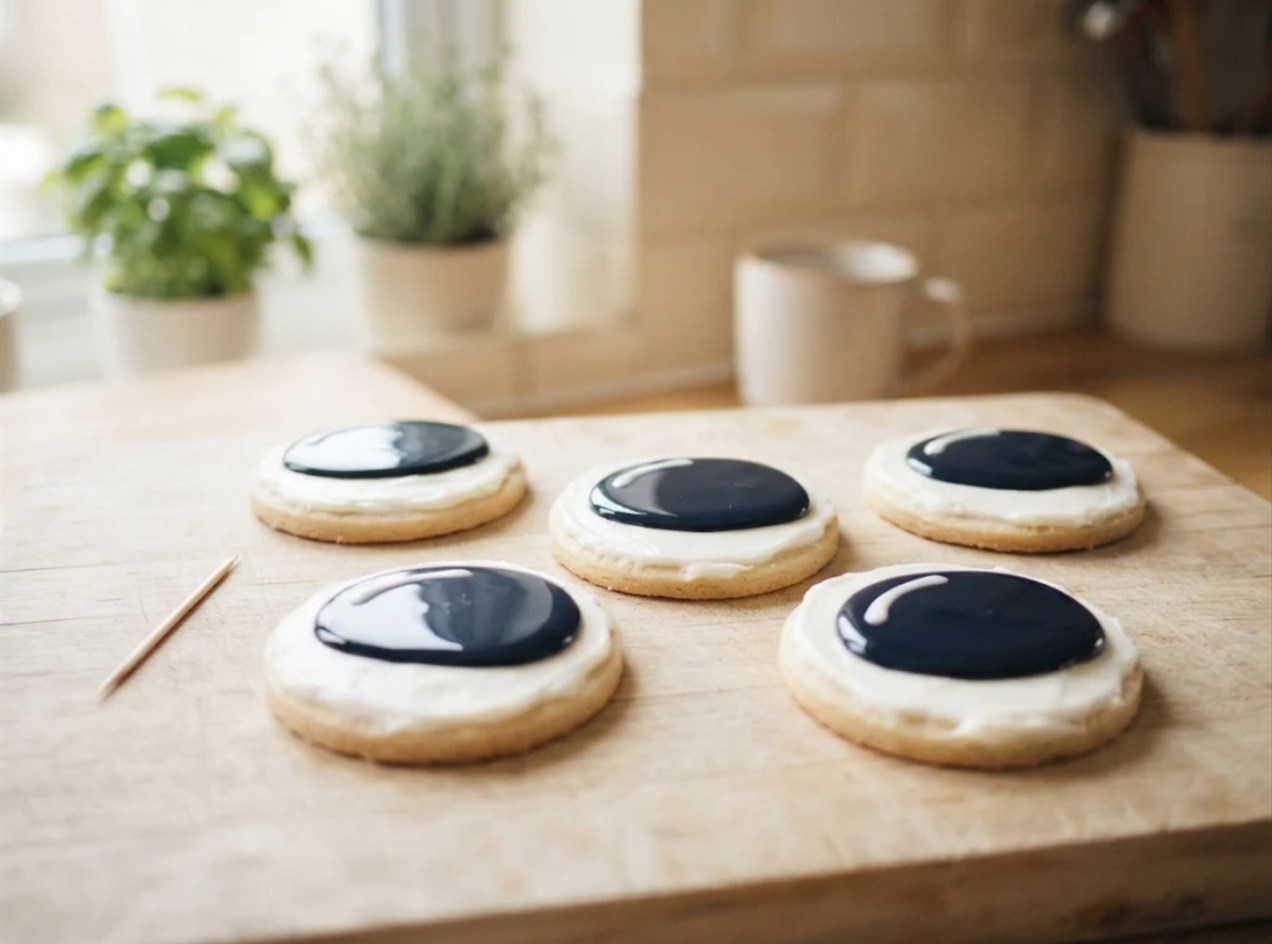
Colors: white, navy decorating gel. Difficulty: Easy, no oven.
For a table of three-year-olds, or a day the oven is busy. Dragging the toothpick through the visor is the part every small child wants to do twice.
- Spread each round with white frosting right to the edge using the back of a spoon.
- Squeeze a wide oval of navy decorating gel across the middle for the visor and spread it flat with a toothpick.
- Drag the toothpick once through the top of the visor to pull a little white frosting into a shine line.
Astronaut Cookies for Birthdays, Classrooms and Launch Parties
Each of the three big reasons to bake these wants a different mix.
- If it is a space birthday, bake the gingerbread astronaut, the helmet and a moon for each guest, and pipe each child’s initial on the moon’s flag. For a “first trip around the sun” first birthday, the grown-ups get the decorated set and the birthday baby gets a plain cookie.
- If it is a space unit at school, lean on the boot and the glove, which are quick to make by the dozen, and let the class design their own blank patches on paper first. Check the school’s food rules before you bake, since many ask for store-bought treats, and the no-bake helmet rounds cover that case.
- If it is a launch watch party, pack the spacewalker, the patch and the moon on one platter, and set the timer so the cookies come out as the countdown starts.
The planner does the math for cookies, batches, colors and days, working the dough out from the size of each shape, because the moon round uses about 45 percent more dough than the glove.
Astronaut Party Cookie Planner
Enter the guests, the cookies each and the party date, then tick the designs. It works out the dough batches from how big each shape is, how many of each to cut, the icing colors and which day each job falls on.
For planning only: the dough per batch figure is an estimate and dough rolls out differently in every kitchen, so bake one test tray before you shop for a big party. The no-bake version is not counted because it uses store-bought cookies. Nothing you enter leaves your browser.
Picture a space party for 12 on a Saturday, with the astronaut, the helmet, the spacewalker and the moon ticked. The planner calls for 14 cookies, one batch of dough and one double batch of icing in 9 colors, with 4 astronauts, 4 helmets, 3 spacewalkers and 3 moons. Cut a boot or two from the leftover dough for the birthday child. Bake and flood on Wednesday, pipe on Thursday, and Friday stays free in case a waving arm snaps.
Troubleshooting
| Symptom | Cause | Fix |
|---|---|---|
| The waving arm snaps off | Dough rolled thin at the shoulder, or the cookie lifted by the arm | Roll an even 1/4 inch, freeze before baking, and lift every spacewalker by the body |
| Brown dough shows through the white suit | The white flood went on too thin | Flood white a little thicker, or give it a second thin coat once the first crusts |
| Gold looks like mustard | Too much brown, or yellow gel that has not deepened yet | Start again from lemon yellow with a toothpick dot of brown, and let it rest an hour before judging |
| Navy or gold bleeds into the white | The white went on before the darker color crusted, or the other way round | Give each color an hour to crust, or leave a hairline of bare cookie between the two |
| The astronaut’s face looks smudged | Eyes piped onto a damp cookie, or a big dot | Pipe the face last, on bare gingerbread, with the smallest round tip; practice two dots on parchment first |
Make-Ahead and Timeline
Plan on three days: bake and flood on day one, pipe details on day two, bag or box on day three. For a big party, freeze the plain cookies flat in an airtight container and thaw them in it so condensation forms on the outside. For how long decorated cookies stay good to eat, see how long iced astronaut cookies keep in a tin.
Storage Instructions
Once cured, store the cookies with parchment between layers in an airtight tin at room temperature, away from sunlight, which fades gold and orange, and away from soft cookies, which pass their moisture to crisp ones.
For favor bags, heat-seal or tie each cookie in its own clear bag so a broken arm stays in its bag. Hold to the overnight cure for royal icing before bagging, or the bags will stick to soft icing.
Frequently Asked Questions
Can I turn a regular gingerbread man into an astronaut?
Yes. Cut a plain gingerbread person, flood the body white, and pipe a sky blue ring round the head for the helmet, leaving the face bare. For a paper version with no icing, a paper and foil astronaut disguise for a gingerbread man works as a craft at the same party.
Can I use sugar cookie dough instead?
Yes. Any cut-out dough that bakes flat works with the template. A plain sugar cookie gives a paler base, which helps the white suits look brighter with a single flood.
How far ahead can I make astronaut cookies?
Baked, undecorated shapes freeze for up to about 3 months. Decorated cookies keep about two weeks in an airtight tin once cured, so decorating three days ahead leaves plenty of margin.
Why do some visors have a face and others do not?
A real visor is gold and you cannot see the face behind it, so the helmet and the spacewalker stay blank. The gingerbread astronaut is the friendly exception: its bubble helmet is clear, so the gingerbread face shows through.
More Gingerbread Cookie Recipes
- firefighter cookies with a helmet, a truck and a spotted dog, the next uniform set for a hero-themed tray
- caped hero cookies that skip the logos, for a party that wants capes as well as helmets
- a cookie set for every kind of party, when the next party wants a different theme
Build a Launch Pad with a Best Gingerbread Houses Kit Pick
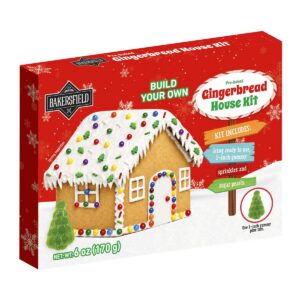
When the party wants something to build as well as decorate, skip baking walls and start from a gingerbread house kit you can turn into mission control, then line the astronauts up on the roof for lift-off.