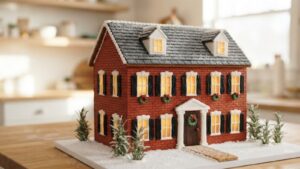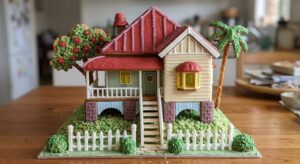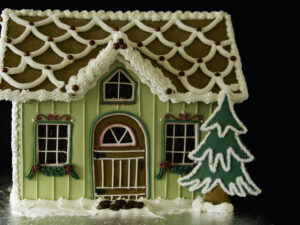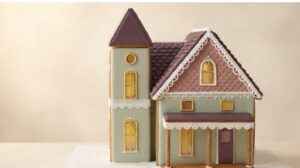
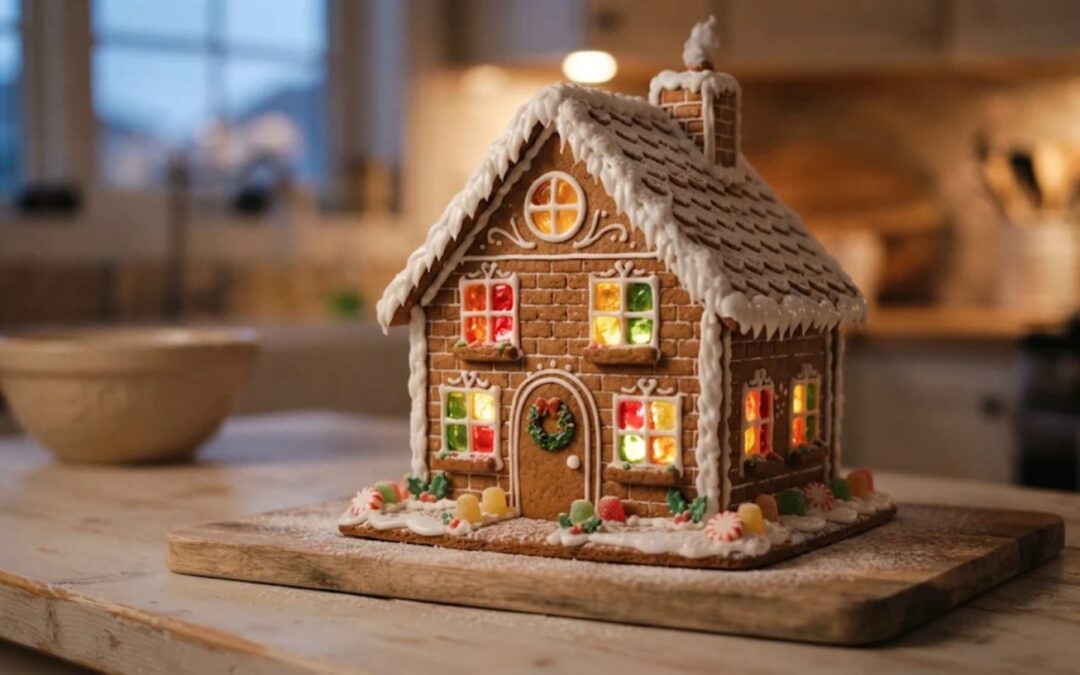
Windows are what make a gingerbread house look lived in. Light a candy pane from inside and the whole house glows, which is why window openings are worth cutting even on a first build.
This guide covers eight ways to make gingerbread house windows, from stained glass candy baked into the openings to isomalt, poured sugar, gelatin sheets and piped icing panes. It is built on the window math from our template builds, candy-making temperatures from Colorado State University and the methods bakers publish. It is for anyone with a template, a kit or a dough already rolled out.
You get the candy window recipe, a method picker and a calculator that says how many candies to buy. The card comes first, because candy glass is the method most houses use.
Stained Glass Candy Windows for Gingerbread Houses
Makes the windows for 1 house, about 5 to 6 square inches of glass · Prep 10 minutes · Bake 22 to 30 minutes at 300F, candy in for the last 5 · Cool 30 minutes on the tray
Total time about 1 hour 10 minutes. The candy pass happens inside the panel bake, not after it.
Equipment: Baking sheet, Parchment paper, Zip-top bags, Rolling pin, Small spoon, Piping bag with a small round tip.
Ingredients
- 6 to 8 clear or translucent hard candies, about 25 to 30 grams, for about 5 to 6 square inches of windows
- Gingerbread house panels with the window openings cut out, on a parchment-lined baking sheet
- Stiff royal icing, for piping frames, optional
Method
- Cut the window openings out of the rolled dough before baking, leaving a strip of dough about 1/4 inch wide around and between them.
- Bake the panels on parchment at 300F and take the window pieces out about 5 minutes before they are done, while the surface is nearly matte.
- Crush the hard candies by color in separate zip bags with a rolling pin, leaving pieces about the size of a lentil.
- Fill each opening with crushed candy until it touches every edge and sits level with the dough, never mounded.
- Return the tray to the oven for about 5 minutes and watch through the door until the candy melts flat and glassy.
- Cool the pieces completely on the tray, about 30 minutes, until the glass is hard and the pan is cold.
- Peel the parchment away from the back of each piece instead of lifting the piece off the paper.
- Pipe a line of stiff royal icing around each pane and across it for crossbars, if you want frames.
Notes: the candy amount comes from the window math on our own template builds, and the bake from our house dough recipe. Ovens vary, so watch the candy, not the clock: it is done when it lies flat and glassy. Melted candy is far hotter than the cookie around it, so keep small hands away until the tray is cold.
Which Window Method Fits Your House
For colored stained glass, bake crushed hard candy into the openings. For clear glass, use isomalt or gelatin sheets, and for frosted panes, pipe royal icing. If young children are making the windows, pick a method with no hot sugar: gelatin sheets or piped icing.
We call this the Window Chooser Table. Every method is rated on heat, clarity, damp air, kid safety and whether it glows when the house is lit. The ratings are our editorial calls, drawn from how each material behaves.
| Method | Heat | Clarity | Damp air | Kids | Glows when lit |
|---|---|---|---|---|---|
| Crushed hard candy, baked in | Oven, last minutes of the bake | Clear to bright stained glass | Can turn sticky | Grown-up handles the hot tray | Yes |
| Isomalt | Melted, then poured | Clearest, does not brown | Still takes on water | Adults only, very hot | Yes |
| Poured sugar glass | Stovetop or microwave to hard crack | Clear to pale amber | Can turn sticky | Adults only, very hot | Yes |
| Gelatin sheets | None | Clear with a diamond pattern | Softens and wrinkles in damp air | Yes | Yes |
| Piped royal icing panes | None | Opaque or frosted | Holds well once set | Yes | No, it blocks light |
| Painted icing windows | None | Opaque, painted glow | Holds well once set | Yes, with water-based paint | No, painted on |
| Lit candy windows | Oven, then a battery light | Glowing | As candy | Battery lights only | The point |
| Leaded stained glass | Oven | Multicolor panes with dark lines | As candy | Grown-up handles the hot tray | Yes |
The pattern is simple. Anything made from melted sugar glows and dislikes damp air. Anything made from icing or gelatin needs no heat, and icing blocks light.
Which Gingerbread House Window Should You Make?
Four questions, one window method, plus a backup if your kitchen or your helpers rule out the first choice.
A shortcut built from our method table, not a guarantee. Hot sugar and melted candy burn: keep children away from the tray until it is cool. Use battery lights only. Nothing you pick is stored or sent anywhere.
What You Need for Candy Windows
This list covers the candy method in the recipe card and the frames. Each method below lists anything extra it needs.
Materials
- Clear or translucent hard candies, about 6 to 8 for a house with 5 to 6 square inches of windows
- Gingerbread dough rolled to 1/4 inch, with the window openings cut from a template
- Stiff royal icing for frames and crossbars
- Isomalt nibs, leaf gelatin sheets or extra sugar and corn syrup, only for those methods
- A battery tea light or fairy lights, for a lit house
Tools
- A baking sheet lined with parchment paper
- Zip-top bags and a rolling pin, for crushing candy by color
- A small spoon, for filling the openings
- A small sharp knife, for cutting the openings
- A piping bag with a small round tip
- Kitchen scissors, for gelatin sheets
How to Make Stained Glass Gingerbread House Windows Step by Step
These eight steps make candy glass windows during the panel bake. Our house dough bakes at 300 degrees for 22 to 30 minutes, and the candy goes in for the last few of them.
1.Cut the openings before baking
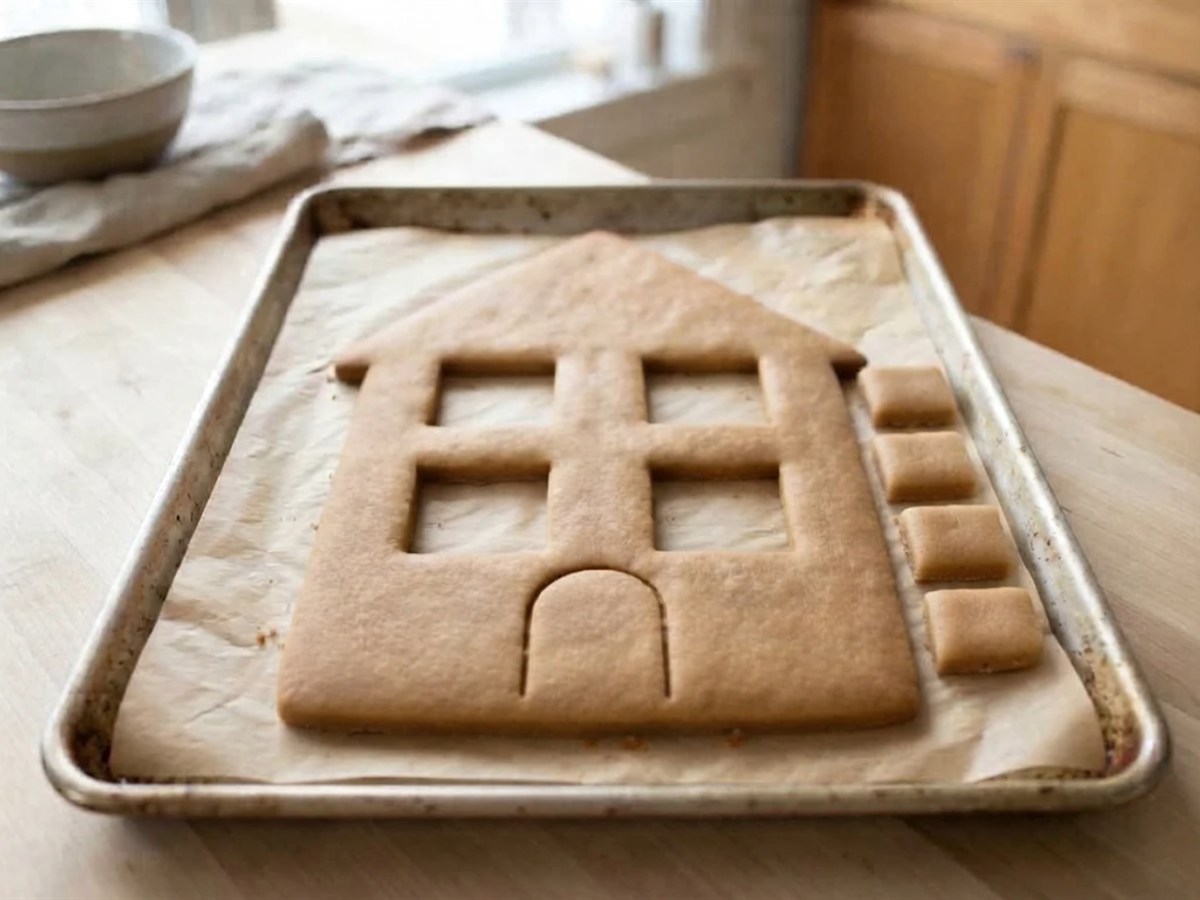
Cut the window openings out of the rolled dough before baking, leaving a strip of dough about 1/4 inch wide around and between them. Lift the cut pieces out with the knife tip.
Why this matters: baked gingerbread snaps when you cut it, and thin strips between windows are the first thing to break. Our A-frame chalet keeps its window bars at least 0.2 inch wide for that reason.
2.Bake the panels and pull the window pieces early
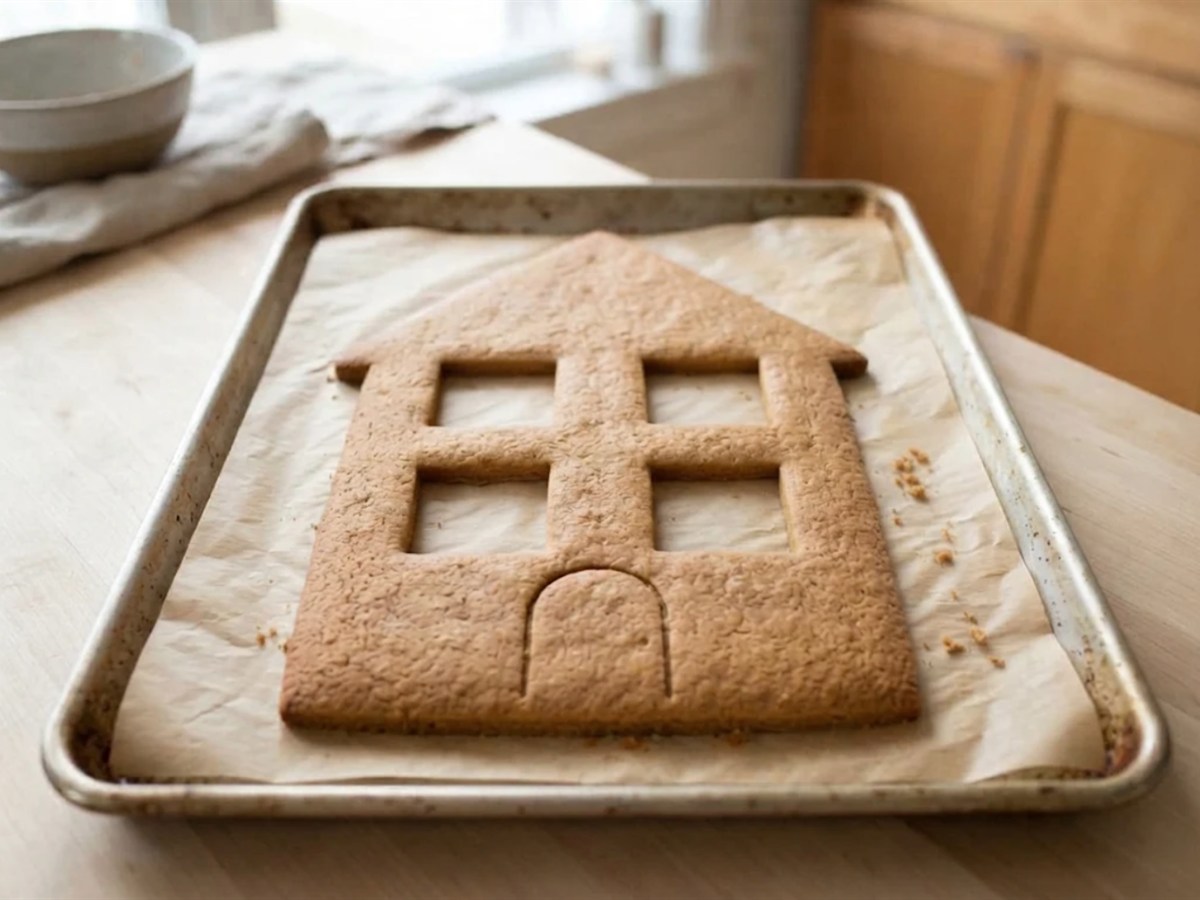
Bake the panels on parchment at 300 degrees, and take the pieces with windows out about 5 minutes before they are done, while the surface is nearly matte.
Why this matters: the candy needs a few minutes in the oven too. Pulling the panel early means the gingerbread finishes baking while the candy melts, instead of over-baking.
3.Crush the candy by color
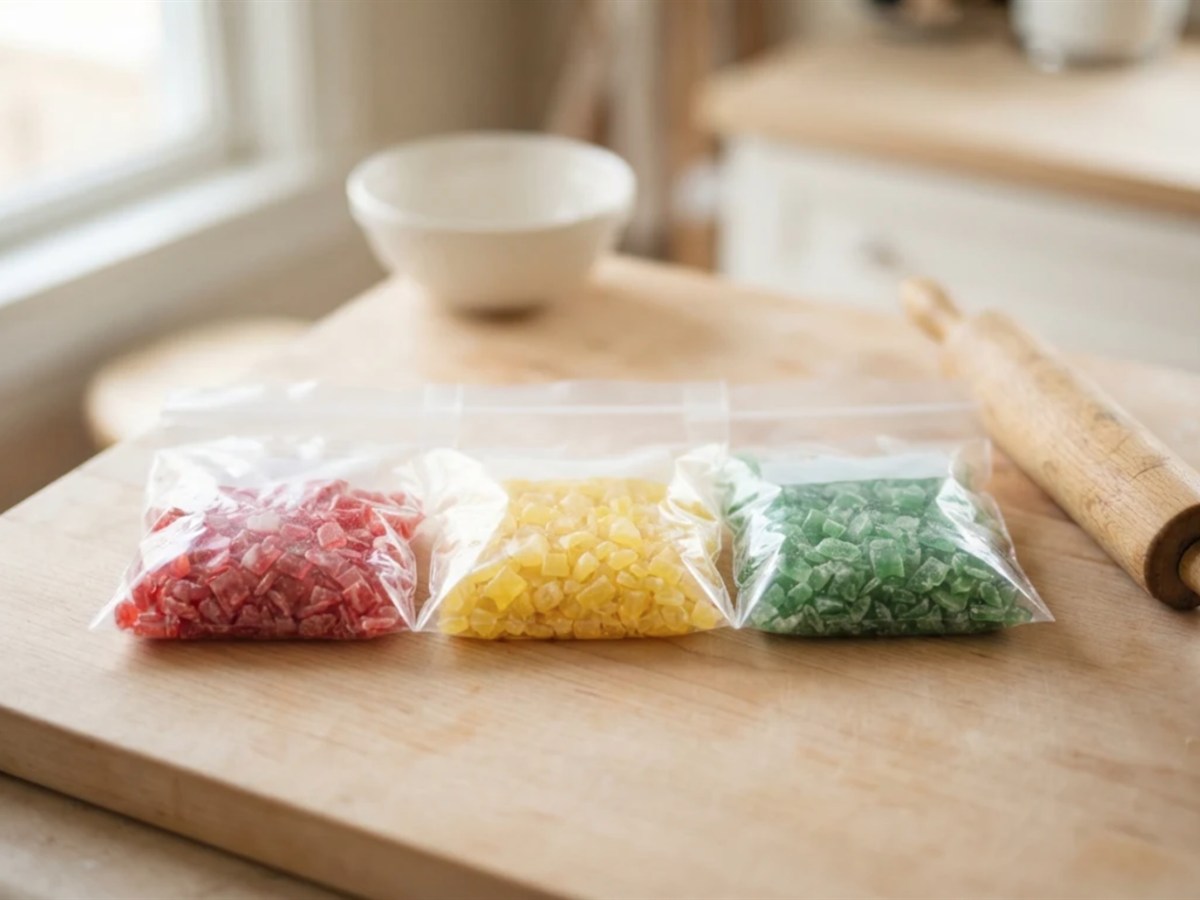
Crush the hard candies by color in separate zip bags with a rolling pin, until the pieces are about the size of a lentil. Keep the colors apart.
Why this matters: small pieces melt evenly and fill corners. Mixed colors melt into a muddy brown pane.
4.Fill the openings level
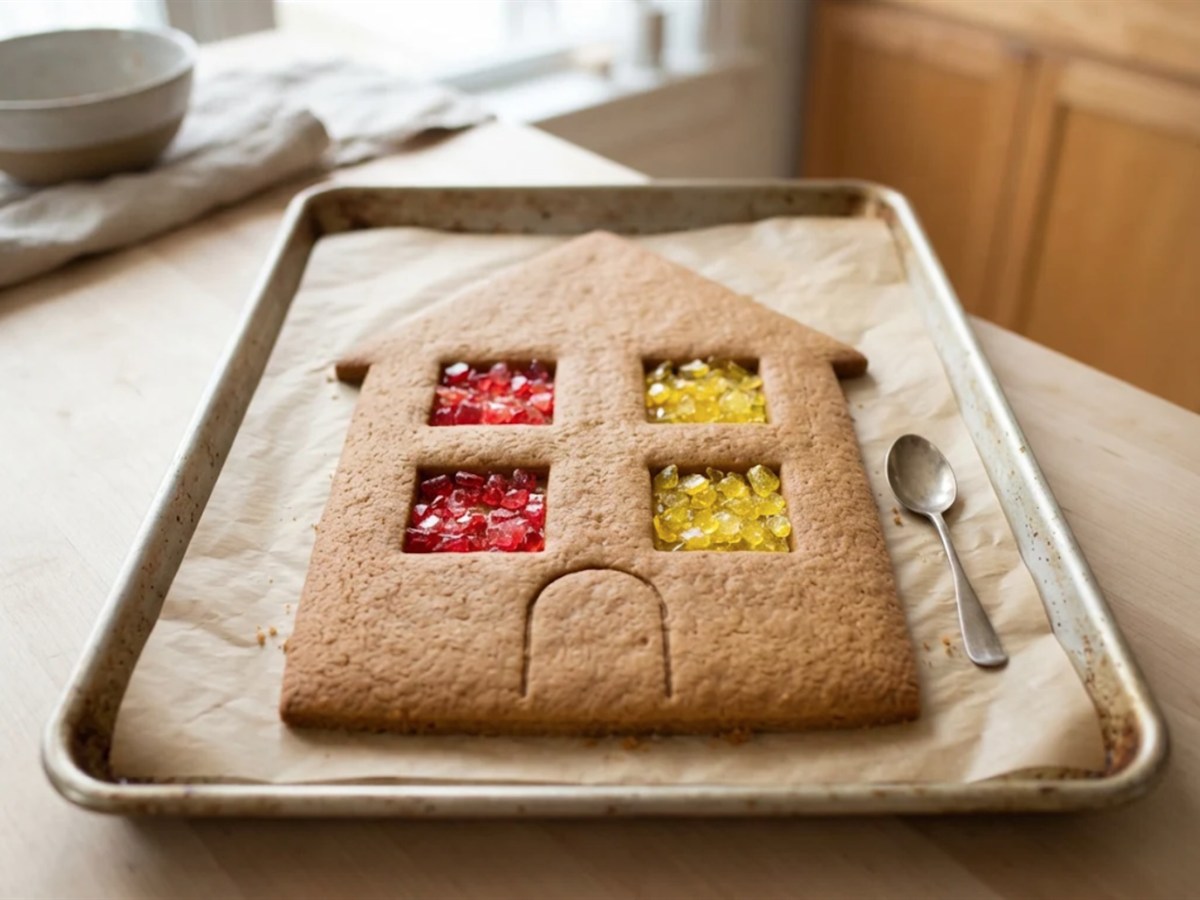
Spoon crushed candy into each opening until it touches every edge and sits level with the dough. Do not mound it.
Why this matters: candy that misses an edge melts with a gap, and a mounded pane overflows onto the gingerbread or sets thick and dark.
5.Return the tray to the oven
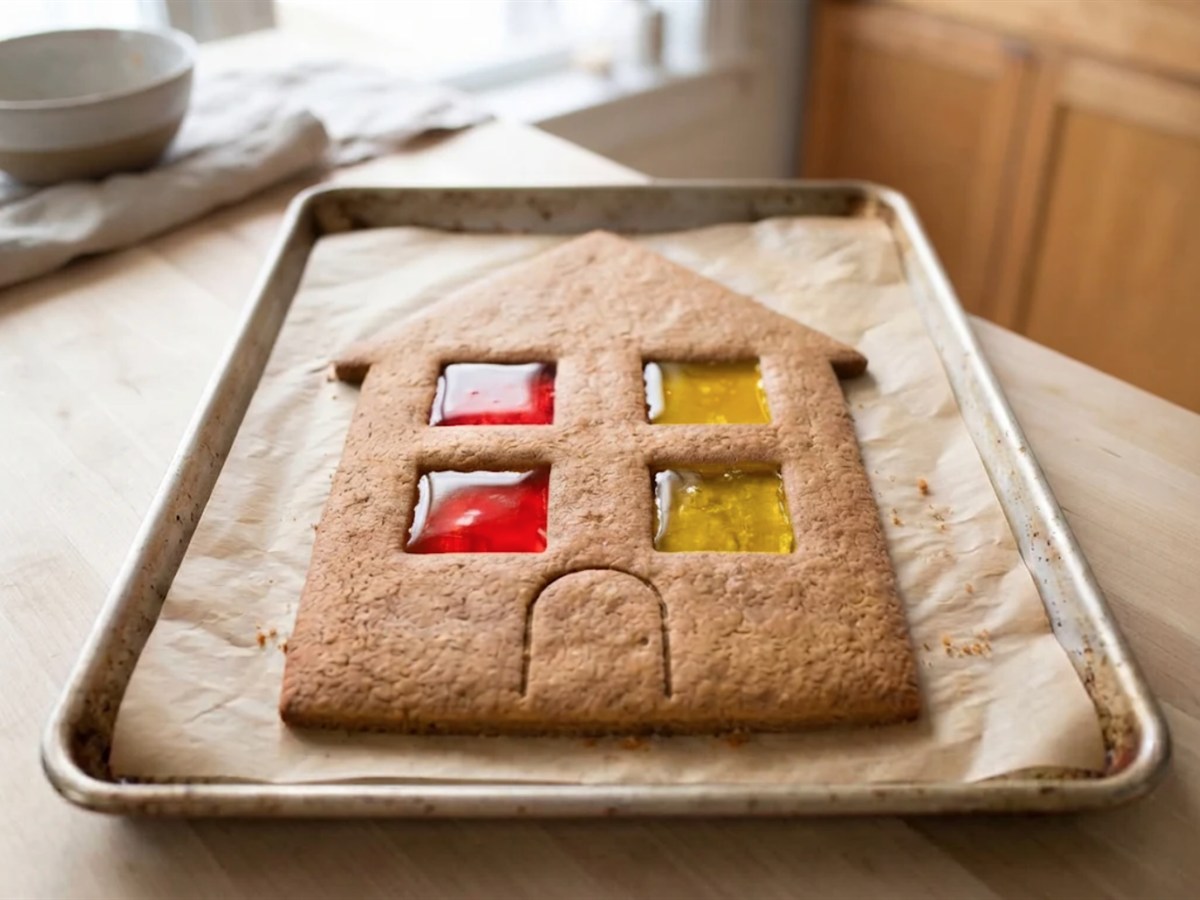
Return the tray to the oven for about 5 minutes and watch through the door. The candy is done when it lies flat and glassy, with no lumps left.
Check as you go: ovens vary, so watch the candy, not the clock. Bubbles that start to brown mean it has gone too long.
Why this matters: hard candy melts around the hard crack stage, which Colorado State University Extension puts at 300 to 308 degrees F at sea level, dropping about 2 degrees for every 1,000 feet. At altitude it melts sooner and can scorch.
6.Cool the pieces on the tray
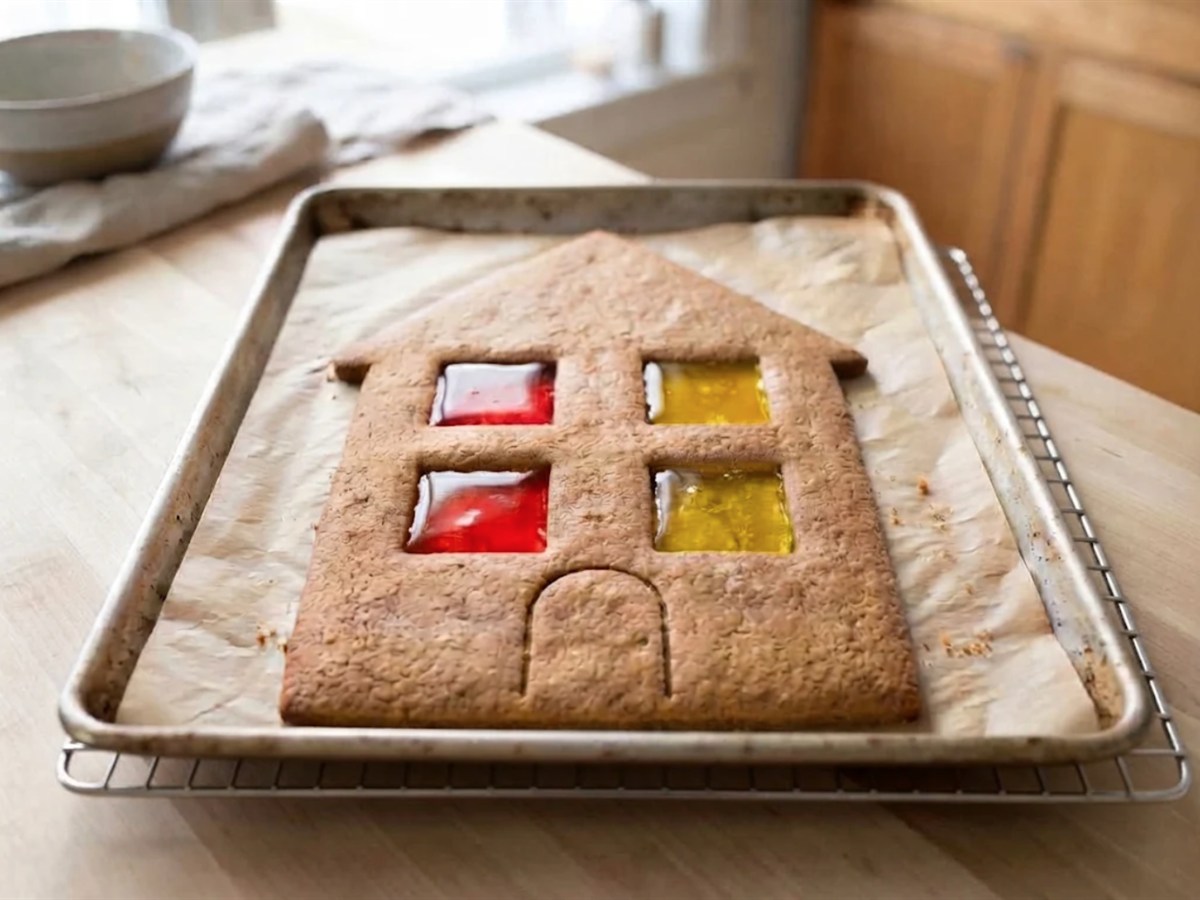
Leave the pieces on the tray until the glass is hard and the pan is cold, about 30 minutes.
Why this matters: warm candy bends and tears away from the frame, and melted candy is far hotter than the cookie around it. Keep small hands away until the tray is cold.
7.Peel off the parchment
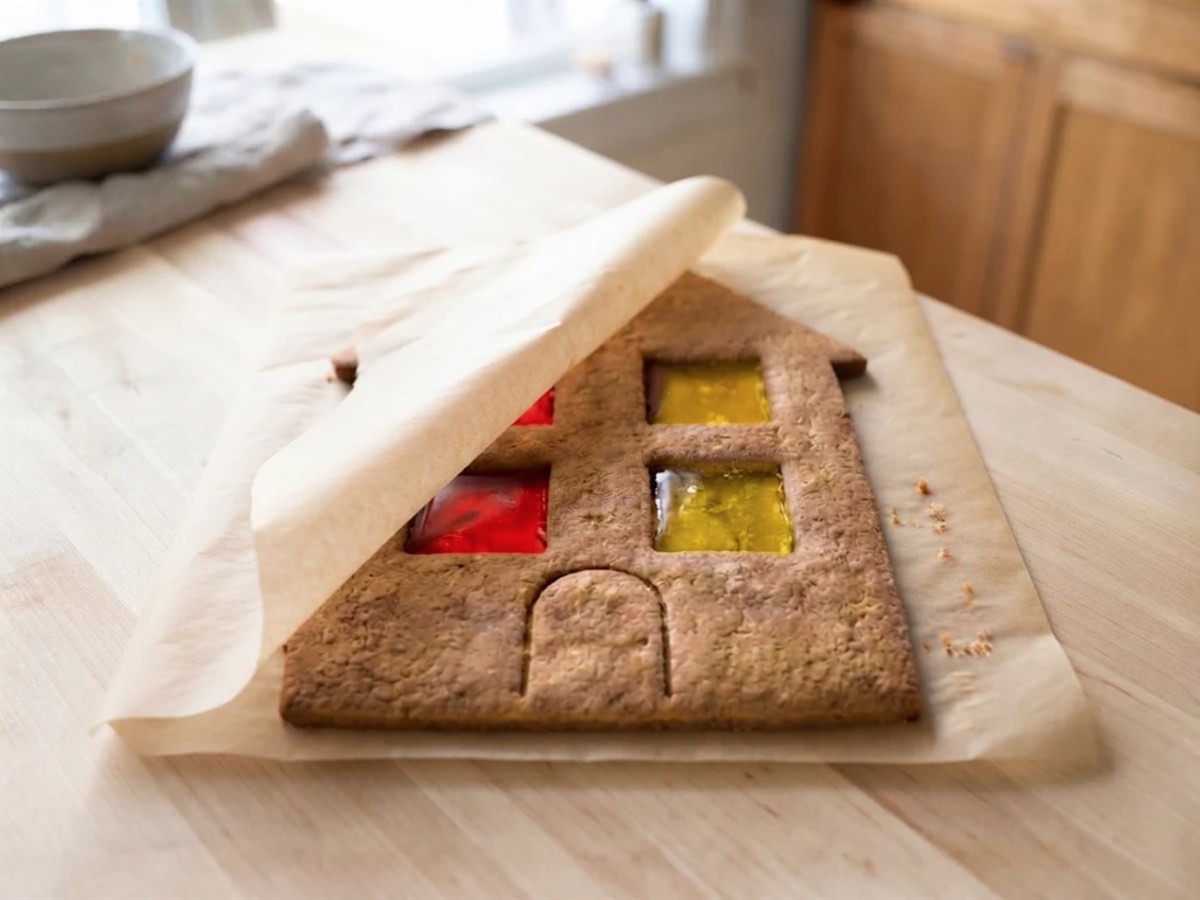
Turn the panel over and peel the parchment away from the back, instead of lifting the piece off the paper. The panes should come away smooth and shiny.
Why this matters: lifting a panel flexes it, and candy glass cracks before gingerbread does.
8.Pipe the frames
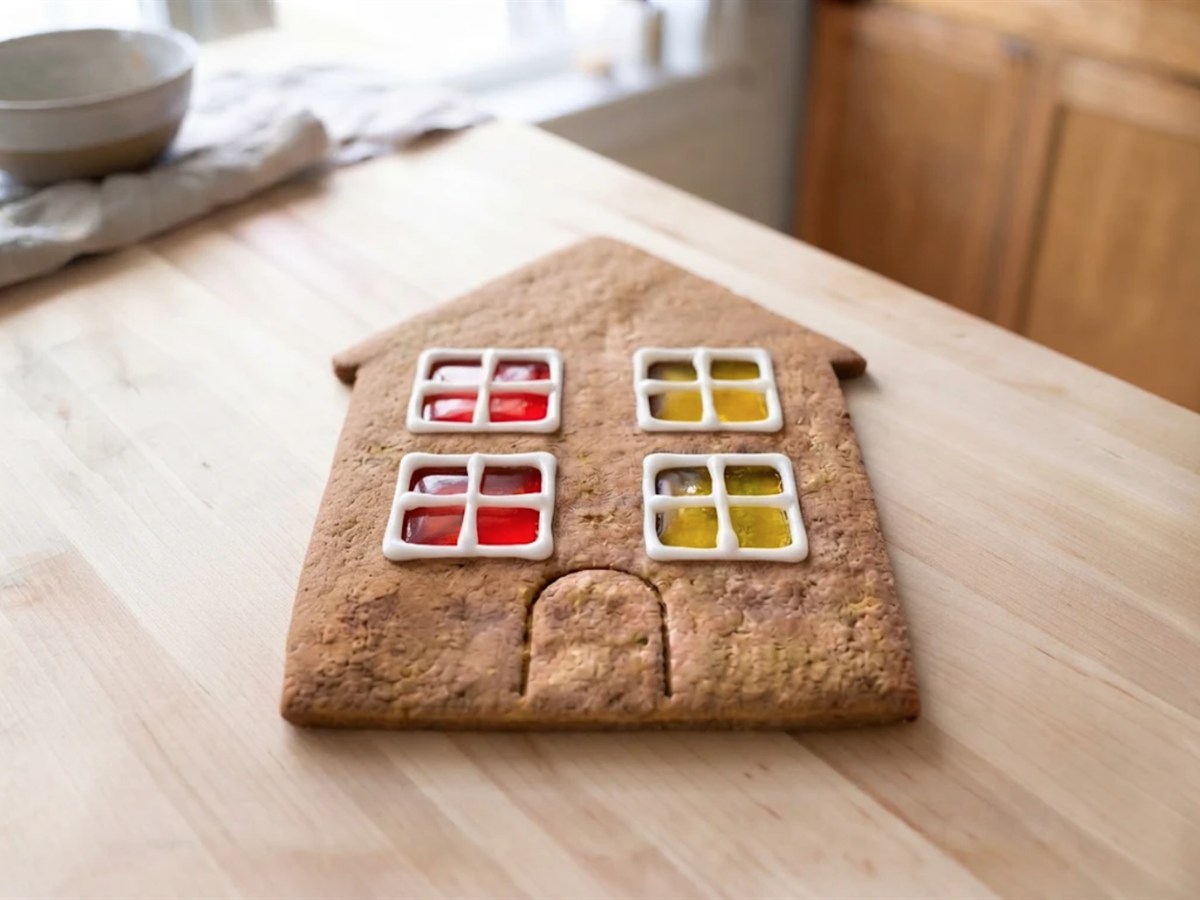
Pipe a line of stiff royal icing around each pane and across it for crossbars. Let the icing set before the walls go up.
Why this matters: frames hide any ragged candy edge and make a candy pane read as a real window.
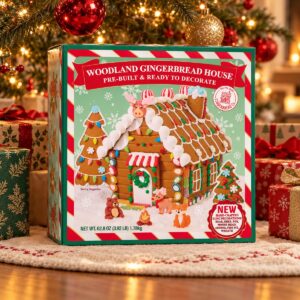
Picture a first-time builder with a kit and no candy windows planned. The kit walls have no openings, so there is nothing to fill. The fix costs ten minutes: cut two small squares out of a spare panel of dough, bake them with candy, and glue them on as shutters with windows in them.
8 Ways to Make Gingerbread House Windows
Candy glass is the classic, but it is one of eight. The no-heat methods suit children and damp kitchens.
1.Crushed Hard Candy Stained Glass
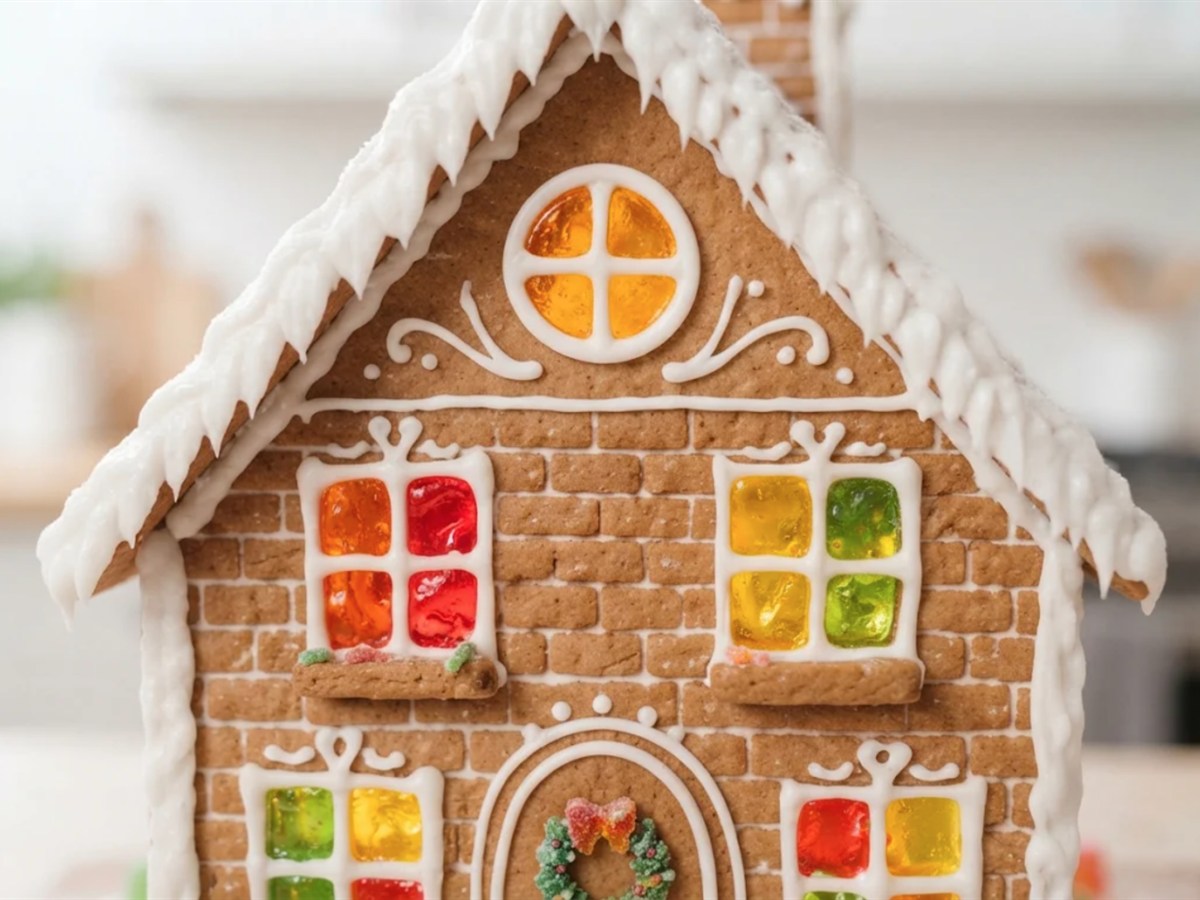
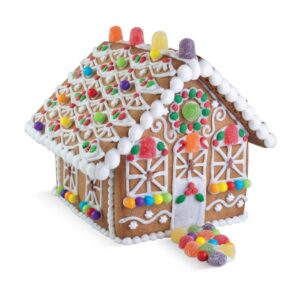
Crushed hard candy stained glass is candy spooned into the window openings and melted in the last minutes of the bake. It is the classic look, it glows when lit and it costs a few candies, as in the step by step above.
Wilton’s candy window method adds the candy with about 5 minutes of baking left, the same timing as the steps above. Clear, see-through candies make the brightest panes. Opaque or shell-coated candy does not turn to glass.
2.Isomalt Windows

Isomalt windows are melted isomalt poured into the openings of a baked panel. Isomalt is a sugar substitute made for sugar work, and it sets crystal clear without browning the way boiled sugar can.
- Lay the baked panel on parchment.
- Melt isomalt nibs in a microwave-safe cup in 30-second bursts, stirring between them, until clear and runny.
- Pour a thin layer into each opening and let it set completely.
Melted isomalt is very hot, so this one is for adults. It still takes on water from damp air, so keep the finished house in a dry room.
3.Poured Sugar Glass
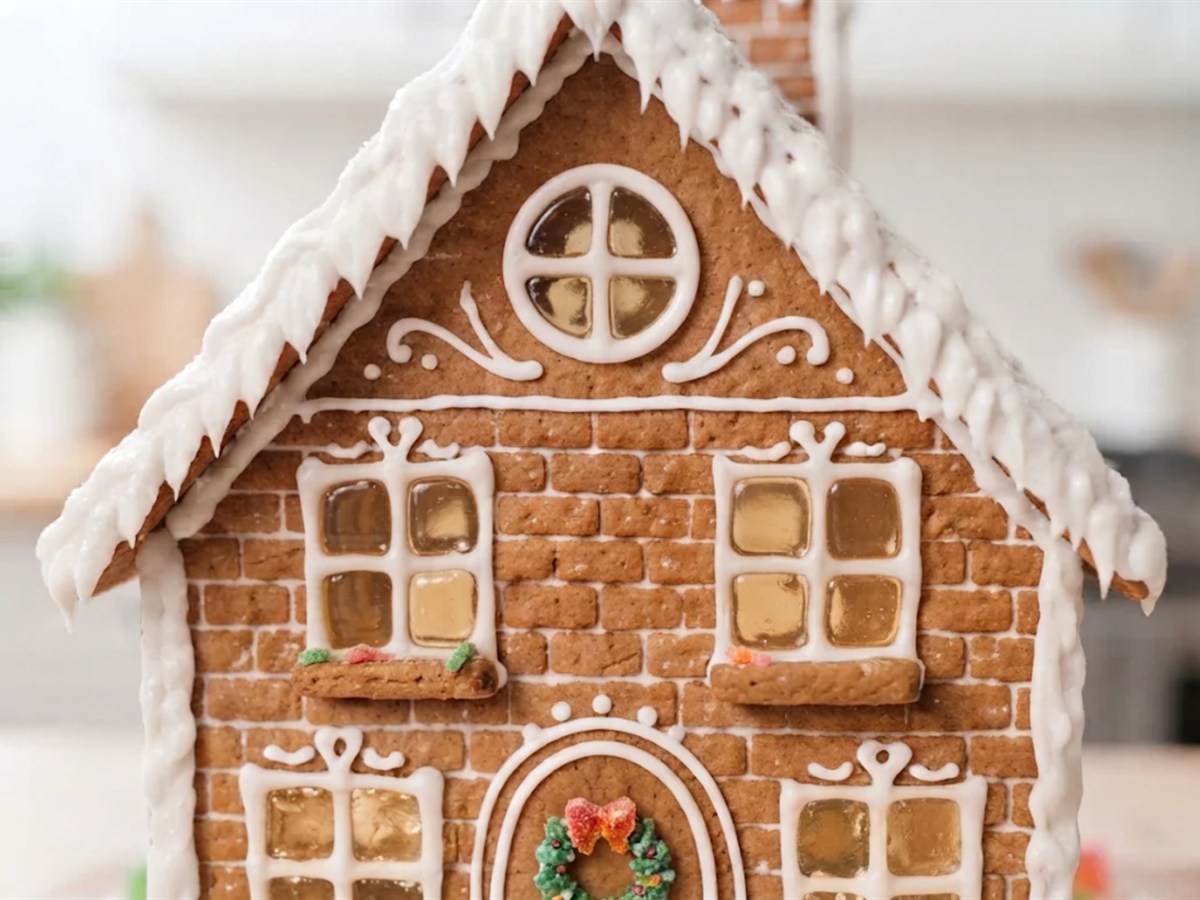
Poured sugar glass is sugar, corn syrup and water boiled to the hard crack stage and poured into the openings. It gives clear to pale amber panes from pantry staples.
- Heat 1 cup sugar, 1/3 cup light corn syrup and 1/3 cup water, stirring until the sugar dissolves.
- Boil to 300 degrees F on a candy thermometer, then take it off the heat at once.
- Pour it into the openings of a baked panel on parchment and let it cool for at least 30 minutes.
Lingering past 300 degrees turns the glass yellow. If you live high up, take it off a few degrees earlier, by the altitude rule above.
4.Gelatin Sheet Windows

Gelatin sheet windows are sheets of leaf gelatin cut to size and glued behind the openings with royal icing. They need no heat, the fine diamond pattern looks like old glass, and children can make them.
- Cut each sheet a little larger than its opening with clean scissors.
- Pipe a thin line of icing around the opening on the back of the baked panel.
- Press the gelatin onto the icing and let it set flat before you build.
Gelatin softens and wrinkles in damp air, so add it close to display day in a humid house.
5.Piped Royal Icing Panes

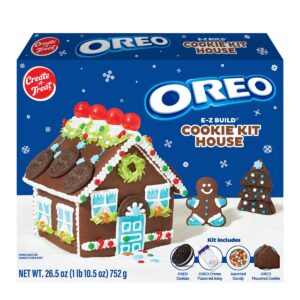
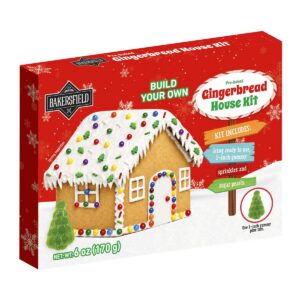
Piped royal icing panes are windows drawn in icing: frames and crossbars piped onto the wall, with the panes flooded white or pale yellow. They need no openings, which makes them the only window method that works on a kit house with solid walls.
- Pipe a square frame and a cross in stiff icing.
- Flood the four panes with thin icing in white, pale blue or warm yellow.
- Let them set, then add a line of snow along the sill.
Our piping and flood icing recipe makes both thicknesses from one batch.
6.Painted Windows

Painted windows are piped icing panes painted with edible paint, usually a warm yellow fading to orange so they look lamp-lit. They give the glow of a lit window on a house with no light inside.
- Flood the panes white and let them set hard, ideally overnight.
- Paint a warm yellow wash, darker at the bottom corners.
- Paint a curtain edge or a candle silhouette in brown once it is dry.
The paint is gel color thinned with clear vodka or extract, as in our guide to edible paint.
7.Lit Candy Windows

Lit candy windows are candy glass panes with a battery light inside the house. Warm yellow, orange and red panes glow brightest, because most battery tea lights give a warm light.
- Make the candy windows as in the step by step.
- Plan a way to reach inside, a back opening or a lift-off roof, before you build.
- Set a battery tea light or a string of fairy lights inside, never a real candle.
Picture a candy window house on a dark windowsill with blue panes. Behind a warm tea light, blue reads nearly black, while the yellow door pane glows. Our guide to tea lights and fairy lights inside a house covers which lights to use and where to put them.
8.Leaded Stained Glass

Leaded stained glass is candy glass in several colors, with dark lines piped over the set panes to look like the lead in church windows. It suits chapels, churches and tall arched windows.
- Cut a tall arched window and fill sections of it with different candy colors, keeping each color in its own patch.
- Melt and cool as usual.
- Pipe thin lines of black or brown icing over the joins between the colors.
The pointed windows on our free chapel template suit this style: two on each long wall and one in each gable.
Frames That Hold the Glass
Candy glass is decoration, not structure. It cannot hold up a roof or a wall, so the gingerbread around it has to do all the work.
- Leave strips of dough between openings. Our A-frame keeps a 0.3 inch border and bars at least 0.2 inch wide.
- Keep windows away from corners. A wall joint needs solid dough on both sides to take icing.
- Put big windows in walls that carry no roof. A gable end or a front wall under an overhang is safer than a wall the roof rests on.
- Use fewer, smaller openings on a kit. Kit panels are thin, and every opening weakens them.
Picture a builder who cuts six windows into the back wall that carries half the roof. The candy looks wonderful on the tray. Then the roof goes on, the strips between the windows bow, and a pane cracks down the middle. The same six windows in the front gable, which carries nothing, would have been fine.
Which Hard Candies Melt Into Clear Glass
Clear, see-through hard candies melt into the best glass, because the light passes straight through them. Our guide to candy for each part of the house lists the fruit-flavored and ring-shaped hard candies that work, and the shell-coated, filled and chewy ones that do not.
- Melts clear: translucent fruit hard candies and ring-shaped hard candies, sorted by color, and butterscotch discs for a warm amber pane.
- Melts with swirls: striped peppermint discs, which keep some of their stripe as they melt. Our candy guide counts them as melt-down candy for stained glass, and the swirl suits a festive pane more than a clear one.
- Does not melt into glass: chocolate, gummies, shell-coated candy and anything with a filling.
Buy one color more than you plan to use. A spare color lets you fix a pane that came out too dark without remaking the whole wall.
Troubleshooting
| Problem | Likely cause | Fix |
|---|---|---|
| Gaps between the candy and the frame | The candy did not touch every edge | Fill to the edges before melting; patch a gap with a few crumbs and a minute more in the oven |
| Pane is dark in the middle | Too much candy, mounded above the dough | Fill only level with the dough |
| Muddy brown color | Colors mixed, or candy overcooked | Keep one color per opening or patch and take it out once flat |
| Bubbles or browned spots | Too long in the oven | Watch through the door and take it out as soon as it lies flat |
| Glass cracked when moved | Moved warm, or lifted off the paper | Cool on the tray until cold and peel the parchment away |
| Windows went sticky or ran | Damp air | Make candy glass close to display day and keep the house dry; use piped panes in a humid house |
| Frame snapped | Strips of dough too thin | Leave wider bars, about 1/4 inch, and cut before baking |
| Gelatin wrinkled | Damp air or wet icing | Glue it with stiff icing and add it on display day |
Make Ahead Plan
Candy windows happen on bake day, inside the panel bake, so plan them with the dough rather than after it.
- Bake day: cut the openings, bake the panels, melt the candy and cool everything on the trays.
- The same evening: pipe the frames on the flat panels.
- Build day: raise the walls once the frames have set.
- Display day: add gelatin windows, if you use them, and switch on the light.
Storage Instructions
Store finished candy-window panels flat, in a single layer, in a cool, dry room, with parchment between them. Keep them out of the fridge, where damp air turns candy glass sticky. Spare crushed candy keeps in a sealed bag for next year, and a house with candy windows keeps best on display in a dry room away from steam.
How Much Candy You Need for Gingerbread House Windows
Our builds work out to about 4.8 grams of crushed candy per square inch of window: the A-frame’s 2.7 square inches take about 13 grams, the train station’s 5.2 about 25 and the camper’s 5.9 about 28. The calculator does the same math for your openings.
How Much Candy for the Windows?
Pick one of our builds or enter your own openings. You get the grams of crushed hard candy and how many candies to buy.
An estimate from the candy math on our own template builds, at a 1/4 inch dough thickness, not a weighed test of your candy. Brands vary in size, so a few spare candies are cheap insurance. Nothing you enter is stored or sent anywhere.
More Window Ideas and Gingerbread Recipes
Windows pair with every other finishing touch. A snowy sill makes a candy pane look colder outside and warmer in, so see making snow for a gingerbread house. For the dough that holds the frames, start with our construction gingerbread recipe. For every job in order, see our decorating guide.
Frequently Asked Questions
How do you make windows for a gingerbread house?
Cut the openings before baking, pull the panels about 5 minutes early, fill the openings with crushed hard candy level with the dough and bake until the candy melts flat. Cool them on the tray before moving them.
What candy do you use for gingerbread house windows?
Clear or translucent hard candies, such as fruit-flavored hard candies or ring-shaped hard candies, melt into glass. Opaque, filled or shell-coated candies do not.
Can you make gingerbread house windows without candy?
Yes. Glue gelatin sheets behind the openings, pipe and flood royal icing panes, or pour sugar glass or isomalt into the openings.
How do you keep candy windows from getting sticky?
Keep the house in a cool, dry room and out of the fridge, and make the windows close to display day in a humid house. Candy glass takes on water from damp air.
How many candies do I need for gingerbread house windows?
About one hard candy per square inch of window, with a few spare. A house with 5 to 6 square inches of windows needs about 7 or 8.
Can you put a light inside a gingerbread house with candy windows?
Yes, a battery tea light or fairy lights, never a real candle. Warm yellow, orange and red panes glow brightest.
Build Your Next Lit House With Best Gingerbread Houses
Good windows start with openings cut in the right place, so start with a template that has them. Our house templates with window cut-outs print to size, or pick a kit from our kit buying guide and use piped panes on their solid walls. For lit houses to copy, browse gingerbread house ideas with windows.